
Conservation crisis: Endangered Sumatran elephant shot and dismembered for ivory in Riau
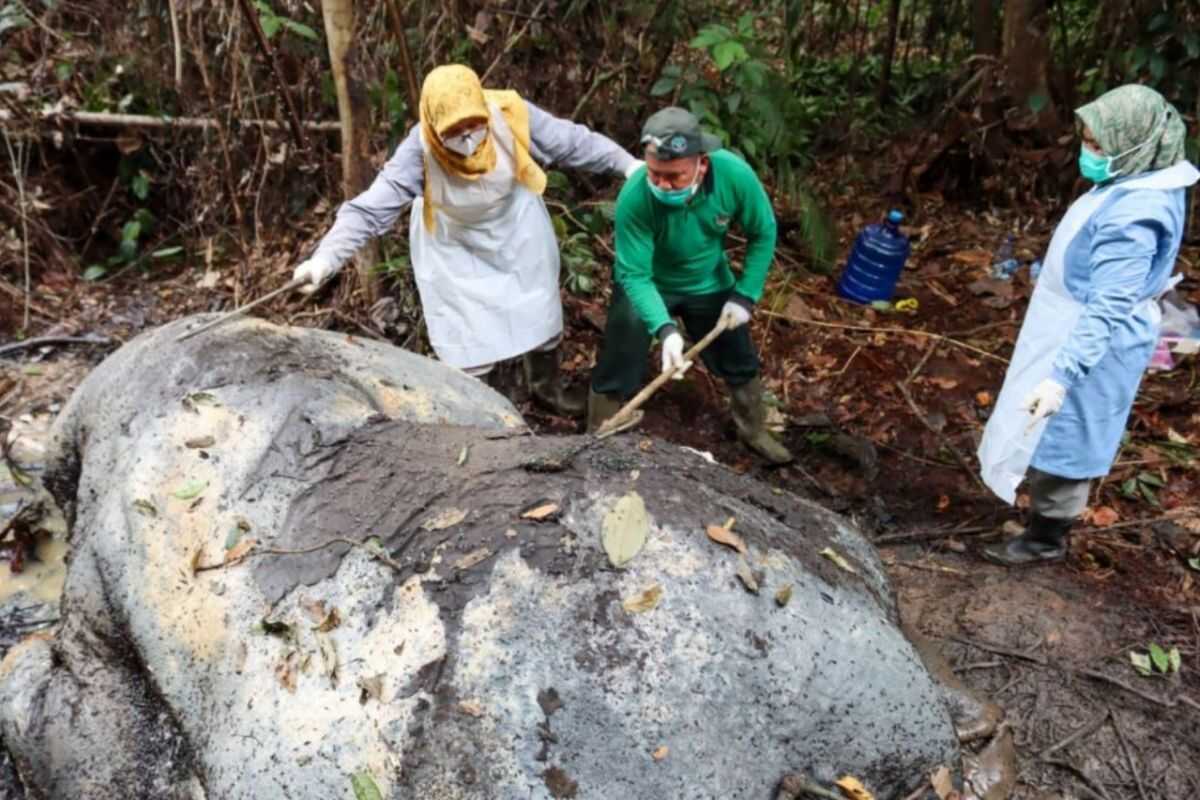
The deaths of elephants in Riau Province have become a grim annual ritual. Four were killed in 2023, two in 2024, and three last year. As 2026 begins, the cycle has resumed. On Feb. 2, 2026, a wild Sumatran elephant (Elephas maximus sumatrensis) was discovered dead in a concession area of PT Riau Andalan Pulp and Paper in Lubuk Kembang Bunga Village, Pelalawan District. Authorities believe the animal died about ten days earlier. The case surfaced publicly on Feb. 5, when Pelalawan Police announced an investigation. A joint team, including the Pelalawan Police, Riau Regional Police, Forestry Police, and the Natural Resources Conservation Agency (BKSDA), mobilized to examine the scene. Winarno, a local resident, discovered the carcass after noticing a foul smell from the forest. He alerted security forces before officials arrived to conduct a necropsy, the animal equivalent of an autopsy. Adjunct Commissioner I Gede Yoga Eka Pranata, head of the Pelalawan Police Criminal Investigation Unit, said his team interviewed witnesses and conducted a crime scene investigation, collaborating with the Riau Forensic Laboratory and PT RAPP personnel. The forensic team collected soil samples for testing to support the investigation. PT RAPP expressed its full cooperation with authorities to determine the cause of death for the protected animal. The scene was harrowing. The elephant was found sitting, its head severed. Dr. Rini Deswita, a veterinarian with Riau BKSDA, confirmed the animal had been shot in the forehead. A bullet remained lodged in its skull, fused to the neck. “The head wasn’t missing, but it was cut in half with a sharp weapon to remove the tusks,” Deswita explained. The elephant’s tusks were over one meter long. The trunk was also severed. Field measurements indicate the elephant was 286 centimeters long and over 40 years old, part of the Southeast Tesso elephant enclave, a critical population in the region. Adjunct Senior Commissioner Ungkap Siahaan, head of the Riau Forensic Laboratory, said two metal fragments believed to be bullets were recovered. One measured 12.3 mm by 16.3 mm; the other 6.94 mm. Preliminary testing confirmed lead, copper or brass, gunpowder nitrate, and gunshot residue on the fragments. Laboratory analyses are ongoing to identify the exact weapon type. Investigation expanded Senior Commissioner Ade Kuncoro of the Riau Special Criminal Investigation Directorate interviewed five witnesses and deployed teams to pursue the suspected poachers. Within a week, the investigation expanded. Thirty-three witnesses—including security officers, PT RAPP employees, residents, and members of the Indonesian Target Shooting and Hunting Association (Perbakin)—were questioned to trace the perpetrators. Pelalawan Police Chief Adjunct Senior Commissioner John Louis Letedara said on Feb. 12 that several individuals were suspected but no strong evidence yet linked anyone directly to the elephant death. Witnesses reported seeing no firearms or ivory being carried near the concession. “One witness mentioned people with air rifles at the Kundur Post, but no elephant tusks,” Letedara said. Investigators continued re-mapping small roads and forest tracks around the carcass to track poachers’ entry and exit routes. Riau Police Chief Inspector General Herry Heryawan directed a thorough monitoring of the case. By Feb. 19, investigators had interviewed 40 witnesses from various backgrounds, including local residents, company staff, and individuals connected to alleged ivory trade networks. Senior Commissioner Zahwani Arsyad, Riau Police public relations chief, said the case was approaching resolution. Authorities concluded that the elephant likely died from a gunshot to the skull, dismissing early speculation about poisoning. Investigators are proceeding in stages and urging the public to report suspicious activity to prevent further poaching. “With community support, we hope to quickly solve this case and deter future poaching in Riau,” Zahwani said. The public is closely watching. Past cases, like the 2024 death of Rahman at Tesso Nilo National Park, suspected of poisoning with a tusk removed, remain unresolved. Authorities hope this investigation will not end in the same way. This case highlights the ongoing threats to Sumatran elephants, a critically endangered species. Poaching for ivory continues to devastate local populations, even within conservation zones, underscoring the urgent need for stronger enforcement and community vigilance. Swift and effective action Conservationists warn that without swift and effective action, annual cycles of elephant killings will persist, imperiling the survival of one of the world’s most iconic and vulnerable species. The death in Pelalawan marks not just a loss for biodiversity but also a challenge for law enforcement and conservation agencies striving to protect the region’s wildlife. Experts stress that coordination between local communities, police, forensic teams, and corporate partners like PT RAPP is critical to cracking down on wildlife crime and ensuring that perpetrators are brought to justice. Dr. Deswita emphasized the brutality of the act. “This is not a natural death; it’s deliberate poaching. It’s a warning that the ivory trade continues, and the elephants pay the ultimate price.” Local residents, meanwhile, remain both witnesses and first responders, often discovering carcasses before authorities arrive. Their observations and testimonies are proving vital in piecing together the timeline and identifying suspects. The investigation is ongoing, with authorities calling on citizens, conservation groups, and companies to report any suspicious activity. Public vigilance, coupled with forensic science, may finally end the cycle of impunity that has haunted Riau’s elephants. The case serves as a stark reminder that conservation efforts alone cannot stop poaching. Law enforcement, community awareness, and rapid scientific investigation must work