
Conservation Cannot Rely Solely on State Budget, Forestry Minister Involves Private Sector and Communities
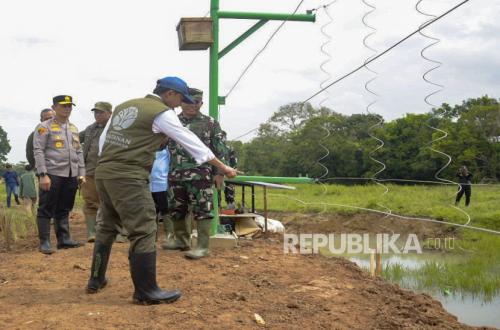
Forestry Minister Raja Juli Antoni is pushing for a major change in the management of national parks by involving local communities and the private sector. The government is preparing Way Kambas National Park as a pilot project for sustainable financing based on conservation and community economy.
Raja Juli stated that the conservation approach can no longer rely solely on the state budget because the needs for protecting areas continue to increase while the budget is limited. For decades, most of Indonesia’s 57 national parks have depended on state funding that has not been sufficient for operational needs and ecosystem recovery.
Threats such as forest encroachment, poaching, fires, and human-wildlife conflicts still occur in many conservation areas. This situation prompted President Prabowo Subianto to form the Task Force for Innovation in Financing and Management of National Parks.
Raja Juli was appointed as Deputy Chair of the Task Force alongside Mari Pangestu, Vice Chair of the National Economic Council, as Co-Chair. Way Kambas National Park was selected as the initial location for implementing innovative financing such as biodiversity bonds, voluntary international carbon credits, and strengthening conservation tourism.
The Ministry of Forestry explained that this model shifts conservation management from dependence on state budgets towards a blended finance scheme involving the private sector and capital markets, with the main goal of preserving forests and biodiversity.
Raja Juli said the President has given special attention to the preservation and population of Sumatran elephants in Way Kambas. On that occasion, Raja Juli also inaugurated the construction of area boundaries to reduce human-elephant conflicts.
Way Kambas National Park (TNWK) is an important habitat for Sumatran elephants, Sumatran rhinos, and Sumatran tigers, which are critically endangered according to the IUCN. The area faces serious pressures including recurrent forest fires, habitat fragmentation, invasive species, and illegal hunting.
Through the carbon scheme, companies can purchase carbon credits from conservation and forest restoration activities. The funds will be reused to support area operations and sustainable ecosystem recovery.
The Ministry of Forestry stated that Ministerial Regulation Number 27 of 2025 has opened opportunities for voluntary carbon market projects in national parks. Raja Juli explained that the utilisation of carbon environmental services can only be carried out in utilisation zones in accordance with Law Number 32 of 2024.
Zoning adjustments are carried out temporarily to strengthen wildlife habitats and will be returned to the original condition after recovery is complete. “In designing this project, we are targeting improvements in the welfare of local communities and the invaluable biodiversity of TNWK,” said Raja Juli.