
Conflicts Heat Up Worldwide, Rewriting the World Trade Map: What Should Indonesia Do?
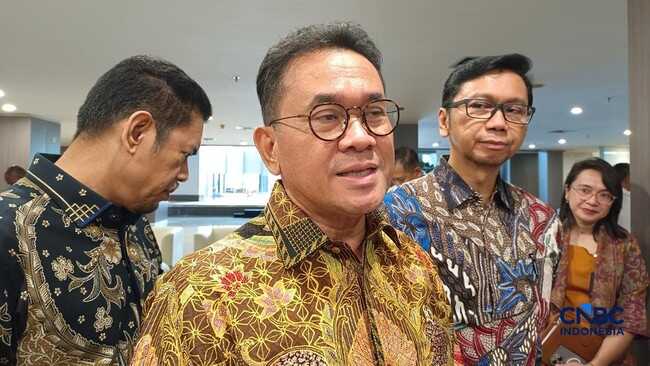
Heat of conflicts everywhere, changing the world trade map: what should Indonesia do?
Jakarta, CNBC Indonesia - Trade Minister (Mendag) Budi Santoso said the escalation of global geopolitical conflicts could alter the world trade map. The government also sees opportunities to fill market gaps in several countries whose supplies have been disrupted by the conflicts.
Budi said that geopolitical tensions that end in disruption of international supply chains usually have a direct impact on global supply chains. When the supply from a country is disrupted, gaps in markets will appear that other countries can exploit, including Indonesia which plans to seize the opportunity.
‘We see that from the trade side, if geopolitical crisis, it will usually change the trade map. When the global supply chain is disrupted, globally there will be exporters hampered and imports hampered as well,’ he said during a visit to the Ministry of Trade (Kemendag) offices in Jakarta, on Thursday (5/3/2026).
‘Therefore there is actually a blank space when a market in another country is not supplied by the supplier country. We want to utilise those empty areas,’ he added.
However, the government remains cautious in exploiting these opportunities. He said that mapping must come first to ensure which countries are really experiencing supply disruptions caused by conflicts.
‘But we also have to be careful, you know, to consider. We survey whether the region is indeed affected,’ he said.
One step the government has taken is directing the business matching program, especially for micro, small, and medium enterprises (MSMEs), to markets that are deemed to have opportunities due to disruptions in the global supply chain.
According to Budi, MSMEs are considered more flexible in penetrating new markets because most are new exporters with comparatively small transaction sizes.
‘One of the examples we are undertaking is especially for our MSMEs. Why? MSMEs are actually easier. MSMEs are, in fact, new exporters, so in the short term. Which markets can they operate in?’ he said.
He added that the MSME business matching program is currently being directed to several areas such as Southeast Asia and Africa.
‘Now the programs that involve business matching with MSMEs are directed to those countries. It has started; transactions in January were US$4 million. In February, we, together with the Director General of PEN, have mapped out which countries such as Southeast Asia and Africa we will enter to fill the gap,’ Budi said.
Separately, the government is also preparing for potential disruptions in commodity trade that rely on imported raw materials. According to Budi, geopolitical conflicts could affect the smooth supply of raw materials from abroad.
‘Yes, we are indeed anticipating it. But up to now the plan is that tomorrow we will meet exporters. We will discuss what problems, I want to know technically where exactly the exporters’ problems lie. Exporters have also said they import raw materials,’ he said.
The government has not yet determined the impact of the conflict on Indonesia’s export performance as a whole. This will be discussed further in meetings with business players.
‘Tomorrow, yes, tomorrow I will meet them. But we also cannot calculate yet. Yesterday we studied with BK Perdagangan but we also cannot be sure until we receive input from business players. Because, you know, we hope the war ends quickly,’ he concluded.
(dce) Add as a preferred source on Google [Gambas:Video CNBC]