
Conflicts Arising from Overlapping Mining Business Permits
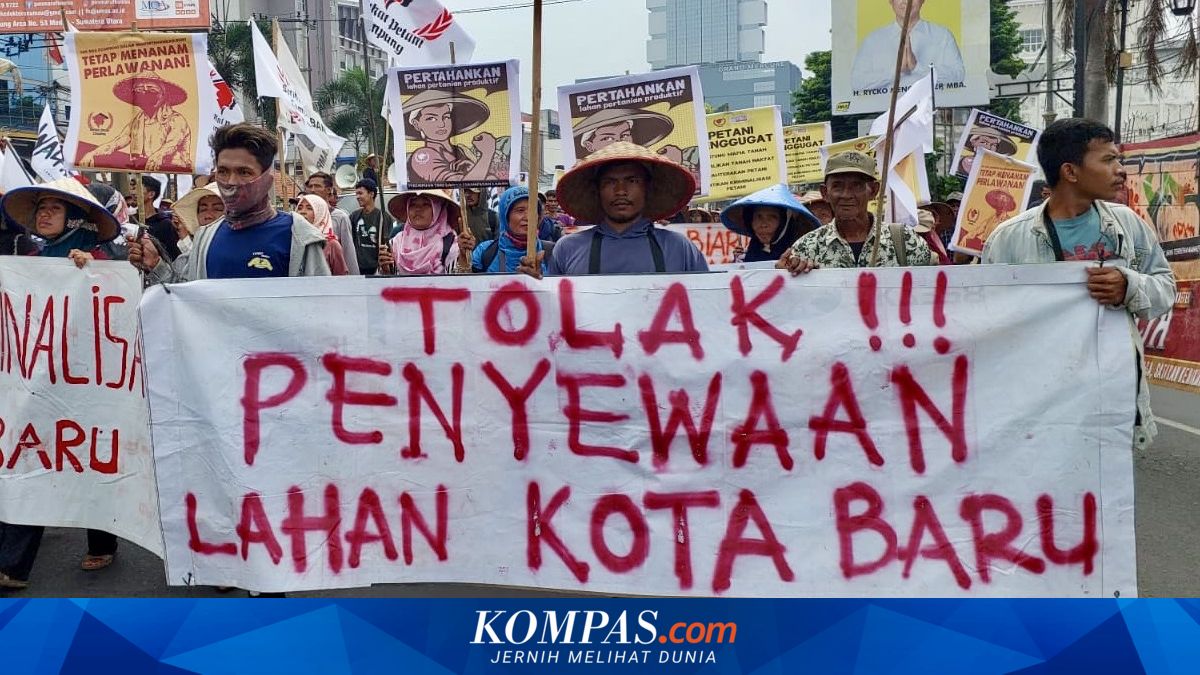
Land conflicts resulting from state policies continue to recur. Data from the Agrarian Principles Consortium indicates that land conflicts in 2025 experienced an increase from the previous year.
At least 341 agrarian conflict eruptions occurred, covering 914,574.963 hectares, impacting 123,612 families in 428 villages across Indonesia (2025 Year-End Note, Agrarian Reform Consortium, 2025).
One of the main causes is problematic regulations, including due to careless government technical policies. State regulations and implementing policies from the government need to be corrected immediately.
One of the most frequent conflicts is disputes between corporations holding Mining Business Permits (IUP) and residents who have long inhabited and managed the land.
As a result of government policies, through the Ministry of Energy and Mineral Resources (ESDM), issuing IUPs whose concession areas target residents’ land, tensions are often unavoidable.
Even due to haphazard—even potentially corrupt—local government policies in the past.
In many cases, corporations always win because they receive support from authorities or have stronger resources to engage in conflict.
Residents are often marginalised, even evicted. This situation is clearly unfair. It cannot be left as is; immediate corrections to those policies are needed.
There needs to be an evaluation of the umbrella regulations and other technical policies that cause these conflicts to emerge and proliferate.
Even in this case, communities are systematically displaced and it appears legal, involving government institutions.
Furthermore, in this case, it is not merely a matter of displacing and seizing legally owned community land; there are also indications of land mafia operations involving authorised government institutions that issue Certificates of Land Ownership (SHM).
Their modus operandi is to invalidate the validity of residents’ SHM. This is highly inhumane, deceitful, and barbaric.
There are thousands of similar cases if we reflect on them. Conflicts and tensions between residents and company parties continue to occur and remain a serious issue.
In this context, what is significant in North Maluku is the mining sector. Data from the Agrarian Reform Consortium shows that in 2025, the mining sector was the second largest contributor to agrarian conflicts with 46 eruptions, an area of 58,904.68 hectares, and 11,020 families affected (2025 Year-End Note, Agrarian Reform Consortium, 2025).
Referring to Law No. 4 of 2009 on Mineral and Coal Mining in Article 136, it states that holders of IUP and IUPK—nominally mining companies—before conducting production operations must settle land rights (on land within the IUP area) with the rights holders in accordance with applicable laws and regulations. This clause is problematic in several key aspects.
First, the government appears completely irresponsible for the policies it creates. The government seems to wash its hands of the potential conflicts arising from the policies it makes.
Conflicts are as if created, and at one point, the government can easily blame the IUP holders if they fail to obtain consensus. This is clearly a bad condition that must be corrected immediately.