
Concrete Evidence America Needs China as 2026 Crisis Deepens
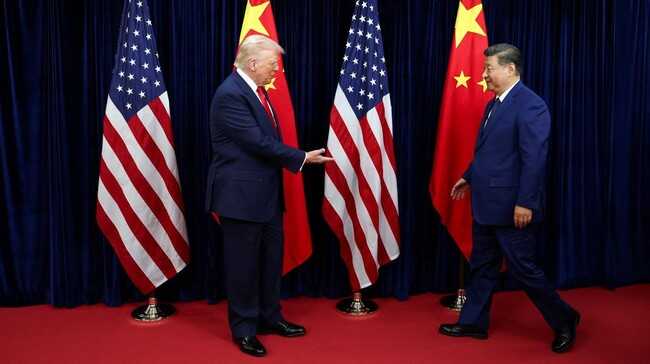
The Trump administration has recently adopted a softer stance towards China, evidenced by decisions to permit exports of Nvidia’s advanced H200 AI chips to China and to suspend security measures targeting Chinese companies in the United States.
The United States has significant interests in China, particularly regarding rare earth elements (REEs). Suppliers to American aerospace and semiconductor companies are reportedly facing significant REE shortages.
Two suppliers have even had to reject client requests, according to industry figures, weeks before Trump is expected to meet Chinese President Xi Jinping in Beijing.
The shortage is centred on rare earth elements such as yttrium and scandium, specialised members of a family of 17 elements that play a small but vital role in defence technology, aerospace, and semiconductors. Nearly all are produced in China.
Although Beijing has permitted many REE exports to the United States after previously imposing a ban in April 2025, many components still struggle to reach the US. Nevertheless, the US and Chinese governments reached a Peace Agreement in October 2025. On the ground, deliveries of these materials remain sporadic into the US, according to Chinese customs data cited by Reuters on Friday (27 February 2026).
The existing obstacles are predicted to be discussed in a further meeting between Trump and Xi Jinping in March.
One major problem is yttrium, which is used in coatings that prevent engines and turbines from melting at high temperatures. Without regular application of this coating, engines cannot be used.
Since Reuters first reported on the yttrium shortage in November 2025, prices have surged 60% and are now approximately 69 times higher than a year ago. Some coating manufacturers have begun rationing materials, according to company executives and traders.
Executives at two North American companies that purchase yttrium to make coatings told Reuters they needed to halt production temporarily due to supply shortages.
One company is now rejecting smaller and overseas customers to conserve supplies for larger clients.
Another company in the coating supply chain recently ran out of materials and ceased selling products containing yttrium oxide, according to sources with direct knowledge of the matter.
Although yttrium and scandium shortages have not yet burdened jet engine or chip production, a US government official told Reuters that some American manufacturers are now facing shortages of certain rare earth elements from China.
China exported 17 tonnes of yttrium products to the US in the eight months after controls were imposed in April 2025, compared with 333 tonnes in the eight months before the measure.
A White House official stated that the Trump administration is committed to ensuring access to critical minerals for all American businesses.
“This includes negotiating with China and monitoring compliance with President Trump’s agreement with President Xi Jinping, as well as developing alternative supply chains if necessary,” the official said.
Reuters spoke with two US government officials, 14 company executives and staff members, traders, and analysts across the aerospace and semiconductor sectors.
All spoke to Reuters on condition of anonymity except for analysts mentioned in the report. North American executives were unwilling to be named when discussing internal production challenges publicly.
China’s Ministry of Commerce did not respond to enquiries.
Beyond yttrium, US semiconductor manufacturers are also facing a scandium supply crisis affecting the production of next-generation 5G chips. This was revealed by Dylan Patel, founder and CEO of research firm SemiAnalysis.
With global production only running at several tens of tonnes per year, scandium plays a small but important role in fuel cells, specialised aluminium alloys for the aerospace industry, as well as advanced chip processing and packaging.
Major US semiconductor manufacturers all depend on scandium to produce chip components that essentially go into every mobile phone and 5G base station, according to Patel.
US chip manufacturers have experienced delays in receiving new scandium export licences from China in recent months and have contacted Washington for assistance, according to two industry sources.
Many of these companies have been forced to obtain scandium from third-country suppliers, according to another US official, but China requires licence applicants to declare their end users.
“Our theory is that the semiconductor industry itself is being targeted,” the US official said.
The US Semiconductor Industry Association declined to comment.
“The US currently has no domestic scandium production and no operational alternative sources outside China,” Patel said.