
Complete! This is the Map of Countries Most Affected by the Iran War: Asia - Europe
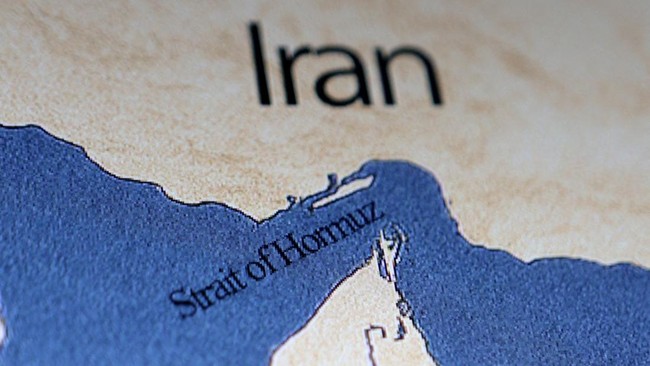
Disruptions in the Strait of Hormuz due to the US-Israel-Iran war have triggered a surge in global oil prices and heightened risks for countries dependent on Gulf energy.
The war between the United States (US) and its ally Israel against Iran, which has been ongoing for nearly a month since 28 February, has disrupted one of the world’s most important energy shipping routes, the Strait of Hormuz. This disruption occurred after Iran responded to the war by attacking ships daring to cross the route.
The situation immediately triggered a surge in global oil and gas prices, while also driving up the cost of various energy-derived products such as petrol, aviation fuel, and industrial fuels.
This situation is of major concern because the Persian Gulf region plays a very important role in global energy supplies. When shipments from the region are delayed, the impact is not only felt in Middle Eastern countries but also spreads to various parts of the world.
Based on 2024 data from the Observatory of Economic Complexity (OEC), many countries are now in a vulnerable position due to their heavy reliance on energy imports from Gulf countries. The higher the dependence, the greater the pressure faced when supplies are disrupted and prices soar.
Asia Becomes the Most Vulnerable Region
Asia is the region that feels the energy shock from the Middle East war the quickest.
In 2024, around 21 million barrels of oil per day pass through the Strait of Hormuz. Of that amount, about four-fifths are shipped to Asia. Therefore, when this vital route is disrupted, the initial and greatest pressure is immediately felt by Asian countries.
China has long been the largest buyer of energy from Gulf countries. Although its dependence is not as high as some other Asian countries, around 35% of its energy supply still comes from the region.
With energy import values reaching US$413 billion in 2024, this supply disruption remains a serious issue for Beijing.
However, there are several other Asian countries with even higher dependence.
Pakistan is one of the most vulnerable, with 81% of its energy imports coming from the Gulf region. This is followed by Japan at 57%, Thailand at 56%, and South Korea at 55%. These figures show that many Asian countries still heavily rely on energy supplies from the Middle East.
Meanwhile, Indonesia is relatively lower compared to many other Asian countries, with only 15% of its energy imports coming from Gulf countries.
Nevertheless, Indonesia is not entirely safe. When global energy prices surge, the impact can still be felt through higher import costs, pressure on inflation, and the burden of energy subsidies.
Additionally, the effects also spill over into the air transport sector. In various Asian countries, airlines are beginning to face pressure due to tightening aviation fuel supplies and rising prices. As a result, flight cancellations are increasing, and some passengers are stranded.
Europe Not Too Dependent, But Still Pressured
Compared to Asia, Europe is indeed not as dependent on energy from the Gulf region. However, that does not mean Europe is safe from threats.
In recent years, Europe has repeatedly faced energy pressures, from the Russia-Ukraine war in 2022 to major changes in oil and gas supply sources.
Among European countries, Greece is one of the most dependent on energy from Gulf countries, with a share of 36% of its total energy imports. This is followed by Poland at 30%, Italy at 22%, and France at 18%.
Meanwhile, other major countries like the UK and the Netherlands also still have dependence, though at lower levels, 11% and 10% respectively.
In percentage terms, these figures are still below many Asian countries.
However, Europe’s challenges are not solely about the extent of its dependence on Gulf energy. Europe is trying to revive its industries and support weak economic growth. Therefore, a surge in energy prices could become additional pressure for businesses and households.
The problem is further complicated because Europe has not fully escaped the shadow of previous energy crises.
After supplies from Russia were disrupted in recent years, the region was forced to reorganise its energy supply chains. In such a situation, price increases due to the Middle East war are clearly bad news.
Africa Faces Risks: Energy and Food
In Africa, the impact of the Middle East war will not be felt equally in every country. Some countries are quite dependent on energy supplies from the Gulf region, while others are relatively lower. Therefore, the emerging pressures tend to be uneven.
Egypt is one of the African countries most dependent on energy from Gulf countries, with a share of 45% of its total energy imports. This is followed by South Africa at 33%. Meanwhile, Nigeria is recorded much lower, at around 12%, so the pressure is relatively different compared to other countries that rely more on supplies from the Middle East.
However, the threat to Africa does not stop at oil and gas.
The Gulf region also plays a major role in the fertiliser supply chain, as the area has a strong energy base for producing raw materials for various agricultural needs.
That is why, when energy prices rise and supplies are disrupted, the effects can spill far beyond the energy sector.
If this condition persists for a long time, fertiliser costs could also surge and burden the agricultural sector.
Ultimately, food prices risk rising, especially in developing countries that are highly sensitive to increases in production costs. In such a situation, governments may be forced to increase subsidies to contain price surges. For many African countries with limited fiscal space