
Complete Guide to the BNPB's Housing Waiting Fund (DTH) Scheme and Its Eligibility Criteria
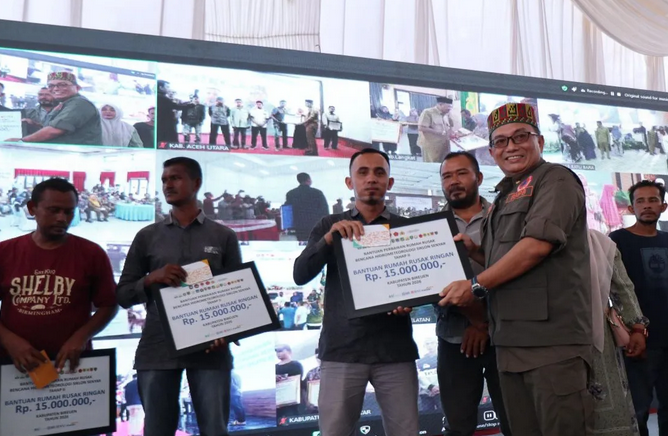
Following natural disasters such as earthquakes, flash floods, or landslides, one of the most urgent issues for survivors is housing. When homes are declared uninhabitable or lost, long-term stays in tents or evacuation shelters are not ideal for the health and psychological well-being of families. This is where the Government of Indonesia, through the Housing Waiting Fund (Dana Tunggu Hunian, DTH), offers an emergency, temporary solution.
DTH is a cash assistance provided by the government to households whose homes have suffered severe damage and cannot be inhabited again. The main objective of DTH is to enable affected residents to rent housing or stay with relatives in more suitable accommodation while the construction of Permanent Housing (Huntap) or home repairs progresses.
DTH forms part of the Ready-to-Use Funds (DSP) managed by the National Disaster Management Agency (BNPB) based on proposals from local governments via the Regional Disaster Management Agency (BPBD).
Under current regulations, the standard DTH aid is Rp500,000 (five hundred thousand rupiah) per month for each Head of Household (HoH). The rupiah amount is allocated with the assumption of local-level rent costs for a simple dwelling. The duration of the assistance usually ranges from 3 to 6 months, depending on the speed of the transition to rehabilitation and reconstruction in the area. In urgent cases, this duration can be extended through coordination between local authorities and BNPB.
Not all disaster victims automatically receive DTH. There are strict criteria to ensure assistance reaches the intended recipients:
The disbursement process for DTH follows a bottom-up bureaucratic pathway: from local to central levels:
For affected residents, it is essential to prepare population documents as administrative requirements for the release of the aid:
The Housing Waiting Fund (DTH) scheme is a manifestation of the state’s presence in providing protection for citizens in difficult times following disasters. With this aid, the psychological and economic burden on survivors is expected to be reduced during the transition to a new permanent home. Synergy between accurate local data and rapid central administration is the key to the programme’s success.
- Can homeowners with moderate damage receive DTH?
Usually not. DTH is prioritised for homes that are uninhabitable or categorised as Severe Damage (Rusak Berat).
- How long does it take for DTH to be disbursed?
It depends on the speed of regional verification, but on average it takes 1 to 3 months after the end of the emergency response period.
- Is the DTH provided in cash?
To ensure transparency, in 2026 the government is prioritising non-cash transfers to the recipients’ accounts.
Amid the rising frequency of disasters, BNPB’s budget has plummeted. Over the past six years, allocations have fallen from Rp7.14 trillion in 2021 to only Rp491 billion in the 2026 RAPBN — the deepest cut in the period and a signal of fiscal tightening that could weaken the nation’s preparedness to face disaster threats.
Finance Minister (Menkeu) Purbaya Yudhi Sadewa said the government stands ready to inject additional funds for disaster response. BNPB recorded a 2025 budget efficiency of 43%. From an initial budget ceiling of Rp1.4 trillion, BNPB now receives around Rp800 billion.