
Complete Guide to Half-Mast Flag Raising Procedures Under Indonesian Law
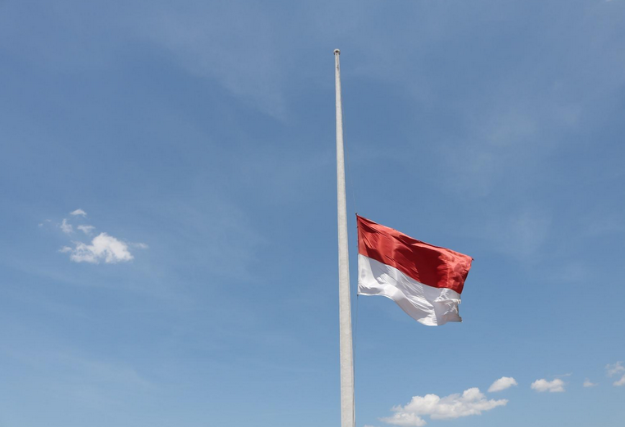
Half-mast flag raising is a universal symbol to demonstrate grief, respect, or commemoration of major tragedies. In Indonesia, this action cannot be done arbitrarily as it is formally regulated under Law No. 24 of 2009. Lowering the Red and White flag to half-mast represents the highest form of state respect for the nation’s finest children who have passed away.
Under Law No. 24 of 2009, the national flag may be used as a sign of peace, a sign of mourning, or as a cover for a coffin or bier. Article 12 paragraph (2) specifically explains that a half-mast flag has the meaning of a sign of mourning.
Symbolically, the empty space above the flag raised at half-mast represents respect for the invisible “flag of death”. This tradition is believed to have originated from 17th-century maritime culture. In Indonesia, this raising symbolises the nation’s collective sense of loss and the deepest mourning over the death of a leader or figure who has rendered great service to the state.
Many citizens immediately raise the flag to mid-pole position. According to regulations, the flag must be raised to the top first before being lowered to half-mast position.
Based on Article 12 of Law No. 24 of 2009, the following technical protocol must be observed by government agencies and the public:
The Indonesian government regulates the duration of half-mast flag raising based on the position of the deceased figure or the level of national mourning.
In addition to the death of important figures, the half-mast flag in Indonesia is regularly raised on 30 September each year. This is done to commemorate the G30S/PKI tragedy and honour the services of the Revolutionary Heroes who fell. The following day, on 1 October (Pancasila Sacredness Day), the flag is raised to full height as a symbol of the nation’s ideological victory.
It is strictly forbidden to raise the flag when it is damaged, torn, faded, or tarnished, including during half-mast raising. This is regulated in Article 24 of Law No. 24 of 2009 with criminal penalties for those who intentionally damage the honour of the national flag.
Raising the flag at half-mast is a solemn action that requires compliance with protocol. By following the correct procedures, we not only demonstrate our grief but also preserve the dignity and honour of the Red and White as the highest symbol of Indonesian national sovereignty.