
Competition for Influence! China and America Racing to Lend to Indonesia
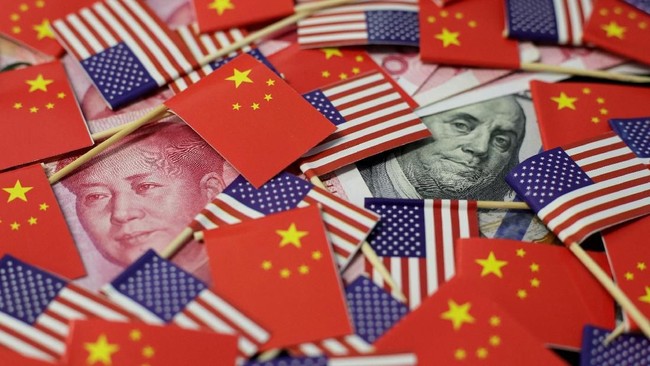
Indonesia’s foreign debt from China declined marginally in early 2026, whilst borrowing from the United States rose, making the relative positions of the two leading creditors an interesting development to monitor.
Based on data from the Bank of Indonesia’s Foreign Debt Statistics (SULNI), Indonesia’s foreign debt position in January 2026 was recorded at US$434.7 billion, growing 1.7% year-on-year. This growth was lower than December 2025, which reached 1.8% year-on-year with a value of US$432.96 billion.
The slowdown was primarily driven by declining private foreign debt. Bank of Indonesia recorded private foreign debt at US$193.0 billion in January 2026, down from US$194.0 billion in December 2025. Year-on-year, private foreign debt also contracted by 0.7%, deeper than the 0.2% contraction in the previous month.
In contrast, government foreign debt continued to show robust growth. In January 2026, government foreign debt reached US$216.3 billion, growing 5.6% year-on-year, higher than December 2025’s US$214.26 billion.
Indonesia’s debt to China declined slightly, whilst lending from the United States rose. Bank of Indonesia data showed Indonesia’s foreign debt to China at US$24.95 billion in January 2026, down marginally from US$24.97 billion in December 2025, though still very close to the record high of US$25.03 billion recorded in August 2025.
In contrast, Indonesia’s debt to the United States rose slightly to US$27.45 billion in January 2026 from US$27.31 billion in December 2025. However, this position remained below the highest level of US$27.95 billion reached in July 2024.
Looking at trends, Indonesia’s debt from China has risen more rapidly than from the United States in recent times. In July 2024, it was approximately US$22.78 billion, before rising continuously until it briefly exceeded US$25 billion in August 2025. Although it has declined marginally now, the position remains elevated.
In contrast, Indonesia’s debt from the United States has remained relatively stable. The figure briefly fell to US$26.36 billion in August 2025 before rising again to US$27.45 billion in January 2026. However, the increase was not as rapid as China’s.
Looking further back, China’s position changes have been particularly striking. In 2010, Indonesia’s debt to China was only about US$2.49 billion. Today, it has surged to nearly ten times that amount at US$24.95 billion.
Meanwhile, Indonesia’s debt to the United States has also increased, from US$5.60 billion in 2010 to US$27.45 billion in January 2026. However, in recent years, the rate of increase has appeared slower than China’s.
Currently, the gap between Indonesia’s debt to the United States and China stands at approximately US$2.5 billion. The United States remains ahead of China, but the distance is now far closer than it was several years ago.
This development sees China firmly established as Indonesia’s third-largest creditor, meaning China’s role in financing Indonesia’s development is increasingly significant.
Singapore remains the strongest as the largest creditor, followed by the United States and China in subsequent positions. Several other countries also remain major lending providers to Indonesia, though their trend directions vary.
Singapore remains Indonesia’s largest lending country with a value of US$54.73 billion in January 2026. Although this declined compared to December 2025’s US$55.26 billion, its position remained far more dominant than other countries.
In fourth position is Japan with total lending of US$20.36 billion in January 2026. This figure increased slightly compared to December 2025’s US$20.34 billion, but remained far lower than in 2010 when Japan was still Indonesia’s largest creditor with total lending reaching US$40.47 billion.
Meanwhile, fifth position is held by Hong Kong with a lending value of US$18.97 billion in January 2026. This figure increased compared to December 2025’s US$18.51 billion and was slightly higher than the 2024 average of approximately US$18.72 billion.
Hong Kong remains one of the important financing centres for Indonesian corporations, particularly through medium-term lending and international banking facilities.