
Compatibility Indicators for Kidney Transplants
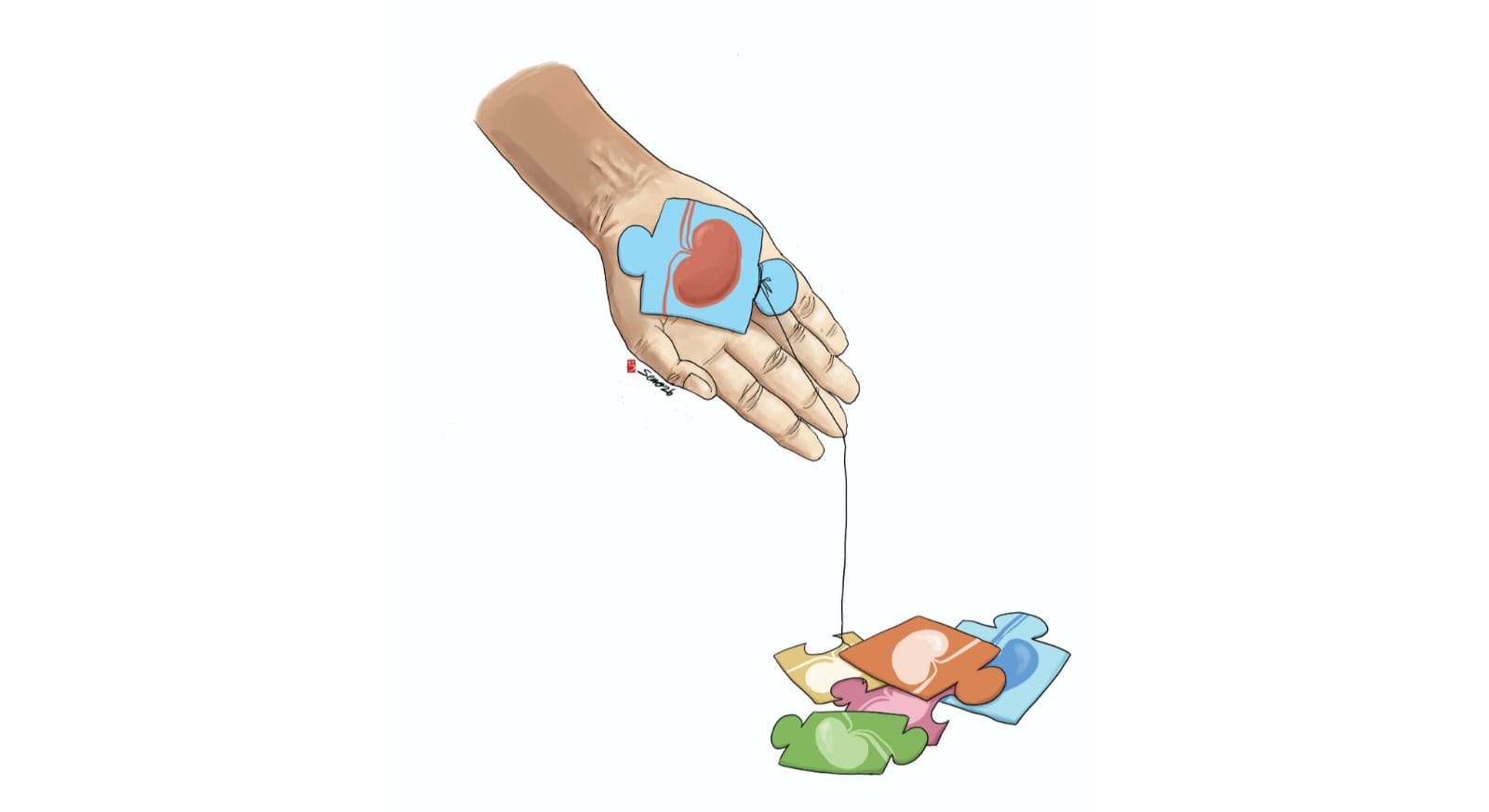
World Kidney Day 2026, which falls on 12 March, carries the theme “Kidney health for all: advancing equitable access to care” and brings concerning information about the burden of kidney disease in Indonesia. In the past year, kidney disease has become the second-leading catastrophic illness consuming the largest portion of BPJS health insurance budget.
In 2024, heart disease ranked first as the costliest disease for BPJS, followed by cancer, stroke, and kidney failure. By 2025, kidney disease rose to second place, displacing cancer. BPJS data shows that throughout 2024, 134,057 chronic kidney failure patients underwent haemodialysis procedures, with treatment costs reaching Rp13 trillion.
In 2024, heart disease ranked first with 22.55 million cases and costs of Rp19.25 trillion. Cancer ranked second with 4.24 million cases costing Rp6.48 trillion, followed by stroke in third place with 3.89 million cases costing Rp5.81 trillion, and kidney failure in fourth with 1.44 million cases costing Rp2.76 trillion.
However, within just one year, the data changed drastically. Heart disease remains the largest budget drain with 29.73 million cases and costs of Rp17 trillion. However, kidney failure now occupies second place, surging extraordinarily to 12.68 million cases with costs ballooning to Rp13 trillion. Conversely, cancer dropped to third place with 7.19 million cases and costs of Rp10.3 trillion, whilst stroke fell to fourth with 9.53 million cases and costs of Rp7.2 trillion.
Kidney failure has experienced a fantastic spike. In just one year, cases have surged nearly nine-fold and costs have increased more than four-fold. Most chronic kidney failure patients undergo routine long-term haemodialysis therapy, which places a heavy financial burden on patients. Without BPJS support, it is difficult to imagine the burden facing millions of chronic kidney disease sufferers.
This requires serious attention. Cases are increasing rapidly, costs are rising, and the disease increasingly affects younger patients. Chronic kidney disease typically does not present early symptoms. As a result, many people only become aware of it when their kidney function has already declined sharply, or they are already in chronic kidney failure.
This is why the kidney is often called a “silent organ”. Most chronic kidney failure patients undergo haemodialysis because costs are covered by BPJS. However, BPJS can also cover kidney transplantation or grafting, although the numbers are very small compared to those undergoing haemodialysis.
KIDNEY TRANSPLANTATION
Kidney transplantation was first successfully performed on humans in 1954 at Peter Bent Hospital, by a team led by Dr Joseph Murray, who later received the Nobel Prize in Medicine in 1990.
In the transplant method, a kidney from a donor is placed in the recipient’s body to replace their damaged kidney. In terms of survival prospects, a kidney graft from a living donor can survive approximately 15 to 20 years on average, while a kidney from a deceased donor survives 8 to 12 years.
Most people who undergo kidney transplant have previously undergone haemodialysis for some time. What is ideal is kidney transplantation performed without undergoing haemodialysis first, which is called preemptive transplantation. Research shows that preemptive transplantation can provide better long-term health outcomes, with superior vascular-neural quality.
Patients can continue to work and have a better quality of life. If a doctor informs that kidney disease is worsening or is already in advanced stages (stage 4 or 5), that is the right time to proceed with kidney transplantation. Even at stage 3B, patients should be educated about kidney transplant opportunities.
Kidney donors can be living individuals who have two healthy kidneys and can donate one kidney. Living donors can come from the same family or from unrelated individuals. Additionally, donors can come from deceased persons’ kidneys. Patients must undergo evaluation at a transplant centre, complete with standard professional protocols, before receiving a kidney donor.
Studies show that people who undergo living kidney transplants live longer than those who undergo haemodialysis. For recipients, a successful kidney transplant also provides the freedom to live life as they did when healthy, including working, travelling, and spending more time with friends and family. Admittedly, there are minor restrictions on what can be eaten and drunk, for example, or heart-healthy diets and weight management to help the new kidney last longer. Health and stamina will also improve.
No jade is without a flaw; there are still risks with kidney transplants, such as surgical risks. After transplant surgery, patients must take antirejection medications, also called immunosuppressants, but risks remain from this medication. Patients will have a higher risk of developing infections and certain types of cancer. Although most transplants succeed and last for many years, how long the kidney lasts can vary. Depending on age, many people will require more than one kidney transplant during their lifetime.
One important matter to note before kidney transplantation is blood testing to determine whether the potential recipient is compatible with the donor kidney. There are three main blood tests that will determine whether patient and potential donor kidney are compatible: blood group determination, tissue typing, and cross-matching. Blood typing measures blood antibodies that react with various blood groups. If the donor’s blood type matches the patient’s blood type, this is an important first step in compatibility assessment.