
Comparative Strength of Arab Currencies: Which Is Most Resilient Against the US Dollar?
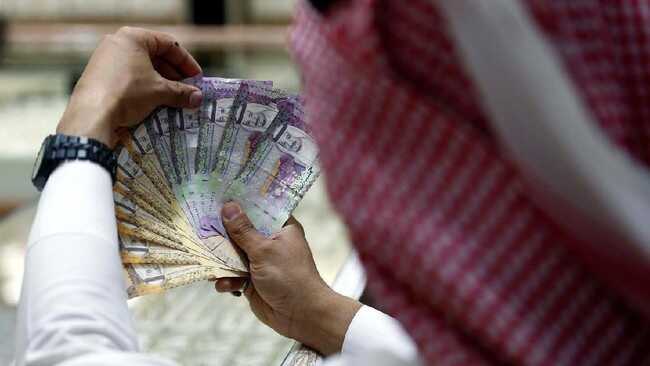
Currency exchange rates serve as a crucial indicator of a nation’s economic strength, and this principle applies equally to Arab countries. Arab nations are members of the League of Arab States, an international organisation comprising Arabic-speaking countries that serves as a forum for cooperation in political, economic, and social matters.
To assess the resilience of Arab currencies against the US dollar, CNBC Indonesia has compiled data on currency movements against the greenback and ranked them from strongest to weakest performance on a year-to-date basis through 27 February 2026.
According to Refinitiv data, the Kuwaiti dinar emerged as the most formidable Arab currency against the US dollar in 2026, appreciating 0.71% and closing at KWD 0.305/USD. The dinar’s strength reflects Kuwait’s substantial current account surplus, underpinned by robust oil exports and considerable state assets, which provide a stable foundation for currency stability.
Beyond its 2026 performance, the Kuwaiti dinar is recognised as the world’s highest-valued currency in nominal terms against the dollar. At current exchange rates, one Kuwaiti dinar is worth more than USD 3, maintaining its position as the world’s most expensive currency.
Following the Kuwaiti dinar, other Arab currencies also recorded appreciation against the dollar year-to-date. The Tunisian dinar appreciated 0.53% to TND 2.8525/USD, the Comoros franc rose 0.52% to KMF 416.94/USD, and the Qatari riyal strengthened 0.15% to QAR 3.6445/USD. The Syrian pound appreciated 0.05% to SYP 110.5/USD, the Omani rial advanced 0.03% to OMR 0.38486/USD, the Algerian dinar strengthened 0.02% to DZD 129.281/USD, and the Bahraini dinar rose marginally 0.01% to BHD 0.3769/USD.
Meanwhile, numerous other Arab currencies remained stable against the dollar throughout 2026. The Lebanese pound, Jordanian dinar, Djibouti franc, Iraqi dinar, and Saudi riyal recorded no year-to-date changes.
Conversely, several Arab currencies faced depreciation pressure against the greenback. The Libyan dinar experienced the steepest decline, depreciating 16.16% year-to-date to LYD 6.3018/USD. This weakness stems from Libya’s fragile economic foundations, as the country’s prospects remain heavily dependent on oil sector developments, whilst prolonged internal political divisions have rendered fiscal discipline and economic reforms extremely difficult to implement.
Other depreciating currencies include the Tunisian dinar down 0.53%, Egyptian pound down 0.52%, Moroccan dirham down 0.34%, Mauritanian ouguiya down 0.23%, Somali shilling down 0.18%, Sudanese pound down 0.03%, and the United Arab Emirates dirham down 0.02%.