
Community Solidarity Becomes Economic Driver in Pancasila Village, Surabaya
In various corners of villages throughout Surabaya, East Java, community solidarity has transcended its role as mere social practice, evolving into a community-based economic system.
Through waste banks, independent social fund management, and reciprocal mutual assistance mechanisms amongst residents, several Pancasila villages in Surabaya have successfully constructed a self-sufficiency model that transforms social concern into an economic driver.
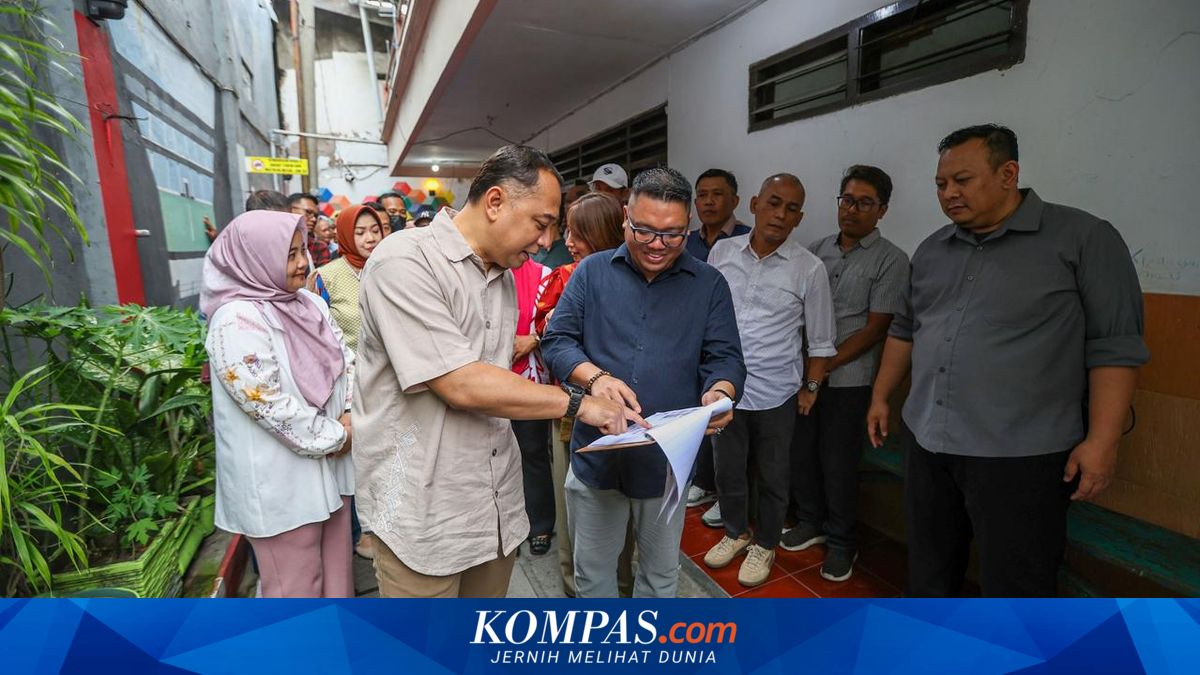
One example of this practice is evident at Pancasila Village RW 9 Lemah Putro, Embong Kaliasin Sub-District, Genteng District, Surabaya. On Saturday 21 February 2026, Surabaya’s Mayor Eri Cahyadi visited the area directly to observe resident activities.
At RW 9 Lemah Putro, Mayor Eri Cahyadi witnessed residents transforming social solidarity into an organised independent assistance system. He assessed that this practice demonstrates Pancasila values being genuinely translated into concrete action in residents’ daily lives.
“I am proud of RW 9 because it has implemented the Self-Sufficient Village concept. We record poor family data, identifying which households are covered by the Municipal Government and which receive assistance through independent community initiatives, ensuring aid does not accumulate and can be distributed equally each month,” stated Mayor Eri.
He explained that Surabaya Municipal Government applies a relatively strict poverty data verification system. Data collection employs dozens of indicators, including physical housing conditions and family income levels. Through this mechanism, the Municipal Government endeavours to ensure social assistance genuinely reaches residents in need.
“Our budget is limited, so there are priority scales. For example, for education assistance, we focus on two children per family so other families can also receive their fair share,” he explained.
“If someone claims they cannot afford but refuses offered employment, we will remove them from the assistance list. The exception is elderly people over 60 living alone, whom the government must fully support,” he added.
In RW 9 Lemah Putro village, community solidarity is also evident in how residents manage their environment. Residents implement waste segregation from households, which is then collected and managed through a waste bank system. Collected dry waste is sold, with proceeds partially returned to residents as supplementary funds.
Mayor Eri views this initiative as aligned with efforts to build a healthy and sustainable residential environment. This corresponds with President Prabowo Subianto’s direction in creating a Safe, Healthy, Clean, Beautiful (ASRI) environment.
“If residents refuse to participate in communal work but complain about flooding, we should not listen. We must move together,” he asserted.
“I want RW 9 Lemah Putro to become an example for other RWs in Surabaya. If the RW mobilises, if the women’s organisation mobilises, if the community support group mobilises, and residents are united, then prosperity will surely be achieved,” he stated.
Beyond RW 9 Lemah Putro, similar practices are evident at Pancasila Village RW IV Ngagel Rejo Sub-District, Wonokromo District. In this village, community solidarity develops through various collective initiatives, ranging from independent waste management, integrated environmental security systems (SISKAMDU), to social fund collection amongst residents.
Mayor Eri reiterated that the primary strength of Pancasila villages lies in social concern that grows from the community itself. He also appreciated the active involvement of RW IV Ngagel Rejo residents in assisting one another.
“Alhamdulillah (praise be to God), these Pancasila villages are extraordinary. Here, waste segregation is already operational, and people capable of helping those unable to help themselves are doing so,” stated Mayor Eri when visiting RW IV Ngagel Rejo on Sunday 22 February 2026.
Observing various practices developing in the village, Mayor Eri desired RW IV Ngagel Rejo Surabaya to become an example for developing Pancasila villages in other regions.
“I offer many thanks. I am making this a prototype, an example for other Pancasila villages that do not yet have one,” he asserted.
He noted that since 2024 through February 2026, total donations collected from residents reached IDR 90,331,000, with the majority distributed for various community social needs.
“From 2024 until today, we received IDR 90,331,000 in donations from residents. Then we distributed IDR 88,686,500. So we have a balance of IDR 1,644,500,” said Endang.
Endang explained that these funds are used for various resident needs, ranging from basic food assistance, provision of wheelchairs for elderly residents, to ongoing support for the Proud Surabaya Cares (BSP) programme.
“Perhaps this is a small part. Although small, we always inspire residents that we must be beneficial and participate in community development,” said Endang.
Beyond social donations, RW IV Ngagel Rejo residents also developed a death assistance programme. This programme is followed by 741 household heads with voluntary contributions of IDR 2,000 each time a resident passes away.
These funds are used to assist grieving families, including corpse handling expenses.
“We provide IDR 1 million to the deceased. For corpse purification services IDR 50,000 and burial services IDR 50,000. So until November 2025, we had a balance of IDR 50,038,300,” he said.
On the other hand, RW IV Ngagel Rejo residents’ economic self-sufficiency is further strengthened through the “Guyub Sayekti” Waste Bank at RT 18. Monthly, the waste bank manages approximately 3 to 3.5 tonnes of dry waste, which is then sold to finance various village needs, ranging from CCTV installation to education assistance for residents.
“Waste segregation is performed by all residents across age groups, serving as a medium for maintaining relationships, community cohesion, and mutual assistance,” said Endang.
Meanwhile, RW 9 Lemah Putro Chairman Agung Diponegoro stated that the Self-Sufficient Village concept in his area continues to be strengthened through various community-based economic empowerment programmes.
“We have a social protection system…