
Commission X: Higher Education Institutions Must Not Be Reduced to Mere Workforce Factories
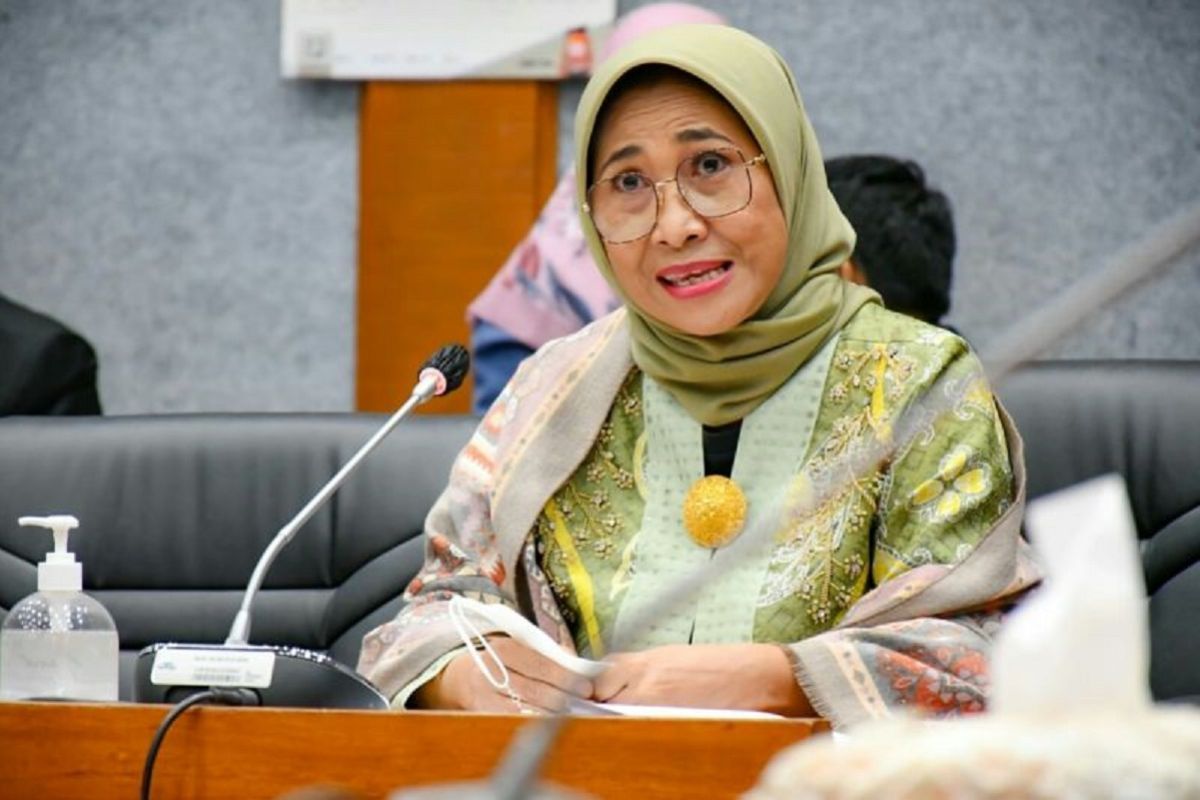
Jakarta (ANTARA) - The Chair of Commission X of the Indonesian House of Representatives, Hetifah Sjaifudian, agrees that higher education must be relevant to the needs of the working world, but universities must not be reduced to mere workforce factories.
“We agree that higher education must indeed be relevant to industry needs, but universities must not be positioned solely as workforce factories,” said Hetifah in a statement received in Jakarta on Wednesday.
The education sector legislator explained that universities have a broader strategic role, including in the development of knowledge, the preservation of culture, and the formation of the nation’s critical capacity.
“The function of campuses is far broader: building knowledge, safeguarding culture, forming the nation’s critical capacity,” she stated.
Hetifah made this statement in response to the government’s plan to evaluate and close several study programmes (prodi) at universities deemed not aligned with industry needs.
Regarding this policy plan, Hetifah emphasised the importance of a strong and comprehensive academic foundation. She reminded that decisions should not be based solely on short-term trends.
She also rejected mass closures of programmes. A more appropriate approach, according to her, is to transform programmes through curriculum revitalisation, strengthening interdisciplinary approaches, and adjustments to regional potentials.
She further warned that an excessive focus on programme efficiency could lead to a narrowing of academic spaces in universities.
Hetifah further stressed the need for transparency in the evaluation process, involvement of all stakeholders, and a fair transition period for students and lecturers so that they are not disadvantaged.
“Students and lecturers must be protected because we are not managing numbers, but determining the future of education and the nation’s civilisation,” she said.
Previously, the Ministry of Higher Education, Science, and Technology (Kemendiktisaintek) invited universities to sort and even close programmes that are less relevant to future workforce needs.
The Secretary General of Kemendiktisaintek, Badri Munir Sukoco, at the 2026 National Population Symposium in Badung Regency, Bali, on Thursday (23/4), said this step is taken to reduce the mismatch between university graduates and industry.
“All the rectors here, there is willingness; later, there may be some that we have to execute in a not too long time regarding the programmes; we need to select, sort, and if necessary close them to improve relevance,” said Badri.