
Commission X deems programme transformation more appropriate than closure
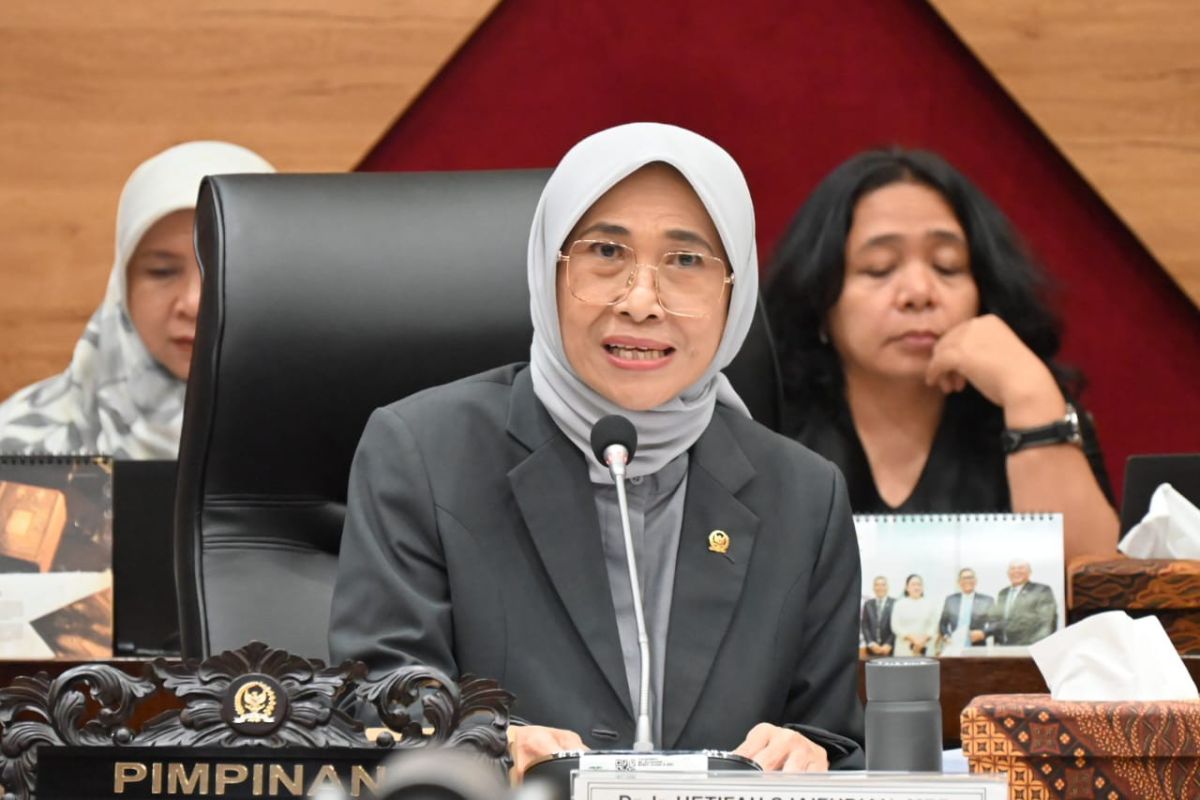
Jakarta (ANTARA) - Chair of Commission X of the Indonesian House of Representatives, Hetifah Sjaifudian, believes that transforming academic programmes is more appropriate than mass closures as planned by the Ministry of Education, Higher Education, Science, and Technology (Kemendiktisaintek).
Hetifah, as stated in a press release received in Jakarta on Monday, emphasised that universities must not be reduced to mere suppliers of labour. Plans for closing programmes require caution, transparency, and robust academic studies.
“Every policy related to academic programmes must be based on comprehensive studies, not merely responding to short-term trends. The function of universities is far broader, including the development of basic sciences, culture, and the nation’s critical capacity,” she said.
She explained that programmes deemed less relevant should be revitalised through curriculum strengthening, interdisciplinary approaches, and linkages with regional potentials and local cultures.
The House member in the education sector also warned that excessive efficiency orientation risks narrowing the academic ecosystem and weakening the strategic role of universities as centres of civilisation.
Therefore, she encouraged periodic, transparent evaluations of programmes involving various stakeholders, including academics, industry, and professional associations.
“If adjustments must be made, they must be accompanied by fair transition periods and full protection for students and lecturers,” Hetifah stated.
Previously, Kemendiktisaintek invited universities to sort and even close programmes that are less relevant to future workforce needs.
Secretary General of Kemendiktisaintek, Badri Munir Sukoco, at the 2026 National Population Symposium in Badung Regency, Bali, on Thursday (23/4), said this step is taken to reduce mismatches between university graduates and industry.
“All the rectors here, with willingness, there may be some that we have to execute in not too long a time regarding programmes; we need to select, sort, and if necessary close them to increase relevance,” Badri said.
He stated that universities should deliver Indonesia towards an advanced nation through graduates who can meet future needs. However, currently, campuses tend to apply market-based strategies, namely opening programmes that are in demand by prospective students.
“As a result, there is an excess supply there. I can check as well, for example, in 2028 we will actually have an excess supply of doctors. If this is allowed, especially with maldistribution, imbalance in distribution in each region,” he said.
Kemendiktisaintek, continued Badri, found that education or teaching majors graduate around 490,000 alumni each year, while the market for prospective teachers is only 20,000 people, so the rest become educated unemployed.
For that, he invited universities, especially members of the Consortium of Universities Concerned with Population, to help compile studies on programmes that are still relevant.