
Commission VIII Views Cancellation of Online Schooling as Energy Efficiency Strategy as Strengthening Education Quality
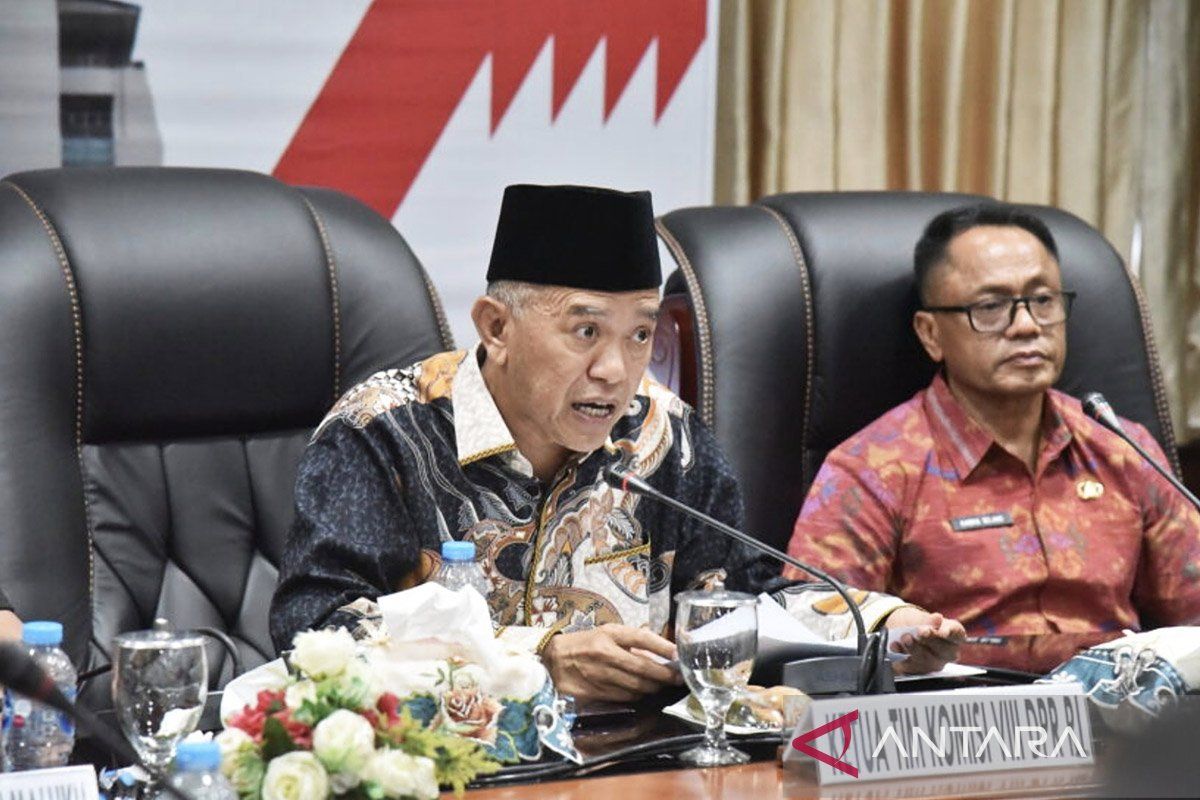
Jakarta (ANTARA) - Deputy Chairman of Commission VIII of the Indonesian House of Representatives, Singgih Januratmoko, views the cancellation of the online learning policy as an energy efficiency strategy as an important step to strengthen education quality, particularly in madrasahs and religious education environments.
According to Singgih, the government’s decision demonstrates a response to on-the-ground dynamics while addressing the aspirations of stakeholders who have long faced limitations in implementing online learning.
“We appreciate this decision. Education quality is the main foundation of human development. Policies that prioritise a balance between energy efficiency and learning quality are a necessity,” he stated in a comment in Jakarta on Thursday.
He emphasised that face-to-face learning (PTM) remains the primary effective method, especially in character building, conceptual understanding, and strengthening religious values in madrasahs.
In this context, learning not only serves as knowledge transfer but also as a means of fostering morals and spiritual character, which is a hallmark of Islamic education.
Commission VIII of the House of Representatives has noted several data points that form the basis for this policy consideration. Based on the 2024 National Assessment, there has been a 5.2-point decline in numeracy and literacy competency indices in regions with high intensity of online learning over the past three years.
Additionally, data from the Ministry of Religious Affairs’ Management Information System for Supervision shows that around 34 percent of madrasahs in 3T (disadvantaged, frontier, and outermost) areas face serious challenges with internet access and network stability, which has led to an increase in dropout rates at the Tsanawiyah and Aliyah levels.
“Online learning is not a bad thing, but if forced in conditions where infrastructure is not evenly distributed, it is feared to widen the education quality gap,” he said.
As a follow-up step, Singgih encourages the implementation of a blended learning model with a composition of 70 percent face-to-face and 30 percent online, adjusted to regional conditions.
This approach is seen as capable of maintaining learning quality while still providing space for energy efficiency without sacrificing material depth, particularly at the secondary and higher religious education levels.
He also proposes that energy efficiency budgets be redirected to more targeted data quotas, utilising the Integrated Social Welfare Data and the Ministry of Religious Affairs’ database to reach vulnerable groups.
Furthermore, Commission VIII of the House of Representatives urges the acceleration of renewable energy utilisation through the installation of rooftop solar power plants in madrasahs as a long-term solution.
Currently, out of around 83,000 madrasahs in Indonesia, only about 15 percent utilise solar energy, so opportunities for efficiency remain wide open without reducing learning hours.
Singgih affirmed that Commission VIII of the House of Representatives will continue to monitor the implementation of this policy to ensure that energy efficiency runs in tandem with improvements in equitable education quality.
“Education is a long-term investment for the nation. Therefore, every policy must consider its impact on the quality of future generations,” he stated.