
Commission VI Views No Rise in Subsidised Fuel Prices as Positive for Industrial Stability
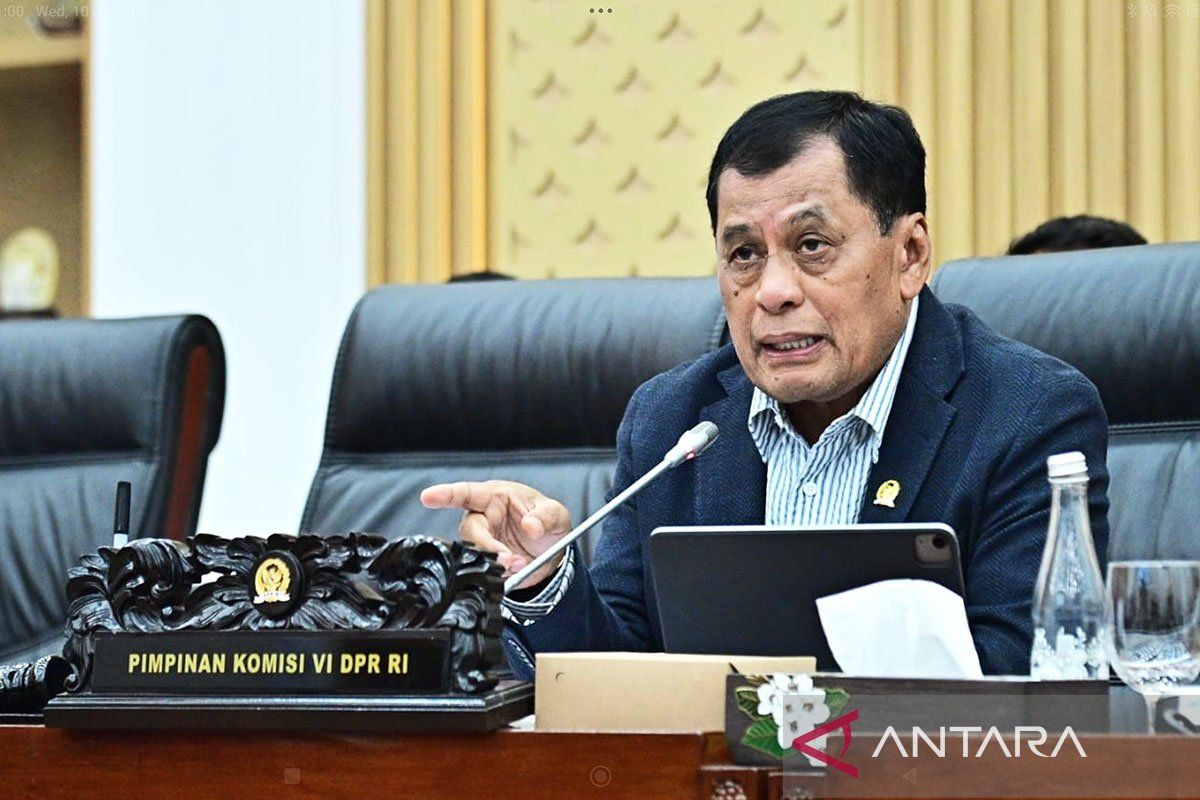
Jakarta (ANTARA) - Deputy Chairman of DPR RI Commission VI Nurdin Halid views the government’s affirmation that subsidised fuel (BBM) prices will not rise in 2026 as having a positive impact on industrial stability.
According to him, this policy serves as a strong signal in maintaining national economic stability amid global pressures. The policy is seen as capable of dampening production cost fluctuations while preserving public purchasing power.
“Energy price stability is key to maintaining logistics and production cost efficiency, thus keeping the national industry’s competitiveness intact,” said Nurdin, as per a statement received in Jakarta on Tuesday.
He views the certainty conveyed by Finance Minister Purbaya Yudhi Sadewa as providing room for business actors to formulate more measured business planning amid global economic uncertainty.
This policy is deemed not only to impact large-scale industries but also to offer protection for micro, small, and medium enterprises (UMKM) that are vulnerable to input cost fluctuations.
With controlled BBM prices, cost pressures are believed to be minimised, allowing business actors space to maintain profit margins and ensure operational continuity.
On the other hand, energy price stability also contributes to curbing inflationary pressures and keeping domestic consumption strong.
Nevertheless, the legislator in charge of trade and investment affairs stressed that the effectiveness of the subsidy policy greatly depends on its targeting accuracy and discipline in its use.
According to Nurdin, without optimal oversight, the state’s fiscal burden could increase and reduce the government’s policy space moving forward.
“Subsidies must be used wisely and on target. This is a social protection instrument, not to be misused,” he said.
He urged the government to strengthen the subsidised BBM distribution monitoring system to prevent leaks, while ensuring its benefits are truly felt by entitled communities.
He emphasised that policy consistency and good governance will be key to maintaining national economic stability.
This certainty on subsidised BBM prices should be seen as an opportunity to strengthen national industrial resilience. “With maintained stability, industry has the chance to grow more resilient and competitive amid global economic dynamics,” said Nurdin.
Previously, Finance Minister Purbaya assured that subsidised BBM prices would not experience increases until the end of this year, even though world oil prices continue to rise due to the escalation of the US-Israel and Iran conflict.
However, he could not predict or guarantee the dynamics of non-subsidised BBM prices because those commodities are not included in those receiving price relief from the government.
“We are ready not to raise (prices) until the end of the year for subsidised BBM, yes, assuming oil prices at 100 US dollars per barrel until the end of the year, already calculated on average,” said Purbaya in a working meeting with DPR RI Commission XI in Jakarta on Monday (6/4).