
Commission VI Deputy Chair: Village Cooperative Commercial Vehicle Imports Must Align with Constitution
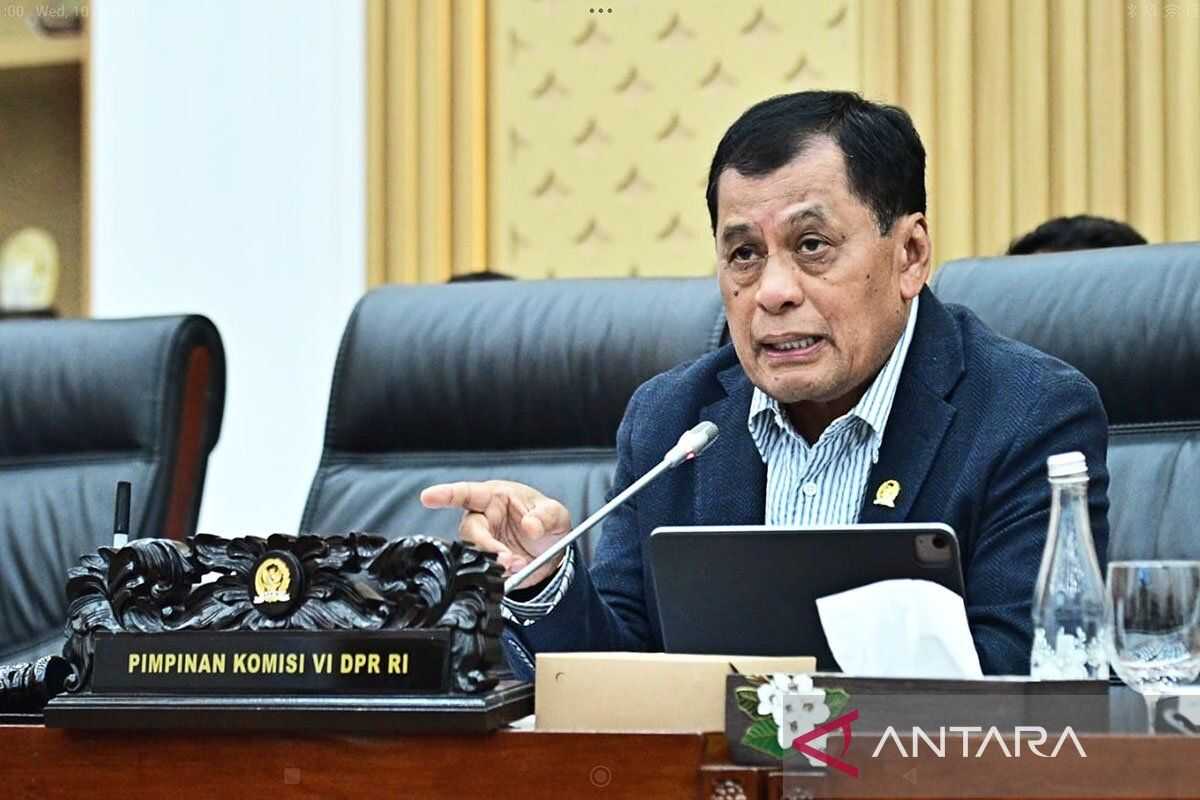
Jakarta (ANTARA) — Deputy Chairman of House of Representatives Commission VI Nurdin Halid has stated that the plan to import 105,000 commercial vehicles for the operations of the Merah Putih Village/Sub-district Cooperatives must align with the 1945 Constitution of the Republic of Indonesia.
Halid, in a statement received in Jakarta on Sunday, said the imports must not deviate from the mandate of Article 33 of the 1945 Constitution, which stipulates that the economy shall be organised as a collective endeavour and utilised to the greatest extent for the people’s prosperity.
“Cooperatives are the backbone of the national economy, but their strengthening must not contradict the spirit of Article 33. Every rupiah of state expenditure must ensure maximum benefit for the people and strengthen the nation’s economic foundations,” he said.
In this context, he reminded that state spending should serve as an instrument to strengthen national production capacity, increase domestic added value, and create employment.
According to him, policies involving very large budget allocations must not be decided solely on the basis of price efficiency but must comprehensively account for their impact on national industry, the workforce, and the domestic economic structure.
He acknowledged that strengthening village cooperatives is indeed a strategic agenda to shorten distribution chains and bolster the people’s economy.
However, if the vehicle procurement is carried out through mass imports, the government is expected to transparently explain the technical reasons and why domestic production capacity is deemed unable to meet the requirement.
“We must not allow a situation where cooperatives are strengthened but the national automotive industry loses its momentum,” Halid said.
Furthermore, he questioned whether a comprehensive study had been conducted on the potential involvement of domestic industry, including schemes for increasing the domestic component level (TKDN), production partnerships, and local assembly.
The government is expected to open dialogue with industry players so that decisions taken do not produce long-term counterproductive effects on the national industrial self-reliance agenda.
He further affirmed that House Commission VI would closely oversee this policy.
Halid’s statement was made in response to the planned procurement of approximately 105,000 commercial vehicles from India through state-owned PT Agrinas Pangan Nusantara (Persero), valued at Rp24.66 trillion.
The commercial vehicle procurement is intended to support the logistics transport operations of the Merah Putih Village/Sub-district Cooperatives.
News of the import move by Agrinas was announced by Indian automotive company Mahindra and Mahindra Ltd (M&M) on its corporate website on 4 February 2026.
On 20 February 2026, Agrinas Pangan Nusantara Chief Executive Joao Angelo De Sousa Mota confirmed to domestic media the import of 105,000 vehicles from the Indian company.
The hundreds of thousands of vehicles comprise 35,000 units of 4x4 pick-up trucks from M&M, followed by 35,000 units of 4x4 pick-ups and 35,000 units of six-wheeled trucks from Tata Motors.