
Commission V highlights unresolved congestion issues during Eid exodus: Jakarta-Merak to Merak-Bakauheni toll roads
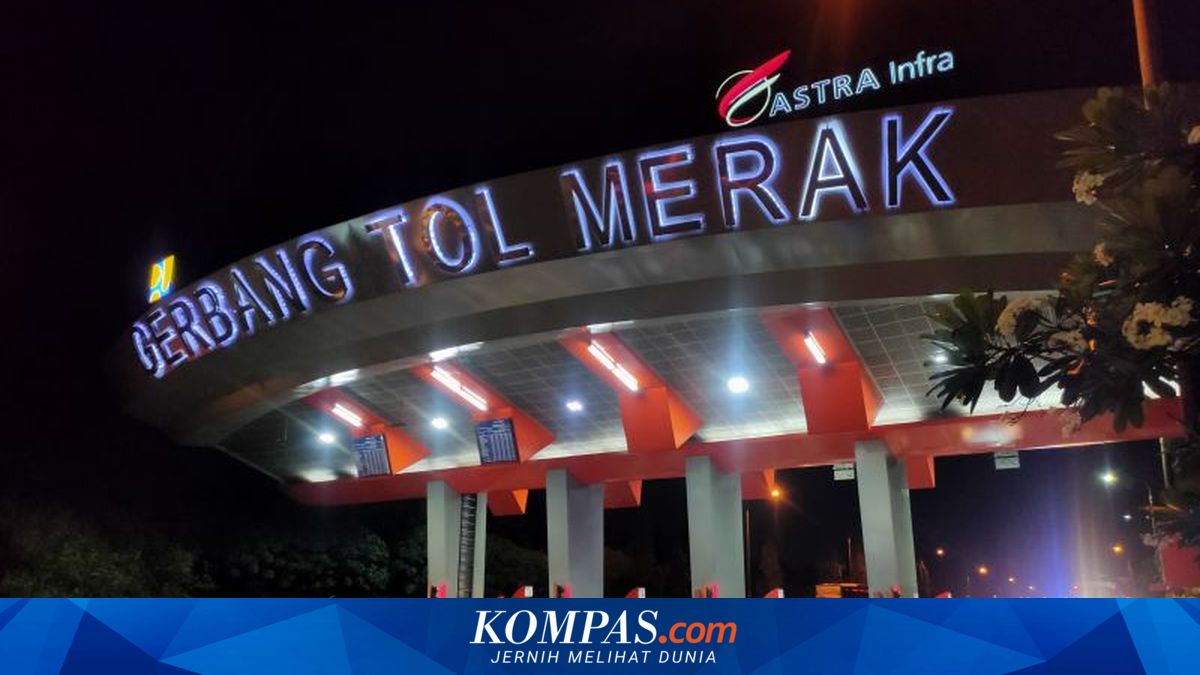
JAKARTA — The chairman of Commission V of the Indonesian House of Representatives, Lasarus, has highlighted numerous congestion points that persistently emerge during the annual Eid exodus season and have not been successfully resolved by the government.
The consistently congested areas during the exodus include the Jakarta-Merak toll road, the Cipali toll road, the Merak-Bakauheni ferry terminal, and the Ketapang-Gilimanuk ferry terminal.
“It feels as though we never finish here, like someone who fails their semester credits at these particular locations year after year,” said Lasarus during a coordination meeting on preparations for the 2026 Eid exodus with the government on Wednesday (11 March 2026).
Lasarus emphasised that these transport hubs represent recurring problems that emerge every year during the exodus season.
He therefore requested that the government strengthen cross-sector coordination in the days leading up to the 2026 Eid exodus.
According to him, coordination must take place between ministries and institutions, regional governments, transport operators, and toll road operators, particularly at the transport hubs that have historically experienced congestion.
“In the remaining days ahead, the government is obliged to consolidate cross-sector coordination amongst ministries and institutions, regional governments, transport operators, and toll road operators, particularly at transport service hubs that experience congestion and traffic jams every year,” he stated.
“Commission V will conduct a working visit tomorrow to the Merak-Bakauheni ferry crossing whilst examining the toll road access from Jakarta to Merak port,” he concluded.
In earlier reporting, the Coordinating Minister for Infrastructure and Regional Development Agus Harimurti Yudhoyono (AHY) estimated that the peak of the 2026 Eid exodus would occur in two waves: 14-15 March and 18-19 March 2026.
“For the return traffic, the peak is estimated to fall on 24 and 25 March, followed by a second peak on 28 and 29 March,” said AHY at a press conference at the Palace in Jakarta on Wednesday.
AHY stated that the number of journeys during the Eid exodus period this year is estimated to reach 139.3 million journeys.
He noted that population movement is expected to be heaviest towards Central Java, East Java, West Java, the Special Region of Yogyakarta, and South Sulawesi.
In terms of transport modes, private vehicles remain the primary choice for people returning to their hometowns.
Besides private cars, motorcycles and public buses are also widely used during the exodus.
“It can be imagined that when discussing the exodus, the main burden is on roads, whether toll roads, national roads, or arterial roads that will then be used to reach destination districts and cities,” said AHY.