
Commission III Member Says Asset Forfeiture Bill Could Violate the Constitution
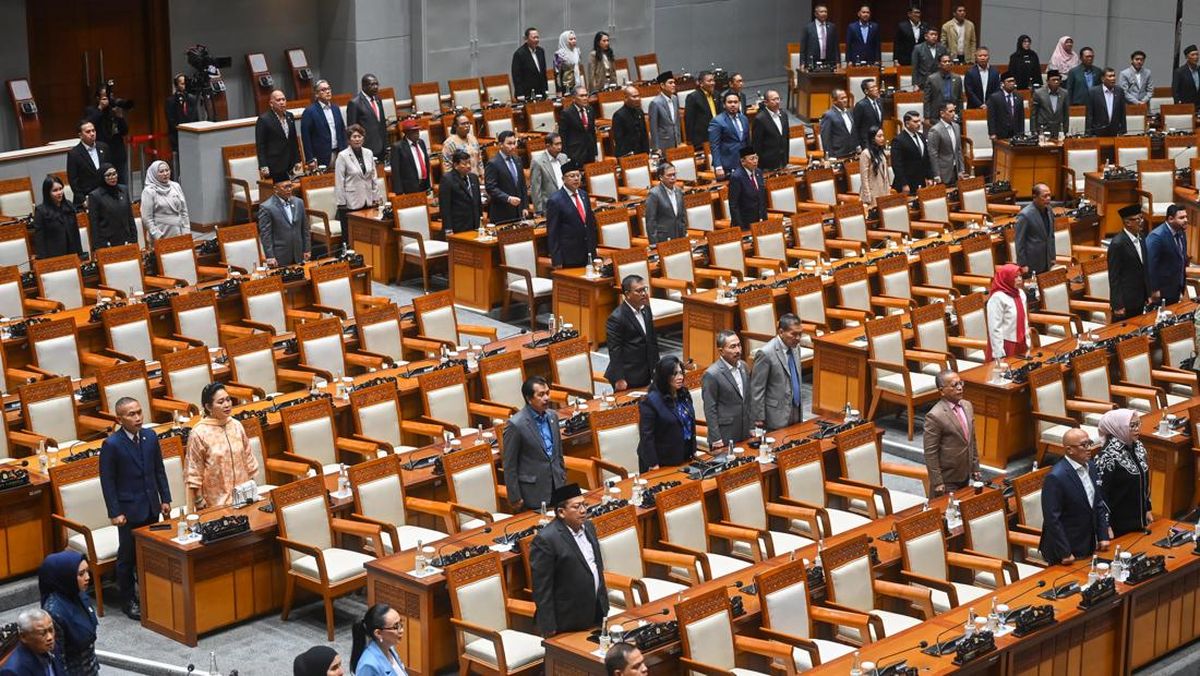
A member of Commission III of the Indonesian House of Representatives (DPR RI), Soedeson Tandra, has cautioned that the Asset Forfeiture Bill could infringe upon several legal principles and constitutional provisions.
Soedeson particularly highlighted the mechanism for asset forfeiture that can be carried out without a criminal court decision or on a non-conviction based approach.
According to Soedeson, the mechanism outlined in the draft bill potentially undermines the character of Indonesian law, which adheres to a civil law system and is in personam (focused on the person) rather than in rem (focused on the thing).
“This has been a concern of mine from the beginning. Because asset forfeiture focuses on in rem, on the property. Yet our system is civil law, ‘whoever’, in personam,” Soedeson stated in his comments on Thursday (9/4).
On the other hand, he said, the mechanism for forfeiture without criminal proceedings also risks violating Article 28 of the 1945 Constitution. Indeed, every citizen, without exception, has the right to protection of their property.
Referring to Article 6 of the Basic Law on Judicial Power, Soedeson continued, a person cannot be declared guilty without a valid judge’s decision.
“Citizens, including criminals, have their property protected by the Constitution. A person cannot be declared guilty without a judge’s decision. That’s clear,” said the Golkar politician.
Meanwhile, from a civil law perspective, Soedeson noted, the transfer of rights over property in Indonesia has rigid procedures, starting from agreements to administrative handover processes (levering).
He is concerned that if the Asset Forfeiture Bill ignores these processes, the state would be taking actions that are legally considered premature.
“Seize first, then forfeit after a decision. Even the word ‘forfeit’ without due process is wrong to me. Law is a process; it can’t suddenly take something just because it’s excessive. That’s very dangerous,” he remarked.
In addition to the forfeiture issue, Soedeson also cautioned against the idea of eliminating the element of state loss and focusing only on fraud offences. According to him, without clear boundaries on state loss, law enforcement would be uncontrolled and target civil servants.
“If state loss is removed and only fraud is addressed, we’re all in trouble. This could mean all civil servants could be arrested by the police. State loss provides boundaries, something concrete against unlawful actions,” he said.
Commission III of the DPR is currently holding marathon hearings with experts, practitioners, and academics to gather input for drafting the Asset Forfeiture Bill. However, the DPR has not yet signalled when the bill will begin discussions with the government.