
Commission II Affirms that Revision of Election Law is Drafted by DPR, PT Scheme Options Under Discussion
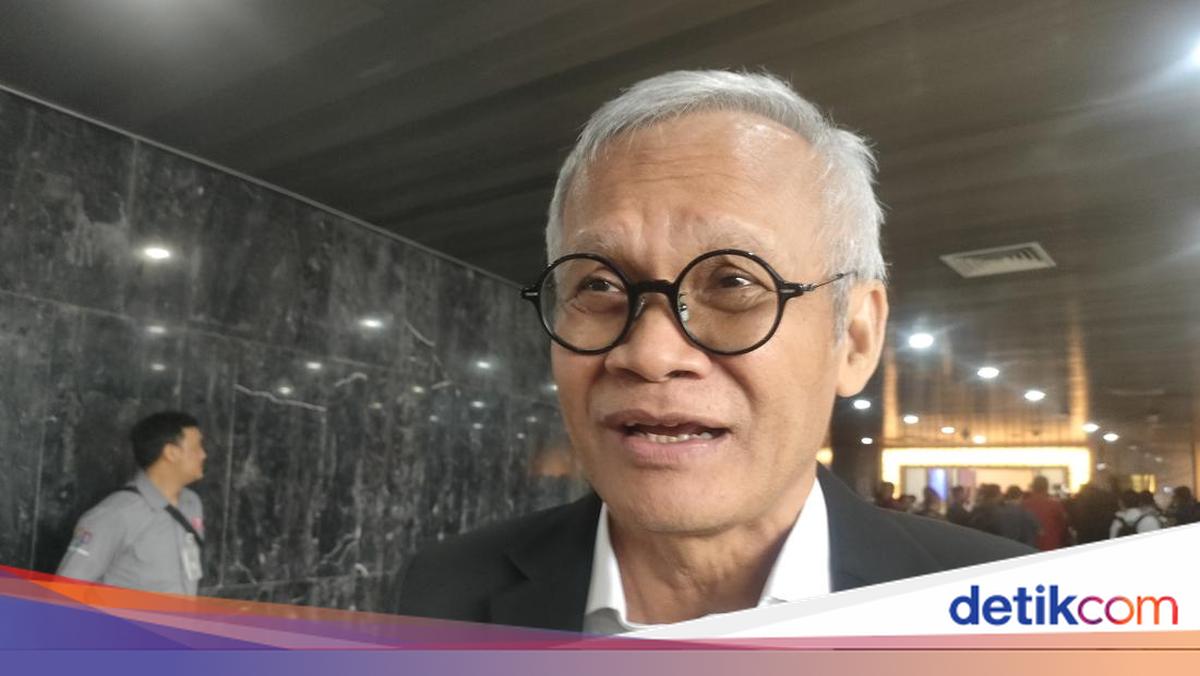
Deputy Chairman of Commission II of the Indonesian House of Representatives (DPR RI), Aria Bima, stated that to date, the DPR remains the proponent of the revision to the Election Law (UU on Pemilu). He said the Election Bill is included in this year’s Priority National Legislation Programme (Prolegnas).
“Up to today, the DPR RI, within the Prolegnas, the Election Bill—whether for legislative elections, presidential elections, and regional head elections, or codification—is part of the DPR’s initiative Prolegnas,” said Aria Bima at the parliamentary complex in Senayan, Jakarta, on Tuesday (12/5/2026).
Aria Bima stated that his side is following the decisions already taken in the plenary session. Nevertheless, he assessed that forming the Working Committee (Panja) for the Election Bill is not easy because all faction opinions must be combined into a single Inventory of Problems List (DIM).
“Up to today, it’s still the DPR’s proposal. We’re following the existing legal basis, the plenary session decision, in Commission II. Regarding the working committee, it’s indeed not easy because we have one DIM. For DPR initiatives, we have one DIM. We can’t have different DIMs between one faction and another,” said Aria Bima.
This PDI Perjuangan politician stated that the preparation of the DIM from the DPR must be unanimous. It’s a different story, he continued, if the Election Bill is a government initiative, then each faction can submit a different DIM.
“Our DIM with the government. This is one of them, besides in drafting, we as one institution. It’s different if it’s a government initiative; we can have faction DIMs. This is also one thing that doesn’t make it easy for us to compile the bill draft,” said Aria Bima.
“Our debates, differing opinions, democracy, right, are in the bill drafting. Once it’s a bill, there’s one perception. So, friends, if there are those saying delays, the discussion is persistent, tough, indeed it’s not easy to translate this Constitutional Court decision,” he added.
He exemplified the parliamentary threshold or parliamentary threshold (PT) proposed by the DPR must be unanimous. However, according to Aria, so far, differing views from factions in the DPR have emerged in determining the threshold.
“Secondly, for DPR initiatives, we have one inventory of problems list, for example, on the parliamentary threshold. It must be one DIM. Whether zero, four, five, seven, the DPR can’t differ. Right? Some references are per commission there are two. There are 13, meaning at least 26 DPR members. So, that’s the measure of 4 per cent from 580,” explained Aria Bima.
In the threshold discussion, a proposal also emerged for two or three political parties to merge post-legislative election into one party. This provision applies to the next election in 2034.
“For example, because less than two (in the commission) is not effective. There can’t be two, three because three times 13 is 39, meaning above five, six per cent. But the Constitutional Court decision is zero per cent. Some propose that before the election, two or three political parties have agreed to merge post-legislative election into one party,” said Aria Bima.
“But merging, the others disappear. For the 2034 election, they can’t be three parties anymore, still one party. Some have such a formulation so that what is meant is no parliamentary threshold limit but a minimum number of factions limit, but combined. Like earlier, can be three seats per commission from 39. Things like this are what we discuss lively in the bill draft and expert bodies,” he said.
He mentioned that Commission II of the DPR RI continues to receive aspirations from various parties regarding the preparation of the Election Bill. Commission II of the DPR will involve experts, academics, and non-governmental organisations to discuss the bill draft well.
“Including legislative elections for regional councils and regional head elections. This, in my opinion, today we agreed to invite experts from universities and still NGOs, we take seniors like Mr Ramlan Subakti and friends from Muhammadiyah for this period in-depth. Hopefully, there are qualitative improvements in us compiling together with expert bodies for the bill draft,” he added.