
Commission I: No Legal Basis to Grant Unrestricted Air Access to Foreigners
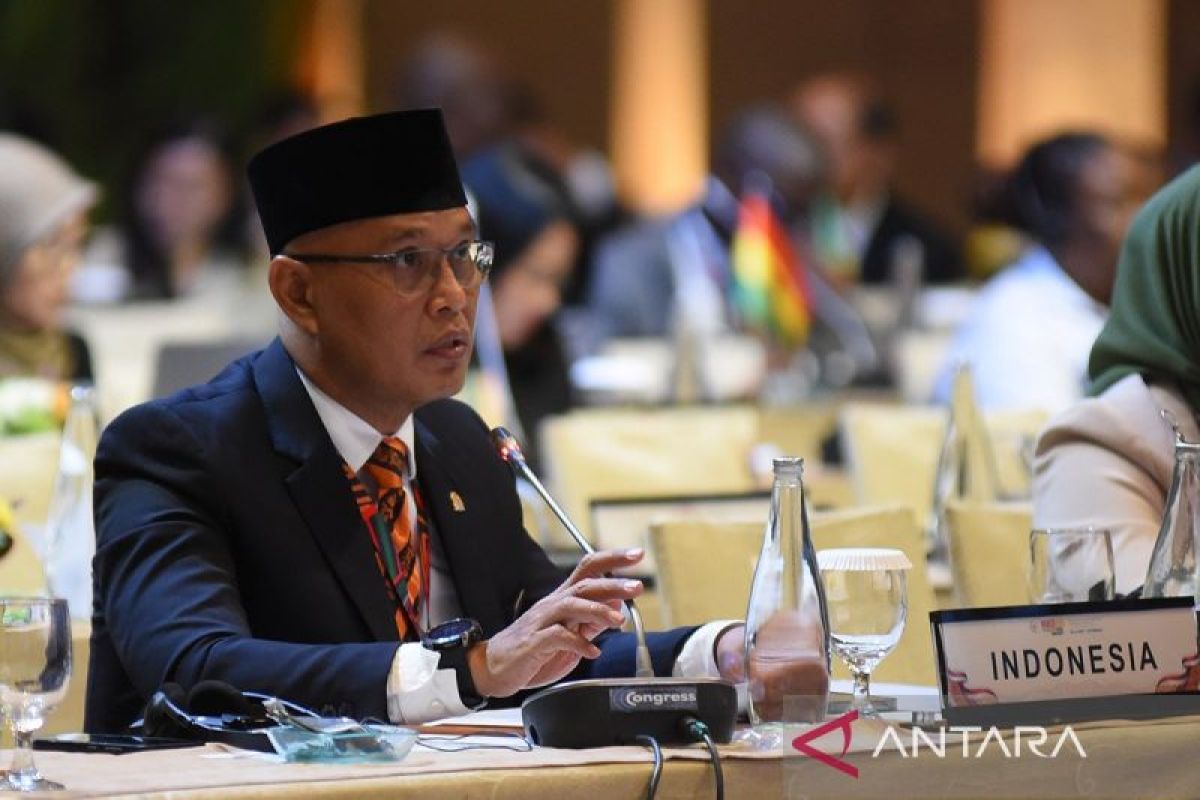
Jakarta (ANTARA) - Deputy Chairman of Commission I of the House of Representatives Sukamta has reminded that there is no legal basis permitting the granting of unrestricted access to the national airspace to foreign parties.
Sukamta, in a statement in Jakarta on Monday, responded to the circulating rumours regarding an agreement that would allow the United States (US) to freely traverse Indonesian airspace.
In principle, he explained, Indonesia opens avenues for defence cooperation with various countries, including the US, as part of efforts to strengthen national capacity.
However, all forms of such cooperation must remain within the framework of national interests, respect the principle of sovereignty, and not interfere with Indonesia’s free and active foreign policy.
“Commission I of the House of Representatives will continue to carry out its active and constructive oversight function and ensure that every international cooperation aligns with the constitution and the interests of the Indonesian people,” Sukamta said.
To date, according to him, the information circulating about the agreement remains speculative and is not supported by an official statement from the Indonesian Government. Therefore, it is important for all parties not to draw premature conclusions before a comprehensive clarification from the relevant authorities is available.
He stated that national interests and state sovereignty must be the top priority in every policy. Indonesia’s airspace, according to him, is an inseparable part of the state’s sovereignty.
Based on both national and international law, he emphasised that every foreign aviation activity, especially those of a military nature, must comply with strict permitting mechanisms, including diplomatic clearance and security clearance.
He noted that Indonesia holds a strategic position in the Indo-Pacific region and is committed to maintaining regional stability. Therefore, every policy related to foreign military access must be carefully considered, including its implications for regional geopolitical balance.
“Government transparency is key to maintaining public trust and avoiding misperceptions, both domestically and internationally,” he said.
Commission I of the House of Representatives, according to Sukamta, has a mandate to oversee defence policies and foreign relations. If there is an agreement or strategic pact that impacts aspects of state sovereignty and defence, he believes it should be consulted and included in the House of Representatives’ oversight mechanism in accordance with applicable laws and regulations.
He conveyed the mandate of Article 10 of Law No. 24 of 2000 on International Treaties and Constitutional Court Decision No. 13/PUU/XVI of 2018, which grants the House of Representatives authority in ratifying international agreements and the forms of such ratification.
“The government is expected to provide complete, proportionate, and fact-based explanations,” he said.