
Commentary: As US wades into Iran, its pivot to Asia lies in tatters
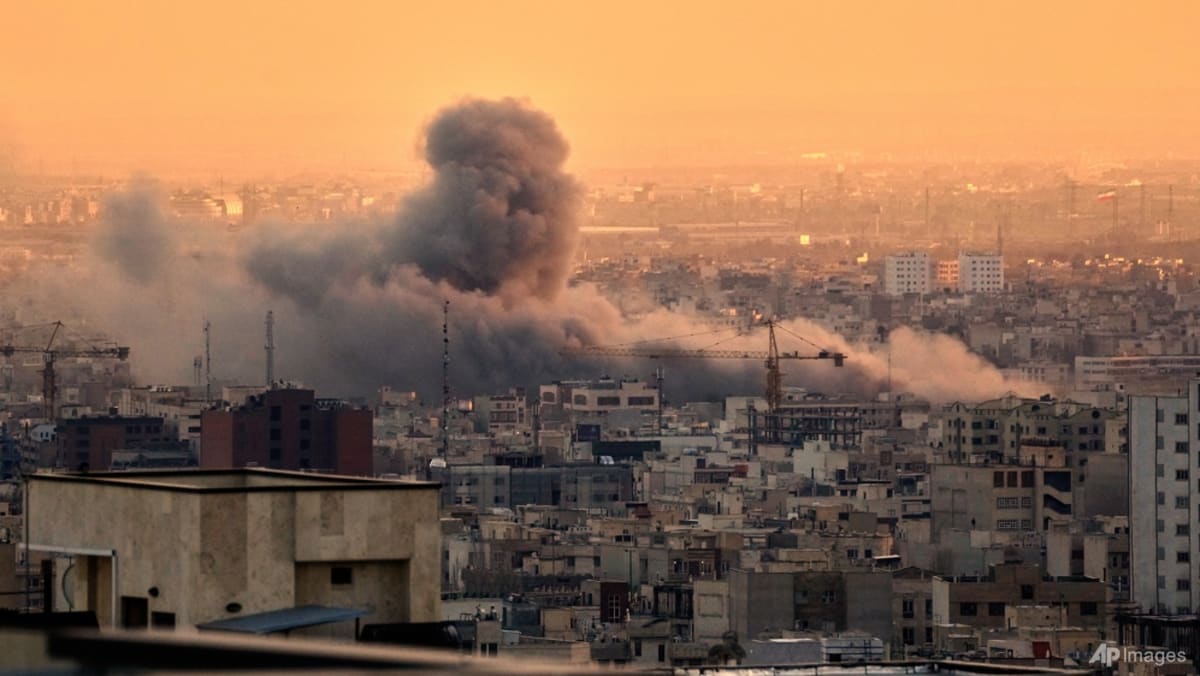
Commentary: As US wades into Iran, its pivot to Asia lies in tatters
A long war in Iran will hurt America’s ability to deter China, says Kevin Chen from the S Rajaratnam School of International Studies.
SINGAPORE: The Trump administration’s “pivot to Asia” did not last long. In May 2025, Secretary of Defense Pete Hegseth declared that America is “here to stay” in the “priority theatre” of the Indo-Pacific. By the end of the year, the Trump administration’s National Security Strategy told a different story, prioritising the Western Hemisphere over the Indo-Pacific.
Now, with the US waging an escalating war against Iran, its security commitment to Asia is in doubt again.
Observers of the region have warned about the shortcomings of American engagement for years, including lacklustre economic ties and a tendency to view the region through the prism of US-China competition. Security engagement and deterring China were the only consistent pillars of the crumbling strategy.
The question must be asked: What trade-offs will this have for the US’ ability to deter China from aggressive actions in Asia? The answer is sobering.
While some contend that there is strategic sense in trying to shift the Middle East away from China’s economic orbit, the evidence points to the US walking into a conflict that has no clear end and will leave it less prepared for a potential showdown with Beijing. Three implications stand out.
COSTS FOR US STRATEGY IN ASIA
The first is the risk of the conflict intensifying and broadening. The US and Israel aim to destroy Iran’s missile launchers before Iran’s missiles overwhelm their finite defence munitions. Iran, meanwhile, aims to expand the war to the Gulf states, increasing the costs to force Washington to back off.
Washington wants to make this war a sprint, while Tehran wants to make it a costly melee.
No one can say when the US decides that its objectives have been met. Nonetheless, it would be difficult for Washington to pay attention to Asia if its strategic bandwidth is held hostage by the Middle East.
The second is the rapid depletion of American munition stocks. On Wednesday (Mar 4), US Central Command said that they had hit nearly 2,000 targets inside Iran. Observers have cautioned that the US is depleting its stockpile of Tomahawk cruise missiles that could be necessary for a conflict with China.
US missile defence munitions present a serious problem as well. During last year’s 12-day war between Israel and Iran, US stockpiles of missile interceptors were “severely affected”, with more than 150 Terminal High Altitude Defense (THAAD) Interceptor missiles expended. Many more will likely be used in the current fight against Iran, which has been estimated to have fired over 500 ballistic missiles and over 2,000 drones by Wednesday.
To be fair, the US-Israeli strikes appear to have been effective in damaging Iran’s offensive capabilities. US officials noted that the rate of Iran’s ballistic missile launches were down 86 per cent from February 28, with a 23 per cent decrease on Mar 4 alone. Reports have also pointed to a supplemental budget request worth US$50 billion being fast-tracked to replenish US missile stockpiles.
Inherently, US forces are not about to run out of munitions. However, every missile that it uses in the Middle East will take time and money to replace.
Third, there is the issue of the broader economic and political impacts of a war in the Middle East. Shipping through the Strait of Hormuz, which includes one-fifth of global oil supplies and large quantities of liquefied natural gas (LNG), virtually halted. Maritime insurers have also begun to cancel war risk cover and raise the premiums for vessels in the Gulf, threatening broader supply shocks.
The implications of a surge in energy prices alone would be devastating for key US allies such as Japan and South Korea, which import much of their energy needs. The US itself is not immune from price disruptions, even though it produces a lot of oil and gas. In a midterm election year, high oil prices and inflation levels could have severe implications for government cohesion and readiness when it comes to deterrence.
THE LONGER IT LASTS, THE BETTER?
Some observers have argued that Washington’s pressure on Tehran is part of a broader gambit against Beijing. Their reasoning is that the orientation of the Middle East will be a key determinant of whether the US can prevail in a confrontation against China, not only by cutting off a key oil source but also by economically isolating it.
However, such arguments overstate the relationship between Tehran and Beijing.
China has relatively few direct investments in Iran. While Iran depends on China to buy almost all of its oil, it only accounts for 13 per cent of China’s of crude oil imports. Beijing has a diversified energy portfolio with alternative sources such as Russia.
China might even see a weakened Iranian regime as an opportunity to increase the economic influence it has with the country.
Indeed, beyond pushing Tehran to keep the Strait of Hormuz open to shipping, Chinese leaders appear content to sit back and watch the conflict unfold. Every missile fired is one less munition in the US stockpile, while the economic and political ramifications of the war will only grow with time.
By the time the US disentangles itself from the conflict, it may be too exhausted and under-equipped to properly deter China. The best-case scenario for Washington would be a swift end to the war, but no such outcome is visible on the horizon.
Kevin Chen is an Associate Research Fellow with the US Programme at the S Rajaratnam School of International Studies (RSIS), Nanyang Technological University (NTU), Singapore. He writes a monthly column for CNA, published every first Friday.