
Commander's Alert Level 1 Directive Attracts Scrutiny
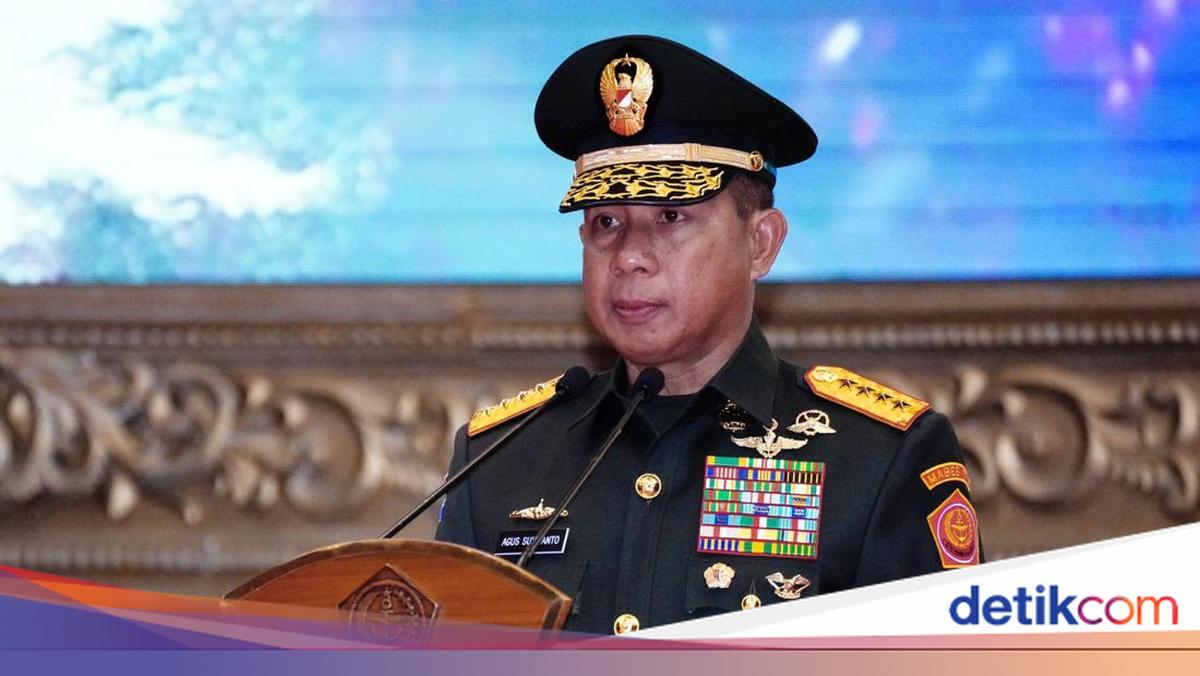
Military Commander in Chief General Agus Subiyanto issued an alert level 1 directive to all branches of the Armed Forces (TNI) in response to escalating conflict in the Middle East. The directive has attracted scrutiny from various quarters.
According to reports compiled on Tuesday (10 March 2026), the Commander’s order was contained in Military Commander Telegram No TR/283/2026, directed at all subordinate units. The alert level 1 was issued to anticipate developments in the domestic situation resulting from the Middle Eastern regional conflict.
The document was signed by the Military Commander’s Operations Assistant Lieutenant General Bobby Rinal Makmun on 1 March 2026. There were seven directives issued to all Armed Forces units.
TNI Public Affairs Chief Brigadier General Aulia Dwi Nasrullah explained that the implementation of alert level 1 constitutes a TNI function mandated by the TNI Law. He stated the protection in question refers to safeguarding the nation and state from threats.
“One of TNI’s principal duties is to protect all the nation and the entire Indonesian archipelago from threats and disturbances to national integrity,” said Brigadier General Aulia when contacted on Sunday (8 March).
Aulia stated that alert level 1 represents TNI’s readiness in facing escalating conflict. Such conflict, he noted, extends beyond national scope to the international arena, as seen in the Middle East.
“TNI operates professionally and responsively, demonstrated through constantly maintaining capability and strength to remain operationally ready, and prepared to anticipate developments in the strategic international, regional and national environment,” he said.
Civil Society Coalition Criticises Alert Level 1
The Civil Society Coalition responded to the Commander’s directive. The civil society coalition argued the telegram does not align with the constitution.
This coalition comprises the Indonesia RISK Centre, Imparsial, YLBHI, KontraS and Amnesty International Indonesia. The coalition reminded that military force deployment falls under presidential authority.
“The coalition believes the telegram does not align with the Constitution, as military force deployment should be under the President’s authority, not the Military Commander’s, given that the President holds supreme authority over the army, navy and air force (Article 10 of the 1945 Constitution),” stated Imparsial Chair Ardi Manto Adiputra to reporters on Monday (9 March).
The coalition explained this is reinforced in Article 17 of Law No 34 of 2004 on TNI, which confirms military deployment authority rests with the President. TNI deployment should be conducted by the President and Parliament.
“Assessment of national situation developments and evolving geopolitical dynamics, as well as TNI deployment, should be conducted by the President and Parliament as representatives of the people. Therefore, the military commander cannot and must not make assessments of the current situation,” he said.
In this context, TNI serves as a state defence tool. Consequently, the Commander’s decision is deemed misguided.
“TNI is the state’s defence apparatus, so its function is merely to implement the state defence policy established by the President. Therefore, it is incorrect and misguided for the Military Commander to assess the situation and deploy the military,” he said.
Furthermore, the coalition sees no current urgency for alert status. Current domestic conditions remain controlled.
“The coalition believes the current urgency for military involvement with alert level 1 status is not yet required. The current situation and condition of national defence and security remain under control by the civilian government and law enforcement apparatus,” he said.
Parliament Members Question Alert Level 1
Commission I member TB Hasanuddin highlighted the telegram issued by the Commander. TB Hasanuddin questioned why the telegram circulated publicly, when it should remain internal to TNI.
“The problem is this. An alert is two things. First, it is purely TNI internal affairs. Second, it is confidential in nature,” TB Hasanuddin told reporters on Monday (9 March).
TB Hasanuddin stated that alert status disclosed to the public only generates public anxiety. The retired major general believed alertness should remain within TNI so forces remain prepared for all contingencies.
“Actually, look, whatever the reason for alert—and the reason could be, say, there might be a disaster, for example a flood. Then alert level 1 is declared. Okay, that’s fine,” he said.
“But if, say, there will be war, and this is announced, there’s no point. No point in my view. Why should the public know?” he asked.
The PDI-P legislator believed publicising alert level 1 only generates public anxiety. TB Hasanuddin noted the public became worried because of the TNI telegram’s circulation.
“Let only the TNI soldiers know to prepare themselves. The public just becomes more anxious. It will actually generate public concern,” he added.
The former senior military officer believed alert status determination was normal for troop control. TB Hasanuddin considered TNI alert status could extend to disaster management.
“So look. Alert status determination is a command and control mechanism to prepare TNI soldiers for specific tasks. And this is routine in TNI. No need to overthink it, it’s normal,” said TB Hasanuddin.
“So the Military Commander declares alert level 1, then it’s alert level 1. Not just for war; sometimes there are disasters. For example, in Sumatra, TNI units in several regional commands were placed on alert level 1,” he added.
Commission I Vice Chair Says Alert Level 1 Addresses Concerns
Commission I Vice Chair Anton Sukartono also commented on the telegram. Anton believed the military’s alert level 1 directive addresses concerns that Middle East conflict might expand.
“The current war situation between Iran and America is raising concerns not only for those in the conflict zone,” he stated.