
Coastal Waste Under Global Spotlight as Bali Urged to Clean Up
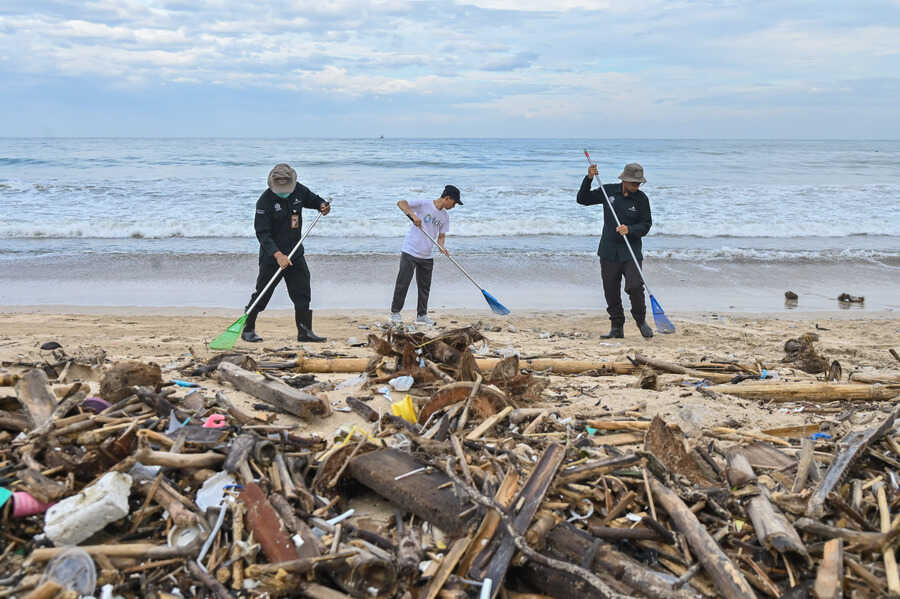
Minister of Environment/HOD of the Environmental Management Agency (KLH/BPLH) Hanif Faisol Nurofiq stressed that Bali plays a crucial role in the national transformation of waste management. The cleanliness of Bali’s coastal areas is regarded not only as an environmental issue but also directly linked to Indonesia’s image abroad.
He said this during a beach-cleaning action in Jimbaran, Badung regency. He reminded that Bali represents Indonesia for international tourists.
‘Bali is Indonesia’s showcase, and its beaches reflect our nation’s face. When beaches are clean, Indonesia is respected as a country that cares for the environment. But if polluted with waste, our reputation also suffers,’ Hanif said on Friday (6/3).
As an international tourist destination, Bali faces serious challenges related to waste. The government aims to achieve a national waste management rate of 63.41% by 2026. According to Hanif, that target must be realised through concrete steps in strategic regions, including Bali.
He also warned that national waste generation is projected to continue rising. By 2029, it is expected to reach 146,780 tonnes per day. Therefore, waste management must be strengthened from the source.
Hanif emphasised the importance of accelerating household waste sorting and strengthening the management system in tourist areas. ‘Bali must speed up household waste sorting, which can be done through composting or modern treatment technology. The waste-bank network also needs expansion, and tourist areas such as hotels, restaurants, and cafes must have disciplined sorting systems so that waste does not burden landfills or pollute the environment,’ he said.
During the visit, Hanif also inspected several source-based waste-management sites in Bali, including the Integrated Waste Management Facility (TPST) Tahura 1 in Denpasar, Kesiman Petilan village in Denpasar, Bongkasa Pertiwi village in Badung, and the 3R Pudak Mesari TPS in Darmasaba, Badung. At these locations he saw firsthand the household- and community-level waste sorting practices.
Although progress has been made, Hanif judged that the waste-management challenges in Bali are still large and need to be accelerated toward resolution.
He also praised the support from the Environmental Fund Management Agency (BPDLH) which has provided a wood chipper to Badung Regency to strengthen waste management in the tourism area.
‘I hope this support will enhance regional capacity to resolve the waste problem, so Bali’s waste issues can be tackled quickly,’ Hanif added.
Through collaboration between the central government, local government, the business sector, and the community, Bali is hoped to become a model of sustainable waste management while preserving the coastal ecosystem. This effort also aligns with the Indonesia Safe, Healthy, Clean, and Beautiful movement (ASRI). (E-4)