
Coal Prices Stagnate as Turkey's Transit Blockade and Shifting Asian Demand Loom
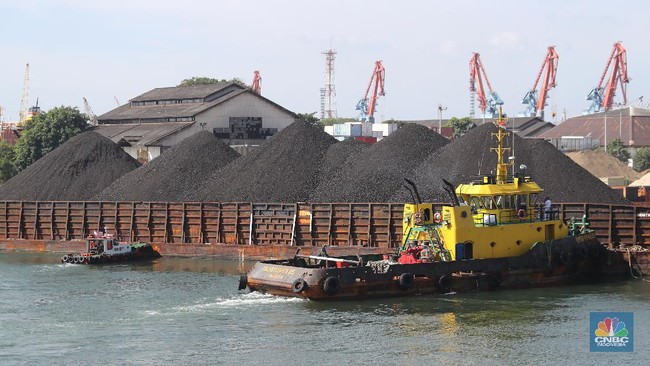
Jakarta, CNBC Indonesia - Coal prices were unchanged amid rising oil prices and concerns over distribution and supply disruptions.
According to Refinitiv, the price of coal in trading on Tuesday (10/8/2026) closed at US$134 per ton, unmoved. Coal prices had previously strengthened, supported by oil and tightening supply.
US West Texas Intermediate (WTI) crude oil futures closed up 1.3% at US$83.20 per barrel. Meanwhile, Brent crude, the international benchmark, rose about 1.4% to US$88.91 per barrel. Oil and coal are substitute commodities, so their prices influence one another.
Turkey has begun blocking a number of commercial vessels from entering the Black Sea en route to the Russian port of Novorossiysk. This move exacerbates disruptions on two commodity trade routes already shaken by a series of attacks. Turkey’s Directorate General of Coastal Safety has informed several ships that transit permits for voyages to Novorossiysk have not been issued, while permit applications through the Dardanelles Strait are taking longer. Vessels heading to Ukrainian ports are also affected, while traffic to Bulgarian and Turkish ports continues as normal.
This transit tightening compounds a sharp decline in Russian coal exports through southern ports. Coal export shipments by rail to ports reached 16.50 million tonnes in July, up 13.01% year-on-year but down 1.58% compared to June, according to data from Metals & Mining Intelligence (MMI). However, shipments to southern ports plummeted 31.18% month-on-month to 1.56 million tonnes. Conversely, the new northern port of Lavna, which has been included in the calculations, received 356,000 tonnes, surging more than 161% year-on-year and 547% compared to June. The increase was partly driven by disruptions in the southern region. Ports in the Baltic region handled 2.99 million tonnes, or about 18% of the total shipment, a volume down 5.83% month-on-month but still up 10.67% year-on-year.
MMI estimates the decline in shipments through southern ports will continue into August. Rising insurance costs and an increasing number of companies refusing shipping bookings through the Black Sea are diverting cargo flows to other routes. Additionally, Turkey’s permit restrictions are expected to slow the transit process and further delay vessel movements. A partial recovery is expected at Baltic ports and the northern route via Murmansk and Lavna, but these routes cannot fully replace the southern terminals. Moreover, longer sea voyage times will pressure shipping profit margins.
China’s coal imports surged to their highest level this year in July, but the increase is considered deceptive as it was largely driven by short-term factors unlikely to persist. Official data shows China’s coal imports reached 43.73 million tonnes in July, up 23% compared to the same period last year. The figure also increased from 42.78 million tonnes in June and was almost a third higher than this year’s low of 33.1 million tonnes in April. The import spike occurred after China tightened mine safety inspections following an accident at a mine in Shanxi province on 22 May that killed 82 people. Mine safety inspections typically suppress production in China, the world’s largest coal producer. When domestic supply decreases, China increases imports to cover the shortfall.
China’s domestic coal production in June fell 9.7% year-on-year to 380.88 million tonnes. Average daily production reached only 12.7 million tonnes, the lowest since July 2025. Production likely remained under pressure in July, with official data expected to be released next week. However, analysts in China expect August production to return to near 2025 levels. This means China’s need for imported coal could start to decline from August. China sources coal from two main channels: seaborne imports and overland imports from neighbouring countries, mainly Mongolia and partly from Russia. Seaborne imports account for about 75% of China’s total coal imports, but this share has been declining in recent years as supplies from Mongolia increase, particularly metallurgical coal for the steel industry.
Analysts at DBX Commodities estimate China’s seaborne coal imports in August will reach 31.23 million tonnes, down from 33.91 million tonnes in July. If realised, this would be the first decline in four months. The figure may still change as additional cargo data comes in, but the initial trend suggests August imports will be below July, indicating China’s import needs are starting to ease as mine safety inspections conclude. The outlook for China’s coal imports and seaborne coal prices also depends heavily on electricity demand. Official data shows thermal power generation in China rose 2.9% in the first half of 2026 compared to the same period the previous year. China’s thermal power plants mostly use coal, with a small portion using natural gas. Despite the increase in output, the share of thermal power in total electricity production continues to decline as China accelerates the development of wind and solar power plants. This signals that the surge in China’s coal imports in July may not be a new trend. If domestic production returns to normal and renewable energy continues to grow, China’s need for imported coal could weaken further.
India is also reducing its reliance on coal-fired power generation.