
Coal Prices Finally Rebound After Five-Day Slump
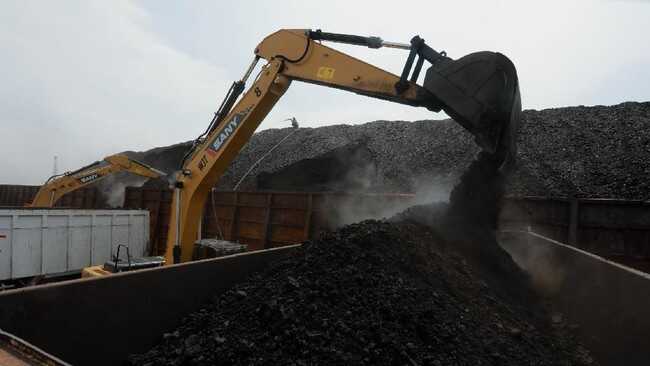
Coal prices have finally risen after falling for five consecutive days.
According to Refinitiv, coal prices on Thursday (26/2/2026) were at US$117.6, up 0.3%.
This increase breaks the negative trend of coal prices, which had fallen by 4% in the previous five consecutive days.
Thermal coal prices at ports in northern China rose due to increased import costs and tighter import supplies. The increase in import prices makes domestic coal more competitive and helps keep port prices stable or rising.
The increase is also due to increasingly limited import supplies. The availability of imported coal has decreased, including due to export restrictions and production policies in supplying countries.
Coal stocks at major ports in the Bohai region, such as Qinhuangdao, Caofeidian, Jingtang, and Huanghua, are lower than last year.
However, the price increase is being held back because trading activity is still slow as buyers consider prices too high. Many end-users are taking a wait-and-see approach, so prices are not soaring.
In addition, coal stocks at power plants are relatively high after the holiday period, so there is no urgent need to buy.
Some market participants expect prices to continue to rise if import constraints continue. However, there is a risk of limited increases if domestic production increases or demand enters a slow season.
Meanwhile, in the coking coal market, after the long Spring Festival holiday in China, the supply of coking coal has returned more quickly than demand. This creates an imbalance in the domestic coking coal market.
Supply from mines that resumed operations after the holiday is quickly returning to normal, and even increasing, while demand from coke plants and steel producers is still slow to recover as they tend to use existing stocks and are not yet aggressively buying back.
This is causing trading activity to remain sluggish and putting pressure on price negotiations as buyers are cautious and market sentiment remains weak.
On the demand side, coke and steel plants are choosing to use up existing stocks and are not immediately restocking, because industrial steel demand is still in the off-season and the weakening real estate sector is also limiting purchases.