
Coal Prices Fall Again But There Remains Positive News For Indonesia
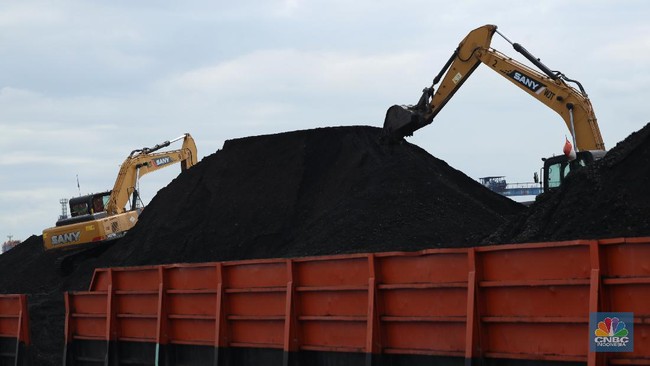
Jakarta — Coal prices have continued to decline following a brief surge amid the Middle East conflict.
According to Refinitiv, coal prices closed at US$135 per tonne, falling 1.7% during trading on Monday 16 March 2026. Coal prices have dropped 2.7% over the past two trading days.
Previously, coal prices had surged to reach US$143.8 per tonne on 9 March 2026 amid the escalating conflict and rising oil prices.
The Asia thermal coal market currently shows diverse trends. High-calorie coal prices have strengthened over recent weeks, whilst mid-range and lower-grade coal markets remain more volatile.
Trading activity continues across the region, though buyers are increasingly cautious owing to uncertainty over shipping costs, coal availability in major consuming countries, and geopolitical risks in the global energy market.
The strongest price movements appear in the high-energy coal segment. However, mid-calorie coal prices remain significantly lower but relatively stable.
According to Bigmint, the Indonesian market shows a wide price range depending on coal quality. Current export prices range from approximately US$35–36 per tonne FOB for 3,400 kcal/kg GAR coal to around US$110–111 per tonne FOB for 6,500 kcal/kg GAR coal from Indonesia.
These quality grades are widely used across Asia depending on power plant type and each utility company’s cost structure.
In the Atlantic region, prices also remain strong. Thermal coal delivered to Northwest Europe trades at around US$120 per tonne for 6,000 kcal coal, whilst export prices from the United States and Colombia generally range from US$90–95 per tonne FOB.
For buyers in South Asia, coal prices are heavily influenced by shipping costs.
Overall, the market shows a clear distinction: high-energy coal prices remain strong, whilst lower-grade coal markets are more sensitive to regional demand and shipping costs.
Several key factors shape the current thermal coal market. The most important is the ongoing conflict in the Middle East.
This increases risks to major shipping lanes and causes oil price volatility. Rising ship fuel costs and vessel security concerns also cause shipping rate fluctuations.
Shipping rates on several major routes from exporting regions to Asia have increased, making many buyers cautious about large purchases.
Another important factor supporting coal demand is the fuel switch from gas to coal.
Concerns about gas supply disruptions and rising LNG prices are prompting some power producers to rely more heavily on coal. This shift is particularly evident in some Asian regions where coal-fired power plants remain the backbone of electricity systems.
Power companies in South Korea, Taiwan, and some Southeast Asian countries are actively seeking mid-range and high-calorie coal cargoes to ensure secure fuel supply. Demand from Vietnam, the Philippines, and Bangladesh also remains stable as electricity consumption increases.
On the supply side, conditions in Indonesia also help support coal prices. Several producers are experiencing delays in obtaining final production approval and export quotas, so coal volumes available for export in the early part of the year are limited.
This helps maintain strong prices for Indonesian mid-grade coal.
However, not all major buyers are active in the market.
China’s demand for imported coal has weakened as domestic coal prices are currently cheaper than imported coal. Chinese power companies and traders prefer to purchase local coal, with some traders even reselling imported cargoes to the market.
India also shows limited buying interest, but for different reasons. Domestic coal production has increased sharply and power plants currently hold high inventory levels. With comfortable supplies, many Indian buyers are bidding lower prices than those offered by exporters.
The combination of strong demand in some markets and weak demand in others creates a fragmented regional market.
The outlook for Asia’s thermal coal market depends heavily on global energy market developments in the coming months. If Middle East tensions continue to disrupt oil and gas markets, LNG prices could rise further. Higher gas prices will prompt more power producers to switch to coal as a cheaper and more reliable fuel. This shift will support demand for high-energy coal, particularly Australian Newcastle coal.
Indonesian mid-calorie coal could also benefit as it offers a more economical fuel option for many developing Asian countries.
However, several factors could limit overly strong price increases. These include high domestic coal production in China and India, limiting their import requirements.
Volatile shipping costs can also dampen large purchases.
Overall, Asia’s thermal coal market appears to be entering a period of balance rather than extreme supply tightness.
Coal demand remains structurally strong in Asia, but purchasing pace will be heavily influenced by shipping costs, domestic coal availability, and global energy market developments.
If energy market uncertainty persists, coal could play an important role in securing electricity supplies across Asia, keeping demand and prices relatively strong in the coming months.