
Coal in Demand Again Worldwide as Energy Crisis Threat Becomes More Real
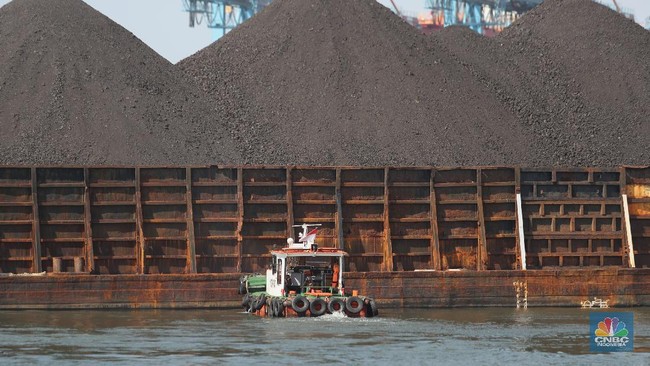
Coal prices surged in the past two days amid concerns over an energy crisis. According to Refinitiv data, coal prices closed at US$138.75 per ton on Thursday, 12 March 2026, up 2.85%, extending a rally that gained 5.8% over the preceding two days.
The surge in coal prices was driven by rising oil prices. West Texas Intermediate (WTI) crude futures rose 9.72% to close at US$95.73 per barrel, whilst Brent jumped 9.22% to close at US$100.46 per barrel, marking the first close above US$100 since August 2022.
The Middle East conflict and the de facto closure of the Strait of Hormuz—described as the “mother of all oil price shocks”—have exposed the world’s heavy dependence on oil and gas. Buyers are now competing for energy cargoes whilst consumers face steep energy price increases once again.
Many countries are switching to coal as an alternative fuel source. India and China are increasing coal consumption and production. India currently holds approximately 210 million tons of coal reserves, one of the largest stockpiles in recent years, and has developed various strategies to address potential energy shortages and ensure smooth energy distribution across all sectors.
The reserves are distributed as follows:
127 million tons stored at pithead mining areas operated by public sector coal companies
15 million tons available at commercial coal company mining sites
54 million tons stored at power plants
14 million tons in transit within the distribution network
India states that maintaining these reserve levels ensures the electricity and other industrial sectors can continue operations without disruption, even if supply chains face temporary constraints.
To facilitate distribution and prevent supply shortages in certain regions, India’s central government has directed the Ministry of Coal to coordinate closely with state governments. This coordination will ensure coal availability for essential activities, including cooking fuel for government-run student hostels and supplies for restaurants and hotels that previously reported difficulties operating their kitchens due to energy supply limitations.
India also stated that the government is prioritising sectors that directly affect daily life and public services. Media reports indicate that if other industries require additional coal supplies, the government will allocate fuel through coordination between the Ministry of Coal and the Ministry of Petroleum. This coordination aims to balance energy needs across various sectors, including manufacturing, hospitality, and services, ensuring economic activity remains uninterrupted.
Officials also emphasised that regulations governing coal allocation to states and industries are being relaxed to enable faster distribution in the current situation.
In South Korea, the government is accelerating the restart of nuclear reactors undergoing maintenance, with approximately six reactors expected to return to operation by mid-May. The country is also considering reviving previously shuttered coal power plants, whilst President Lee Jae-myung called for accelerating the transition to renewable energy.
In Europe, the priority is accelerating clean energy development, with the European Union also considering the possibility of imposing natural gas price caps, according to European Commission President Ursula von der Leyen.
In theory, accelerating solar, wind, and domestic battery development could reduce dependence on fossil fuels. However, the surge in fossil fuel prices to four-year highs could prove an obstacle to renewable energy expansion.
This is because surging inflation and the prospect of persistently high interest rates will increase the cost of clean energy materials and installation. Moreover, expanded renewable energy capacity will mean little if projects struggle to connect to electricity grids.
Global investment in electrical grids currently stands at around US$400 billion annually. To meet electricity demand growth through 2030, investment needs to increase by approximately 50%, according to the latest International Energy Agency report.
Renewable energy also cannot fully replace fossil fuels in many industrial sectors, such as the chemicals industry. Furthermore, renewable energy faces intermittency challenges due to dependence on weather conditions.
Mongolia’s coal exports plummeted in February 2026, dropping sharply compared to the previous month and falling to an eight-month low, with total shipments recorded below 7 million tons.
Using year-on-year data, Mongolia exported approximately 6.35 million tons of coal in February, up about 11.55% compared to the same period last year, but down 37.37% from January. Export value reached approximately US$410 million.
The decline in exports was mainly caused by a slowdown in coal flows to China, Mongolia’s primary market. Most Mongolian coal is shipped across land borders to Inner Mongolia in China.
Logistical disruptions at the border, limited truck and rail transport capacity, and weaker demand from Chinese steel mills all contributed to depressed shipping volumes.