
Coal exports must be reported to Danantara from 1 June
The government will implement a new strategic natural resource export governance policy through PT Danantara Sumber Daya Indonesia (DSI) from 1 June 2026. Initially, the policy covers three key commodities: coal, palm oil, and ferro alloy.
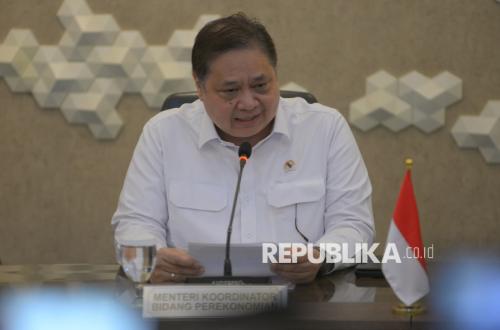
Economic Coordinating Minister Airlangga Hartarto stated the policy follows President Prabowo Subianto’s directive to improve strategic natural resource export governance via a state-owned enterprise (SOE) export mechanism.
“Strategic natural resource exports will be channelled through a single export SOE, PT Danantara Sumber Daya Indonesia (DSI),” Airlangga said in a press conference on Sunday (31 May 2026).
For coal, the government deems stronger governance necessary given its significant contribution to the national economy. In 2025, coal exports were valued at $24.48 billion, making them a major contributor to Indonesia’s trade surplus.
Airlangga explained the policy aims to strengthen export oversight and improve trade data accuracy. The government also seeks to close loopholes for under-invoicing, transfer pricing, and prevent foreign exchange leakage from exports.
“This regulation strengthens export oversight and management. Its purpose is to prevent under-invoicing, transfer pricing, and foreign exchange leakage,” he said.
The policy aims to ensure recorded export values reflect actual transactions, optimising state revenue from natural resources.
Although the policy takes effect from 1 June 2026, Airlangga stressed full implementation will not be immediate. A transition period until 31 December 2026 has been granted to allow businesses time to adjust.
During the transition period, coal companies can continue normal exports as before, but exporters must report all export activities to DSI as the state-owned export entity.
“Implementation begins 1 June 2026 as a transition period where companies continue regular export activities. However, exporters are required to report their activities to PT DSI,” Airlangga said.
Reports will be submitted via a system linked to the Directorate General of Customs and Excise’s CEISA 4.0 Portal. The government will conduct an evaluation in the first three months to assess policy effectiveness.
Full implementation is targeted by 1 January 2027, when strategic natural resource exports, including coal, will be conducted through DSI as the state-owned export entity.
Airlangga assured the government will maintain business certainty during the transition, honouring existing export contracts between coal companies and international buyers.
“This policy aims to ensure business certainty, smooth cargo flow, export realisation, and respect for existing contracts, which will be honoured in line with agreements between exporters and trading partners,” Airlangga said.
According to the government, the policy is part of efforts to strengthen the state’s role in managing strategic natural resources in a more transparent, coordinated, and accountable manner, without disrupting ongoing export activities.