
Coal and CPO in Turmoil: Global Markets Await Prabowo's New Strategy
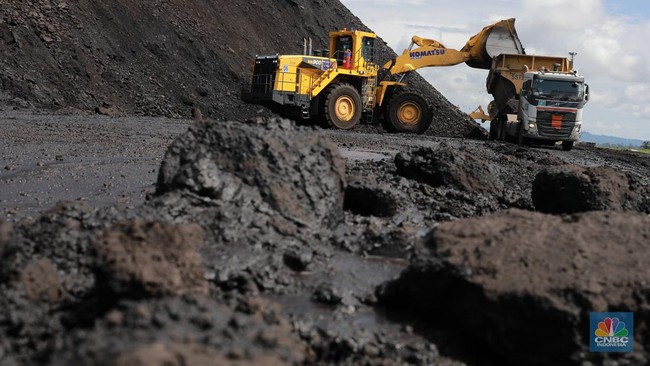
Jakarta, CNBC Indonesia – Indonesia’s two key commodity exports, coal and crude palm oil (CPO), moved in diverging patterns this week. Coal remained comparatively resilient as global energy markets were shaken by Middle East conflict, whilst CPO entered a cautious phase after President Prabowo Subianto announced major overhauls to Indonesia’s commodity export mechanisms.
Australian Newcastle coal futures closed at USD 137.55 per ton on 21 May 2026 on Refinitiv. Weekly gains were modest at 0.77% from USD 136.5 per ton on 15 May. Although movements were not aggressive, the market maintained elevated prices following a significant rally since the start of the year.
Global energy markets remained shadowed by liquefied natural gas (LNG) disruptions caused by Iranian conflict. When gas supplies were disrupted and Asian LNG prices surged, electricity utilities in Japan and South Korea increased their coal consumption. This sustained demand for Australian thermal coal at elevated levels.
South Korea recorded a 40% rise in thermal coal imports in April to 5.7 million tonnes. Japan also increased imports by 2.5% to 7.9 million tonnes. Additional demand from both nations kept coal prices elevated despite declines from March peaks of USD 146 per ton.
Markets also monitored developments in China after a coal mine explosion in Shanxi killed at least 90 workers. Shanxi is one of China’s largest coal production hubs. Risks of stricter safety inspections fuelled concerns over domestic supply disruptions, drawing market attention back to China’s potential import needs.
Simultaneously, Indonesia created additional caution in the global coal market. The government decided that all coal exports would henceforth pass through PT Danantara Sumberdaya Indonesia. This policy formed part of the government’s efforts to tighten foreign exchange earnings from exports and close under-invoicing practices of commodities.
Industry participants immediately raised numerous concerns, ranging from contract mechanisms and payment systems to logistics risks and the positioning of international traders within the new supply chain. Indonesia currently supplies nearly half of global thermal coal trade, so even minor changes directly impact Asian market sentiment.
According to Reuters, Danantara chief executive Rosan Roeslani assured that existing contracts would be honoured. However, the government opened the possibility of reviewing contracts if export prices fell below international market levels. This statement prompted global traders to recalculate risks of long-term contracts with Indonesian exporters.
A similar situation unfolded in the CPO market. Malaysian crude palm oil futures for August delivery on Refinitiv closed at MYR 4.486 per tonne on 22 May 2026. Weekly gains stood at approximately 1.5% compared to MYR 4.420 per tonne on 15 May. However, market volatility surged sharply throughout the week following Prabowo’s speech on Indonesia’s single-window palm oil export mechanism.
Markets initially welcomed Indonesia’s plan to tighten palm oil trade mechanisms. As the world’s largest palm oil producer, the government’s rhetoric about export controls and price management immediately signalled potential global supply tightening to some market participants.
Malaysian CPO prices even briefly surged around 2% after the announcement of the state-owned export company. However, the rally quickly fizzled as markets began questioning the technical implementation of Indonesia’s new policy.
Primary concerns centred on trading mechanisms. To date, Indonesian palm oil exports flowed through long-established networks of exporters and global traders. When the government sought to centralise exports through a single channel, global buyers began weighing risks of distribution delays and contract restructuring.
Malaysia was immediately identified as the most likely beneficiary of diverted demand. Several Malaysian palm oil industry players assessed that global importers could temporarily shift purchases to Malaysia whilst awaiting clarity on Indonesian regulations.
However, Malaysia’s own conditions were not particularly strong. Malaysian palm oil exports for 1-20 May actually declined 13.9-20.5% compared to the previous month. Ringgit strength against the US dollar also made Malaysian palm oil pricier for foreign buyers.
Domestically, the Indonesian government began more aggressively investigating alleged palm oil export manipulation. Finance Minister Purbaya Yudhi Sadewa revealed he held the names of ten major palm oil companies suspected of under-invoicing.
Purbaya presented this report during a limited meeting with Prabowo at the State Palace on Thursday, 21 May 2026, alongside several ministers.
“The report confirms the suspicions he [the President] has held all along, and the data is extremely robust,” said Purbaya when asked about the president’s response after receiving the report.
Government findings revealed substantial discrepancies between Indonesia’s reported export values and import values in destination countries. In one case, export value was recorded at USD 2.6 million whilst the purchasing country’s import data reached USD 4.2 million. Another case showed value differences of nearly 200%.
Tungkot Sipayung, Executive Director of PASPI (Indonesian Palm Oil Association), noted that such practices had long existed in Indonesia’s palm oil trade. Weak export oversight and poor transfer pricing controls constituted primary challenges.
Sipayung assessed that indicators of palm oil export manipulation were hardly novel. “Looking at the data means it has been ongoing for a long time,” he told CNBC Indonesia.
He attributed the issue to weak national export supervision. “Why does it happen? Well, there are unscrupulous exporters, but also weakness in our customs apparatus. This was also highlighted by the President in his speech.”