
CNG Seen as Able to Reduce LPG Imports, Pressure Testing Becomes Key
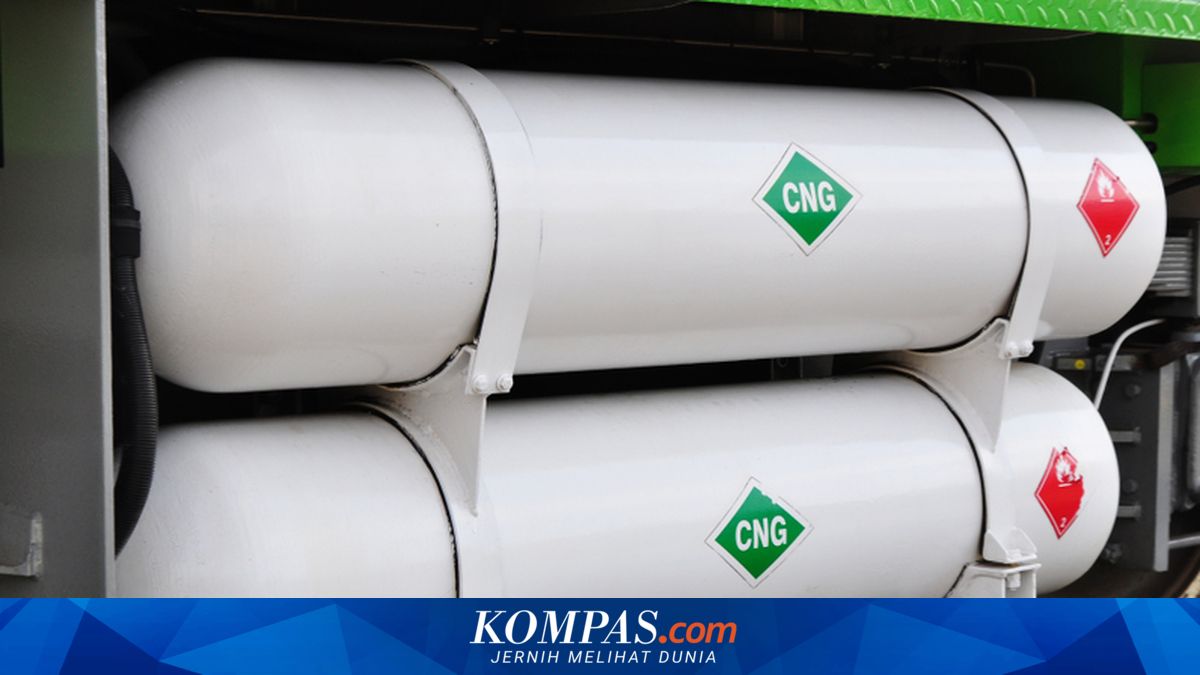
The government is currently trialling the use of compressed natural gas (CNG) in 3 kg cylinders as an alternative to subsidised liquefied petroleum gas (LPG). This step is being taken amid Indonesia’s high dependence on LPG imports, with annual consumption reaching 8.6 million tonnes, while domestic production is only around 1.6 to 1.7 million tonnes.
Minister of Energy and Mineral Resources (ESDM) Bahlil Lahadalia revealed that the CNG trial for 3 kg cylinders is still ongoing because the resulting gas pressure is quite high. CNG pressure reaches 200-250 bar, or equivalent to 2,900-3,600 psi.
“For the 3 kg size, the cylinder is still in the testing phase because the pressure is quite high. In the next two to three months, we hope to have the results,” said Bahlil, quoted from Antara on Tuesday (5/5/2026).
If the trial succeeds, the price of CNG is expected to be much more affordable. “For this 3 kg one, it’s just about to be made. And this cost is 30-40 percent cheaper,” Bahlil stated while attending an event of the IPB Alumni Association in Jakarta on Saturday (2/5/2026).
The Ministry of ESDM is also studying subsidy schemes, although the mechanism and volume are still under discussion. “Everything is still being studied, including the possibility of subsidies and the volume,” Bahlil said.
“CNG can become a concrete solution to reduce LPG imports while strengthening energy resilience,” said Jamaludin in his statement on Tuesday (5/5/2026).
He encouraged the government not to stop at the 3 kg cylinder scheme but to expand the utilisation of CNG to the transportation sector, hospitality, residential areas, apartments, and other commercial sectors.
“This expansion of utilisation is important to create a strong economy of scale, so that the use of domestic gas can run optimally and sustainably,” he emphasised.
Jamaludin also stressed the need to accelerate the development of supporting infrastructure, from CNG filling stations, compression facilities, to integrated distribution systems, as a key factor in the success of this policy.
“CNG can reduce LPG imports and emissions. CNG is good as a substitute for LPG for commercial customers, large kitchens, culinary SMEs, hotels/restaurants, and areas with supplies close to gas infrastructure,” wrote the Institute for Essential Services Reform (IESR) on its official Twitter account on Sunday (3/5/2026).
“But not yet ready to directly replace 3 kg LPG,” IESR continued.
IESR highlighted several technical challenges, namely the need for high-pressure cylinders, special stoves and regulators, more complicated distribution, and strict safety standards.
“Calculate the costs and risks. Conduct trials before widespread implementation. Don’t be reckless, people safety should be no. 1,” IESR emphasised.