
CNG as an Alternative to LPG: How Much Does It Cost?
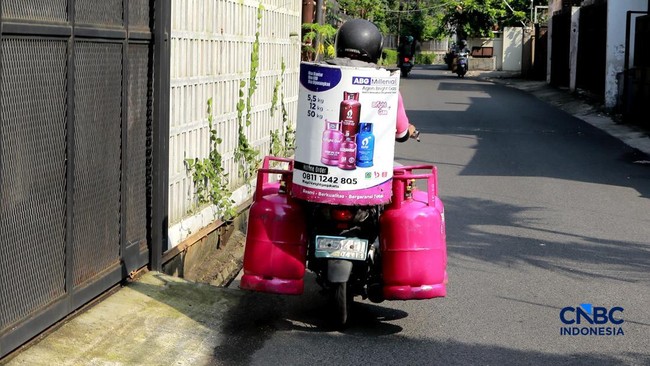
Jakarta, CNBC Indonesia - The Minister of Energy and Mineral Resources (ESDM), Bahlil Lahadalia, continues to seek alternatives to replace Liquefied Petroleum Gas (LPG). One of the options being pursued is the use of Compressed Natural Gas (CNG). So, what is the price of CNG? The compressed gas alternative is considered to be much cheaper than using LPG. According to studies, Bahlil stated that using CNG could be 30% cheaper. “CNG has already been studied. Its price is much cheaper, around 30% cheaper,” Bahlil explained after being met at the State Palace, quoted on Wednesday (6/5/2026). Why is it cheaper? Bahlil explained that the raw material for CNG gas is abundant in Indonesia, supported by domestic industries. “So we don’t import it; just the transportation costs alone can cover it,” Bahlil stated. In addition, CNG gas, according to Bahlil, is available in almost all regions with gas sources. Thus, this can be more efficient. “And if asked whether it is already operational or not, on a large scale it is already in use. In Java regions, CNG is already used. Hotels, restaurants, and MBG kitchens are already using it,” he explained. It can be consumed this year. The Director General of Oil and Gas (Dirjen Migas) of the Ministry of ESDM, Laode Sulaeman, said they are refining the distribution model and preparing supporting infrastructure in the field. He stated that the acceleration of this conversion is mainly to reduce the portion of gas imports that continue to swell along with population and economic growth. “It is targeted to be consumable by the public this year,” he said during a discussion by ASPEBINDO in Jakarta, quoted on Wednesday (6/5/2026). The government notes that national LPG production has been on a declining trend since 2010, now remaining at around 1.6 million tonnes per year. This condition forces Indonesia to bring in supplies from abroad in large quantities to meet domestic needs, which are mostly allocated to the household sector. “That means from year to year, with population growth and economic growth, we will continue to increase LPG imports if we cannot convert to other sources,” he added. Unlike LPG, whose raw materials are limited domestically, the gas source for CNG is available from national oil and gas fields, thus saving foreign exchange while cutting subsidy costs by up to 30%. “If this gas comes from our own production and the distance is not far, after calculations and simulations, it can save around 30% as already announced by the Minister,” he said. In the initial stage, the distribution of CNG is planned to target areas with the most ready supporting infrastructure. The government is focusing on starting simulations of using this type of gas in several urban areas before implementing it evenly throughout Indonesia. “Gradually in big cities in Java first. The roadmap is that we have one because this hasn’t been announced by the Minister yet, but the point is that going forward we will reduce our LPG and replace it with CNG,” he emphasised.