
CNA Explains: How the Iran war might reshape Asia’s energy playbook
CNA Explains: How the Iran war might reshape Asia’s energy playbook
As energy supplies tighten and prices rise, the region faces the fallout of its reliance on imported fossil fuels from the Middle East.
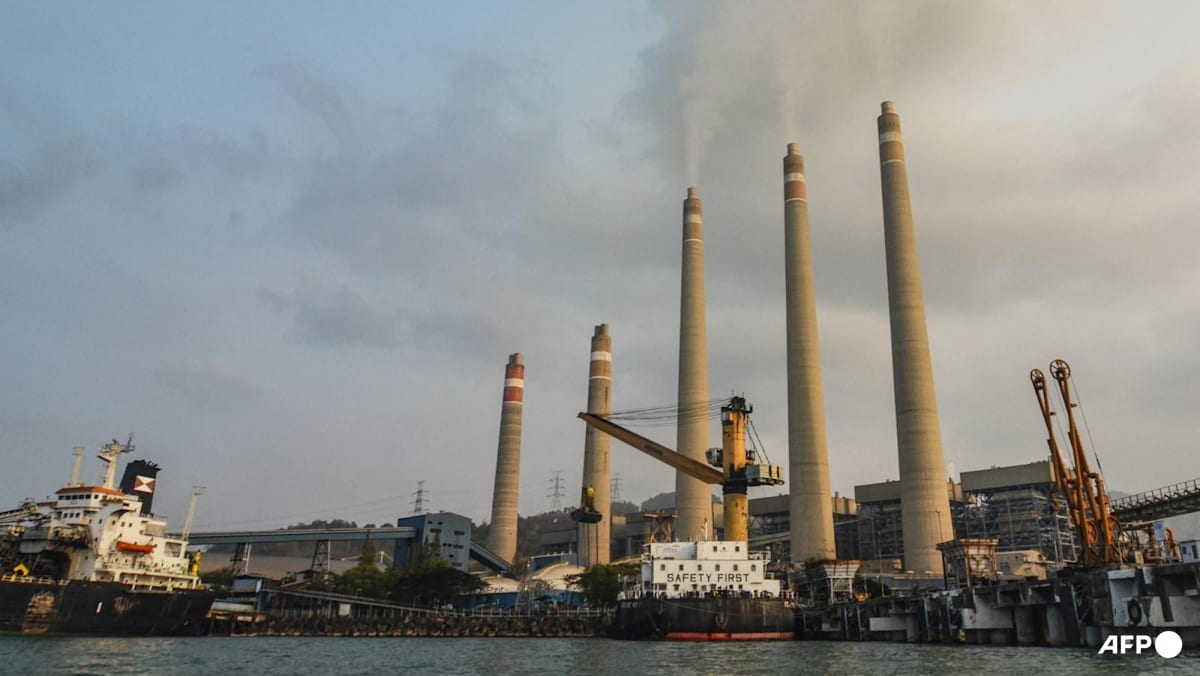
SINGAPORE: As the war on Iran stretches past its first month, some Asian countries are turning to coal to keep the lights on and prevent electricity prices from soaring.
This comes as the region faces the fallout of its reliance on fossil fuels from the Middle East.
Asia is the primary destination for oil and gas flowing through the Strait of Hormuz, and the waterway’s effective closure due to the war has hit its energy supply hard.
As the conflict brings vulnerabilities in Asia’s energy security to the forefront, CNA looks at whether the recent fallback to coal will be permanent and how the war might affect the region’s energy strategy in the long run.
Which countries are turning to coal?
In response to the energy supply disruptions, some Asian countries have lifted restrictions on their coal-fired power plants or boosted operations to replace oil and gas imports.
South Korea lifted a cap on coal-fired power plant output in mid-March, allowing power suppliers to produce over 80 per cent of their installed capacity.
Japan, which relies on imports to meet more than 85 per cent of its energy consumption, has also dropped limits.
Starting this month, its older, less efficient coal-fired plants, which were previously limited to operating at 50 per cent, will be allowed to fully operate for a year.
The Philippines, which was poised to decrease coal power after ramping up liquefied natural gas generation, is now boosting operations at coal-fired power plants to keep electricity costs down.
Thailand also ordered the restart of two decommissioned units at its Mae Moh plant, while India has asked plants to operate at maximum output to meet peak summer demand.
Will the war embed coal further into Asia’s energy mix?
Coal has been a key component of Asia’s energy mix, though some countries, such as South Korea and Japan, have committed to reducing their power plants and coal output.
According to the International Energy Agency, the fossil fuel and its products accounted for 49 per cent of the Asia Pacific’s energy supply in 2023.
Coal plants in Asia will probably be used more until global supply chains for oil and gas are restored, said Ms Jane Nakano, senior fellow at the Center for Strategic and International Studies.
The war will also likely slow the pace of Asia’s coal power plant phase-down as some governments may see the fossil fuel as an insurance against future energy crises, she said.
“Even for those without domestic coal and thus import reliant, the ease of storage makes coal appealing to many from the energy security perspective,” she said.
Still, she does not think that many Asian countries will definitely welcome new coal power plants.
“Coal is unlikely to restore the pre-eminence it had multiple decades ago,” said Ms Nakano.
“Especially for more industrialised Asian economies, prolonged coal reliance could risk handicapping one’s industrial competitiveness as carbon intensity becomes a key factor in shaping the global trade flow and market access in the coming decades,” she said.
Dr Victor Nian, founding co-chairman of the think tank Centre for Strategic Energy and Resources, expects most Asian economies to recognise the serious environmental impacts of burning coal.
He acknowledged that recent developments might prompt Asian economies to think that energy security could somewhat outweigh decarbonisation priorities.
“But I am still positive that coal is merely treated as a strategic reserve for Asian economies to weather the storm,” he said.
Why not pivot to clean or renewable energy now?
While Dr Nian said he would have loved to see countries increase energy contributions from renewable sources after the war broke out, he is not surprised that governments have turned to coal instead.
It is the only other viable form of reliable and affordable energy to cushion the effects of the conflict, he explained.
The intermittent nature of renewables makes them insufficient to sustain modern economies, said Dr Nian, adding that such energy sources would also be unable to support industrialisation and urban expansion in Asia’s emerging economies.
“Expanding the share of clean energy requires time, substantial investment and sustained political will - all of which limit the pace of transition,” said Mr Julius Cesar Trajano from S Rajartnam School of International Studies.
Existing energy systems, infrastructure and markets are deeply built around oil, gas and coal, said the research fellow at the Centre for Non-Traditional Security Studies.
As a result, countries will continue to rely heavily on them in the near term, he said.
The war in the Middle East is also draining every country’s economic strength, whether through higher energy import spending or supply shortages, said Ms Nakano.
This makes adopting clean energy alternatives more costly in the near term, even if doing so makes sense from an energy security perspective as it diversifies a country’s energy sources, she said.
What long-term implications will the conflict have for Asia’s energy strategy?
The Middle East conflict is prompting countries to rethink their dependence on fossil fuels, especially for those that import them, said Dr Nian.
“In the short-term, there is nothing much that we can do other than ‘riding the storm’,” he said.
“But I believe that we are seriously thinking about our heavy reliance on fossil fuel, especially imported fossil fuel from the Middle East.”
All three experts said the conflict’s fallout might lead to a greater push towards nuclear energy in Asia.
Nuclear energy stands to gain renewed momentum because it offers a stable, low-carbon and domestically controlled source of baseload power, said Mr Trajano.
The war will likely accelerate Asia’s shift towards a more diversified and resilient energy mix over the