
Cloud ERP Becomes Key to Efficiency and Agility for Manufacturing Industry in the Smart Manufacturing 4.0 Era
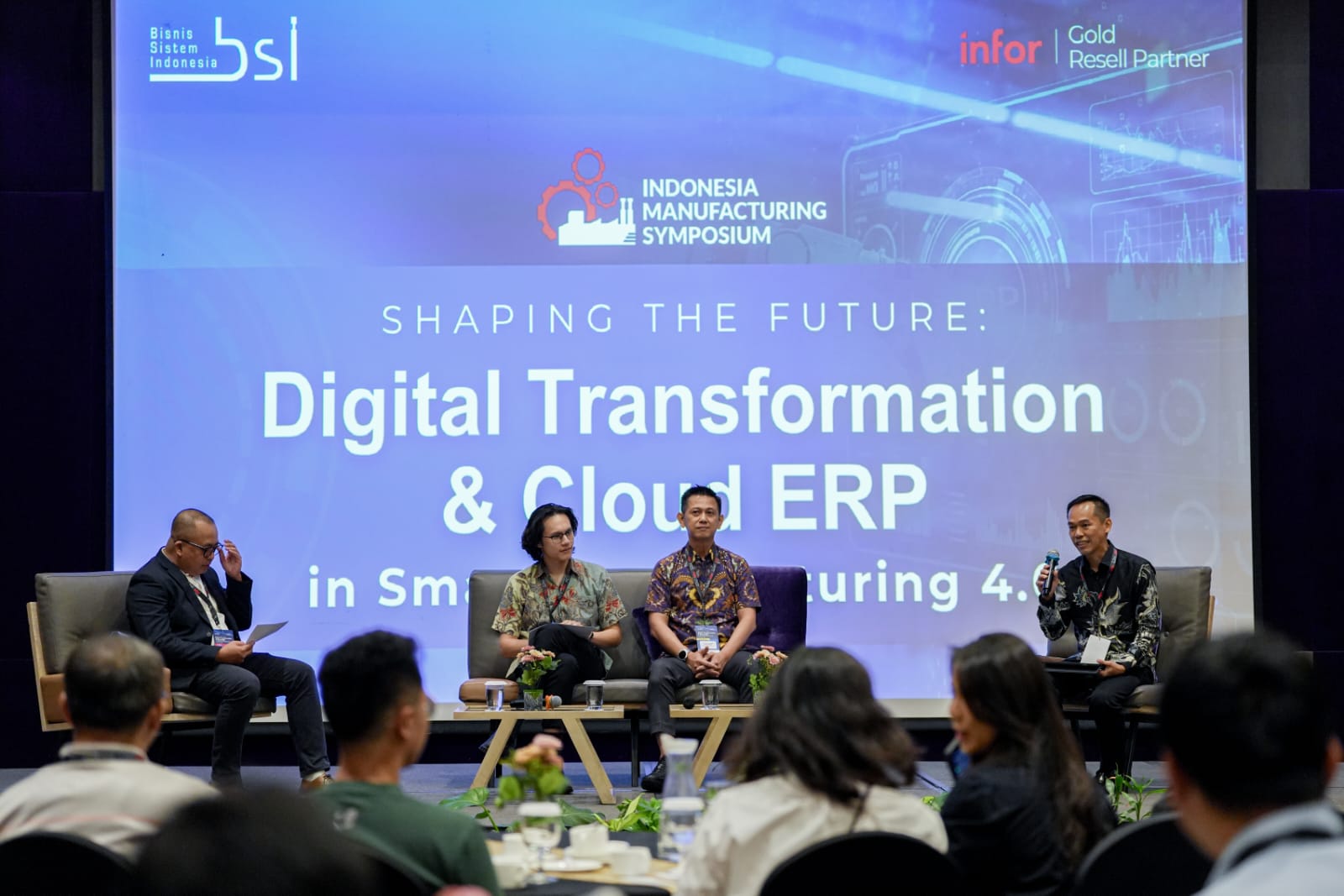
Digital transformation in the manufacturing sector has now become a strategic necessity to increase efficiency, strengthen operational visibility, and support data-based decision-making. Responding to this need, PT Bisnis Sistem Indonesia (PTBSI) together with Infor Indonesia held the Indonesia Manufacturing Symposium 2026 at Swiss-Belinn Cikarang on Thursday, 4 June 2026. Carrying the theme “Shaping the Future: Digital Transformation & Cloud ERP in Smart Manufacturing 4.0”, this forum brought together industry players, technology practitioners, and manufacturing company leaders to discuss the important role of cloud ERP in building operations that are more integrated, responsive, and adaptive to market dynamics. In the opening session, Senior Solution Consultant of Infor Indonesia, Kris Agus Santoso, explained that the role of Enterprise Resource Planning has evolved far beyond administrative functions. “Modern ERP no longer only functions as a transaction system, but has become a strategic platform that supports business transformation. Manufacturing companies now need data integration, operational visibility, and the ability to make decisions quickly. Infor ERP is even equipped with GenAI capabilities that allow companies to access information in real-time and more intelligently,” said Kris. The discussion then continued on the Infor Product Solution which includes Infor LN, Infor M3, and the Manufacturing Execution System. This session was guided by Hary Trisetyo, Application Consultant at PTBSI, together with Anna Concepcion from Infor. According to Hary, digitalisation must be seen as a long-term business foundation, not just a technology project. “Cloud ERP provides comprehensive visibility over all operational processes, from production planning and inventory management to cost control. Thus, companies can make decisions more quickly and accurately,” he explained. Meanwhile, Anna Concepcion highlighted the important role of MES in the modern manufacturing environment. “The Manufacturing Execution System connects ERP with the shop floor in real-time. This technology improves traceability, reduces downtime, and enables faster and more precise operational decision-making,” she said. In addition to the presentation sessions, the symposium also featured a panel discussion moderated by Sudarto Kuang, GM Sales of PTBSI. The panel presented Kris Agus Santoso from Infor Indonesia, Saverio Hans Harlijanto as GM Systems & IT of PT Frina Lestari Nusantara, and Adithia Varuna Jayanegara, Plant and Operation Director of PT Argapura. In the discussion, the panellists shared experiences regarding ERP implementation and its impact on improving the operational performance of manufacturing companies. Adithia Varuna Jayanegara explained that the implementation of Infor ERP at PT Argapura not only strengthened operational control but also shaped a more disciplined and data-based work culture. “The implementation of Infor ERP strengthens the company’s operational visibility and control. In addition, this system also encourages a more systematic and data-based work culture, which is an important foundation in building a corporate ecosystem ready to adopt AI technology in the future,” he said. From an information technology perspective, Saverio Hans Harlijanto emphasised that ERP has now become the main foundation of manufacturing company operations. “Choosing a cloud-based ERP from a vendor that has a global track record provides many benefits, starting from system stability, implementation of international best practices, data security, scalability, to long-term support sustainability,” explained Saverio. The event was officially opened by Yundi Tenggono, Strategic Enterprise Channel Director of PTBSI. In his speech, Yundi emphasised that the success of digital transformation is not only determined by the technology used, but also by overall organisational readiness. “The success of cloud ERP implementation requires business process readiness, data quality, human resource readiness, and assistance that understands the company’s operational needs. A holistic and collaborative approach is key so that digital transformation can deliver real and sustainable business value,” he said. Throughout the discussion, the speakers also discussed various challenges and opportunities for digital transformation in the manufacturing sector, including the importance of data integration, cross-departmental collaboration, increased productivity, and realistic and scalable implementation strategies. Through the Indonesia Manufacturing Symposium 2026, PTBSI reaffirmed its commitment to assisting Indonesian manufacturing companies in building an integrated and adaptive enterprise system. With more than two decades of experience since its establishment in 1998, PTBSI has assisted various organisations in optimising business processes through the implementation of ERP, Enterprise Asset Management, Warehouse Management System, Manufacturing Execution System, and various other business process innovations. This commitment is expected to help the Indonesian manufacturing industry increase competitiveness, accelerate digital transformation, and prepare to face the increasingly dynamic challenges of the future industry.