
Clothing Donations Can Reduce Textile Waste
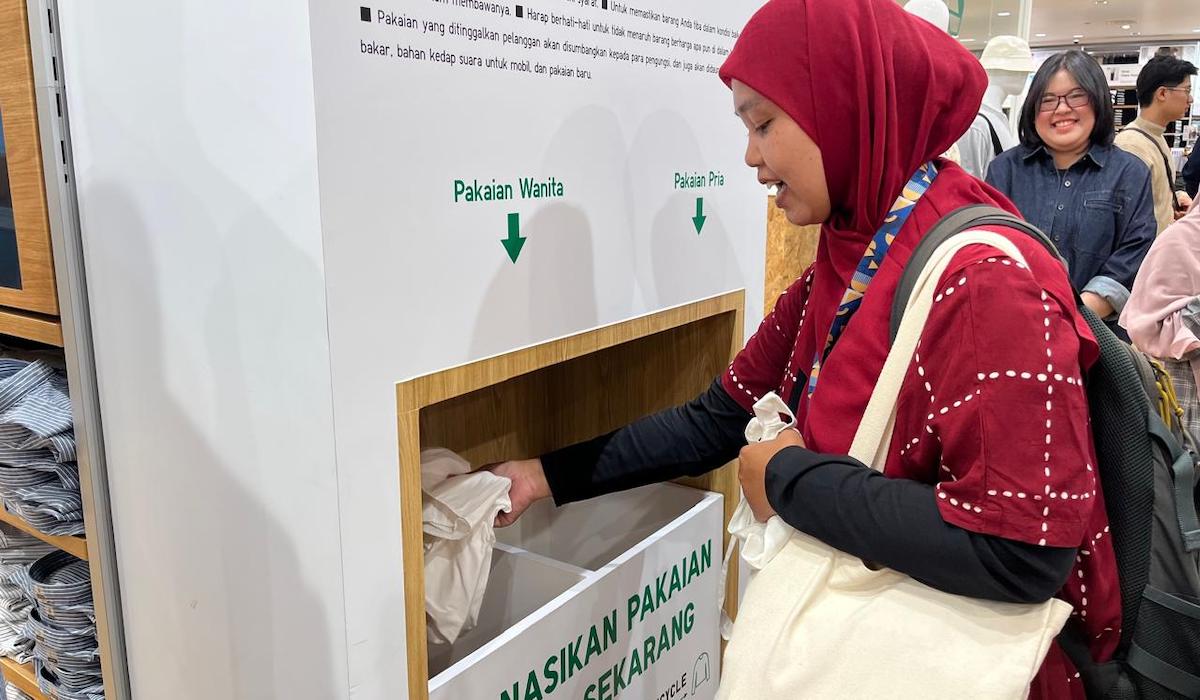
Fashion retailer Uniqlo has launched a Hari Raya Clothing Donation Collection campaign during Ramadan to encourage the public to sort out unworn clothing so it can be reused by those in need. The campaign is part of the company’s commitment to circular fashion practices, extending the lifespan of garments whilst reducing textile waste.
“We view mindful decluttering not merely as a seasonal campaign, but as part of our commitment to circular fashion, reducing textile waste whilst promoting more responsible consumption habits,” said Michelle Secoa, Sustainability Lead of Uniqlo Indonesia, during an interview in Jakarta on Wednesday, 25 February.
The programme provides recycle boxes across all Uniqlo stores to collect wearable clothing from the public. Consumers need only bring clean clothing and place it in the donation boxes available, without needing to make a purchase.
“Visitors can simply come to an Uniqlo store and place clothing in the provided boxes. There is no need to purchase anything, but we remind donors to ensure the clothing is already clean,” said Michelle.
Collected clothing will be sorted again to ensure it is suitable for wear. Clean garments without severe damage will be distributed to those in need.
For the distribution process, Uniqlo continues its partnership with Human Initiative. According to Anisa Zulhaida, Partnership Lead at Human Initiative, the five-year collaboration has distributed more than 14,000 new garments and 20,000 used garments to over 11,000 beneficiaries across various regions of Indonesia.
“Last year, approximately 1,500 beneficiaries were invited to an Uniqlo store transformed into a clothing bazaar. They could select clothing they needed themselves, with a maximum limit of four items per person,” said Anisa.
The distribution of this year’s donated clothing is planned for May 2026, with the location still to be determined.
Beyond distributing wearable clothing, Uniqlo will also utilise unsuitable garments through recycling or upcycling processes so they can still be reused in other forms.
Additionally, Uniqlo offers the Re.Uniqlo Studio service at several outlets, including Grand Indonesia, Senayan City, and Kelapa Gading. This service allows customers to repair or modify old clothing through three types of services: repair, remake, and sashiko.
Repair includes simple fixes such as replacing buttons or zippers, whilst remake allows customers to add embroidery to give personal touches to clothing. Sashiko is a traditional Japanese embroidery technique used to both repair and decorate fabric.
According to Michelle, the repair service is actually the most popular among customers. “Most people who come visit for repair, especially at stores frequented by office workers,” she said.
Through these various initiatives, Uniqlo hopes the public will be more thoughtful in managing their clothing, whether by donating, repairing, or recycling.