
Closure of Al-Aqsa Mosque Deemed Violation of Religious Freedom, BSMI Urges UN to Act
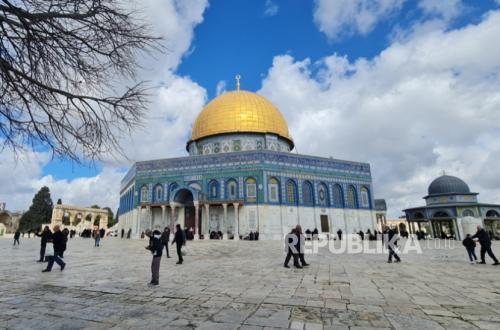
The Indonesian Red Crescent (BSMI), as a humanitarian organisation committed to protecting human rights, has expressed deep concern over the prohibition and closure of mosques as places of worship for Muslims in certain countries, including the Al-Aqsa Mosque in Palestine.
The Chairman of the National Board of BSMI, Djazuli Ambari, emphasised that Israel’s actions constitute a limitation on religious freedom as guaranteed by international law, particularly as stated in Article 18 of the Universal Declaration of Human Rights (UDHR) and Article 18 of the International Covenant on Civil and Political Rights (ICCPR). These provisions affirm that every individual has the right to freedom of thought, conscience, and religion, including the freedom to manifest their religion or belief either individually or in community with others, in public or private.
“The closure of the Al-Aqsa Mosque without a lawful, proportionate, and non-discriminatory basis also contravenes the fundamental principles of non-discrimination and minority protection as recognised in various international human rights instruments,” Djazuli told Republika on Tuesday (31/3/2026).
He added that in relation to this matter, BSMI declares its rejection of all forms of prohibition and closure of the Al-Aqsa Mosque carried out arbitrarily, discriminatorily, or without clear and lawful legal basis. BSMI also urges the UN to act immediately to reopen access to the Al-Aqsa Mosque as a place of worship for Muslims and to ensure protection of religious freedom.
BSMI calls on the international community, including the United Nations and the Organization of Islamic Cooperation, to take concrete steps to ensure respect for the right to religious freedom. BSMI also invites all parties to uphold tolerance, respect diversity, and prevent actions that could exacerbate social tensions or religion-based conflicts.
BSMI also recommends strategic steps for the Indonesian government. First, to raise the issue in multilateral forums. Indonesia can bring this matter to international forums such as the United Nations Human Rights Council (UNHRC) to encourage discussion and resolution, and the United Nations General Assembly (UNGA) to gain broader global attention.
“Coordination with Islamic World Organisations. Indonesia needs to actively promote collective action through the Organization of Islamic Cooperation (OIC), including: joint position statements, fact-finding missions, and coordinated international advocacy,” he said.
Third, Djazuli added that BSMI encourages the Indonesian government to utilise special UN mechanisms. Indonesia can submit a request to the Special Rapporteur, particularly the Special Rapporteur on Freedom of Religion or Belief under the UN, to conduct an investigation and report violations independently.
“Indonesia must also strengthen coalitions with like-minded countries. Building alliances with nations committed to pluralism and religious freedom to issue joint statements and increase collective diplomatic pressure,” he said.