
Climate Crisis Accelerates El Niño Cycle, Indonesia Faces Drought Threat
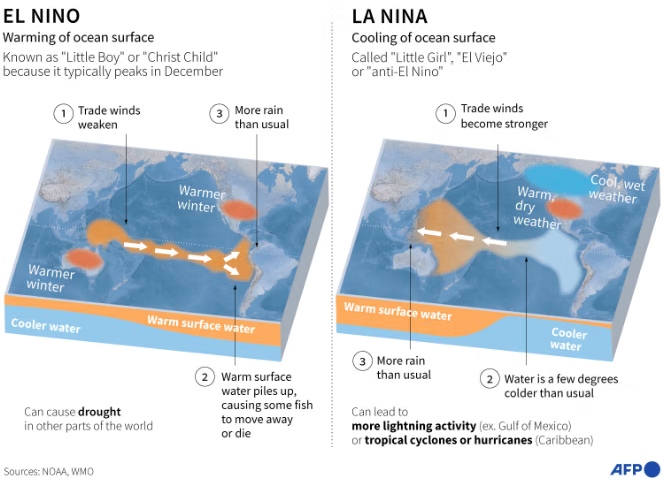
Indonesia is once again facing the potential for extreme drought and land and forest fires (karhutla) triggered by the El Niño phenomenon. Previously, strong El Niño events occurred in a four-year pattern, but the latest trends indicate a shortening cycle, increasing the risk of a climate crisis domestically.
Since 2015, which was a year of very strong El Niño, a four-year pattern was observed with similar events in 2019 and 2023, triggering extreme droughts and massive karhutla. Based on that pattern, the next El Niño was expected in 2027. However, in reality, the phenomenon has re-emerged within just three years.
This condition signals that the impact of the climate crisis is also influencing changes in the El Niño cycle, potentially accelerating the arrival of extreme dry seasons in Indonesia. Head of Greenpeace Indonesia’s Forest Campaign, Kiki Taufik, emphasised that this phenomenon must be anticipated seriously.
“The shortening El Niño cycle must be mitigated seriously because it will trigger more frequent and widespread droughts and karhutla,” said Kiki on Wednesday (8/4).
He added that although El Niño has levels from weak to very strong, all levels still have significant impacts on Indonesia.
During El Niño periods, almost all regions of Indonesia are affected by extreme and prolonged drought. This was evident in the events of 2015, 2019, and 2023. One of the most significant impacts is the increase in fires in peat landscapes in Sumatra, Kalimantan, and Papua.
Karhutla in peatlands have distinctive characteristics: widespread spread, long duration, and producing thick haze that can reach very extensive areas. The eastern coastal areas of Sumatra from Riau to South Sumatra, the western coast of Kalimantan, Central Kalimantan, South Kalimantan, to South Papua are highly vulnerable regions.
According to Kiki, long-term prevention efforts must be strengthened immediately, especially through the restoration of damaged and dry peatlands. “Massive and proper peat restoration is very important to minimise recurring peat karhutla,” he stated.
In addition, the rehabilitation of river basins (DAS) and natural forests is also considered crucial to maintain water reserves during the dry season. “Improving DAS and rehabilitating natural forests is also an important step to ensure water availability amid drought threats,” he added.
Although preventive efforts have been identified since the major karhutla in 2015, their implementation is still far from optimal. With the potential for El Niño arriving faster, strengthening mitigation and ecosystem management becomes key to reducing future disaster risks.