
Climate Apocalypse Kills 832,000 People, Heatwaves Top Killer
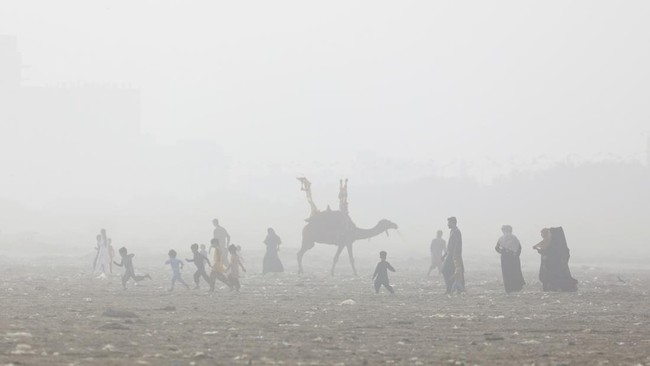
Extreme weather has become a persistent real threat to the global population. Over the period from 1995 to 2024, various extreme weather phenomena have been recorded to have claimed more than 832,000 lives worldwide.
Not only triggering humanitarian crises, this string of natural disasters has also resulted in massive direct economic losses amounting to US$4.5 trillion, or approximately Rp76,365 trillion (US$1 = Rp16,970), nearly equivalent to the Gross Domestic Product (GDP) of the United Kingdom.
The latest data from the Climate Risk Index 2026 report released by Germanwatch reveals a striking divergence between the types of disasters that cause the most fatalities and those that lead to the greatest financial losses.
This indicates that the level of physical infrastructure damage is not always proportional to the number of fatalities.
Silent Killer Without Traces of Damage
Heatwaves have been recorded as topping the list as the deadliest weather hazard in the world. This climate disaster is responsible for 278,395 deaths globally over the past three decades.
Extreme heat can drastically worsen an individual’s health condition, while heatstroke can be instantly fatal.
Despite having the highest fatality rate, heatwaves recorded the lowest economic losses, at US$32.9 billion. This underscores its status as a “silent predator” that claims lives quietly without damaging infrastructure.
Its impacts often occur in cooler climate regions. In 2022, more than 60,000 people in Europe died due to extreme hot weather, following a similar tragedy in Russia in 2010 that killed 56,000 people.
Storms Trigger the Largest Financial Losses
Coming in second place, storms caused 274,750 deaths. Unlike heatwaves, storms leave significant material destruction in their wake.
Economic losses from storms reached US$2.6 trillion, making them the largest financial burden compared to all other weather hazards.
Several countries bear a heavier burden due to high exposure levels. For example, Cyclone Nargis in Myanmar in 2008 killed more than 138,000 people, while Hurricane Mitch in Honduras caused material losses of US$7 billion and claimed 14,000 lives.
Other disasters such as floods, droughts, and wildfires follow with levels of damage and fatalities that cannot be ignored, along with their cascading impacts.
Heavy Burden on Developing Countries
The report also highlights the additional fact that the impacts of extreme weather disproportionately burden developing countries (Global South).
Six of the ten most affected countries are middle- to low-income nations with fiscal limitations for climate adaptation.
Facing these challenges, the international agreement at COP30 in Brazil has committed to mobilising funds of US$1.3 trillion per year until 2035 to support global climate resilience.