
Clever Strategies to Tackle the Plastic Price War
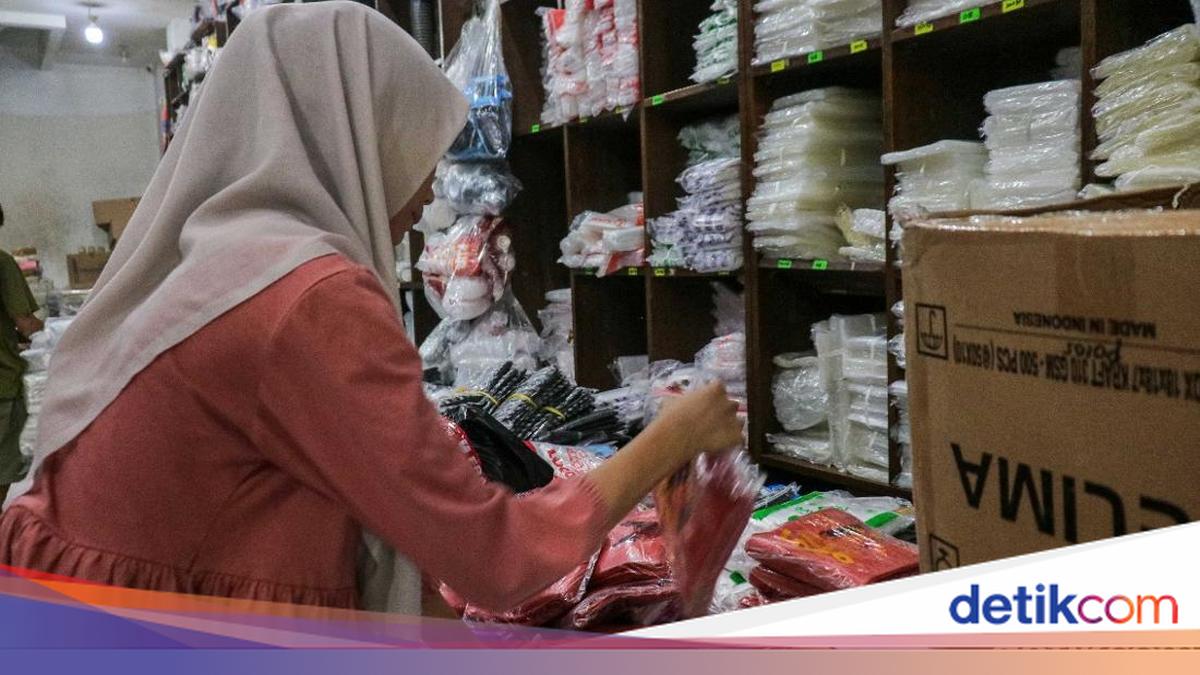
The intensifying situation in the Middle East over the past few months has also impacted the economic sector. Global supply chains have been disrupted, causing prices of several commodities to soar. This includes the skyrocketing price of plastic in the market, a result of the interrupted supply of petroleum-based raw materials.
This condition has led many plastic traders to reduce their purchase volumes. This is because distributors often provide price lists that can change within hours. They also did not expect that this situation is linked to the heating up of global geopolitical tensions.
“I thought it wasn’t connected because of the war. It doesn’t make sense, people are at war, and we’re the ones affected; turns out it’s the raw material,” said Neneng (72), a plastic seller at Pasar Kosambi, Bandung, West Java, as reported by detikJabar on Saturday (4/4/2026).
“We’re confused; every time we want to shop, we’re given a new price list. At night, the price is this much, and by morning, it’s changed again,” said Zainuddin (47), a plastic seller at Pasar SBS, Bekasi, West Java, to detikcom on Friday (27/3/2026).
Similar conditions are faced by street vendors and SMEs who must dig deep into their pockets to buy plastic bags and plastic packaging. They are reluctant to raise selling prices for fear of losing customers. Amid this price pressure, some business actors are starting to seek alternatives to reduce dependence on single-use plastic. Some are switching to eco-friendly packaging, such as banana leaves or cardboard.
Preventing Single-Use Plastic
Amid public concerns over rising plastic prices, this serves as a reminder that the natural environment is increasingly disturbed. This is exacerbated by the high dependence of society on single-use plastic packaging. Therefore, various methods are being pursued to protect the earth from the ferocity of the ‘plastic waste monster’.
One of them is Alner, a company from Cilandak, South Jakarta, which was founded in 2020 and implements a circular economy concept in the form of refills and packaging returns. They focus on providing various fast-moving consumer goods (FMCG). The products offered include groceries, body care, cleaning fluids, to food and beverages that are generally sold using single-use plastic packaging.
One of Alner’s refill stations at Fresh Market Bintaro, South Tangerang City, presents itself as an eco-friendly refill shopping solution.
“We at Alner want to provide an alternative on how we can actually prevent a material—in this case, for example, product packaging—from becoming waste,” said Founder & CEO of Alner, Bintang Ekananda (32), when met by detikX on Tuesday (28/4/2026).
Alner highlights the habit of society that still relies on single-use plastic. Therefore, they invite consumers to switch to reusable packaging in an appealing way. Where every empty packaging—from purchases at Alner outlets—that is returned has an exchange value (cashback) of Rp500 to Rp10,000, which can be used for the next transaction.
“If the system supports our society not to litter or (like) we can easily return packaging and there’s an incentive, we believe it will be much easier to help them change their habits,” added Bintang.
In collaboration with Enviu Indonesia—a startup studio focused on preventing plastic pollution, this business founded in 2020 has already garnered 754 partners in Greater Jakarta, and is supported by various grassroots groups. The products marketed also come from existing and local producers. Thus, Alner offers consumers the option to choose various products at affordable prices.
“But we also want to support local suppliers to be more aware that there is an option for a way (to) market their products with an easier and more eco-friendly system,” he added.
Not only that, Alner is expanding by establishing physical outlets that immediately attract public attention, especially among the younger generation. In January 2026, Alner launched Circular Stand, which is a collaboration with M Bloc Space, Jakarta. Located in front of the Matalokal outlet, Circular Stand focuses more on selling various snacks, drinks, and natural-based products.
Meanwhile, detikX visited Alner’s second outlet in the Fresh Market Bintaro area, South Tangerang City, Banten, which began operating on 28 February 2026. Different from Circular Stand, the outlet named Zero provides more varied daily needs and is also equipped with a mini-cafe facility. Even Zero claims to be the first mini-market in Indonesia to implement a refill system without single-use plastic packaging to minimise waste.
Interestingly, Alner’s physical outlets have distinctive features compared to conventional retail stores. If consumers want to buy snack products, bulk rice, or cleaning fluids, they must bring their own packaging which will then be used as a container at the refill station. Meanwhile, for other products, consumers can directly buy the product and return the packaging once it is used up.
In addition, consumers can exchange plastic, glass, or aluminium packaging that was not purchased directly from Alner for points worth Rp100 per item. “That will then be recycled or processed by a third party, namely Waste4Change. So, they manage that packaging so it can be recycled into new materials again,” said Bintang.
Over the four months since expanding to physical outlets, Bintang admits to having many discussions with various parties to develop Alner’s business, especially through Circular Stand and Zero. Even, amid the geopolitical situation