
Clearing the blemish on the face of national social assistance data
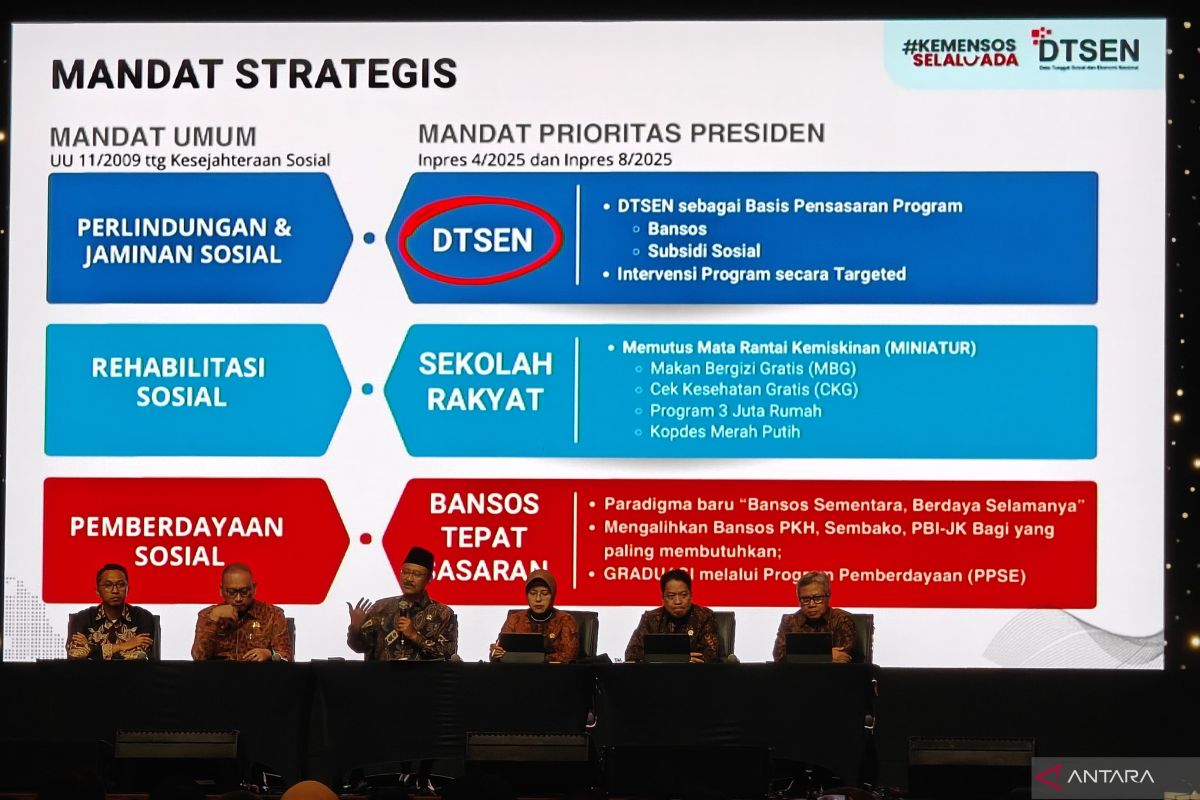
The transformation of Indonesia’s social welfare system through the National Single Socio-Economic Data (DTSEN) is like opening Pandora’s box in the management of welfare policy in Indonesia.
The classic problem of mistargeting or misuse of funds has become a “blemish” on the face of social protection policy. This stain frequently emerges whenever national social assistance is distributed and generates public criticism regarding programme precision and targeting.
The government’s bold decision to address the problem at its root deserves commendation. On one hand, it ensures that government stimulus properly protects citizens who are genuinely impoverished, whilst on the other, it closes loopholes for social assistance misappropriation to enrich individuals or specific groups by unscrupulous actors.
This improvement step is crucial given the substantial social assistance budget that the state allocates annually through the State Budget. Social Welfare Minister Saifullah Yusuf revealed that the government allocates more than 500 trillion rupiah annually for various subsidies and social protection programmes. However, the size of this budget does not fully guarantee that state assistance truly reaches those most in need.
Consequently, the Social Welfare Ministry has undertaken a major consolidation of the social welfare data foundation. This transformation is marked by the shift from the Unified Social Welfare Data (DTKS) to DTSEN, which is now used as the primary reference for various social protection programmes across ministries and agencies.
In the new scheme, the government maintains broad coverage of social assistance beneficiaries. Two main programmes managed by the Social Welfare Ministry are the Family Hope Programme (PKH), reaching approximately 10 million recipient families with a budget of around 28.7 trillion rupiah, and Non-Cash Food Assistance (BPNT) valued at 42.8 trillion rupiah targeting approximately 18 million families.
Through the BPNT programme, each recipient family receives assistance of 200,000 rupiah per month distributed quarterly, meaning each family receives approximately 600,000 rupiah every three months. Meanwhile, PKH assistance varies according to beneficiary category, such as school-age children, pregnant women, persons with disabilities, the elderly, and young children, with assistance values ranging from 225,000 to 750,000 rupiah per distribution cycle.
The large number of social assistance recipients also creates opportunities for misuse. These findings emerged partly from cooperation between the Social Welfare Ministry and the Financial Transactions Report and Analysis Centre (PPATK).
From analysis of approximately 10 million social assistance recipient accounts, 8.3 million were recorded as actively receiving assistance. However, PPATK discovered several anomalies, including more than 600,000 social assistance recipients identified as engaging in online gambling. Of this number, approximately 200,000 recipients subsequently had their assistance terminated.
Additionally, irregularities were found in the employment status of numerous social assistance recipients. PPATK detected 27,932 individuals with state-owned enterprise employee status, 7,479 doctors, and more than 6,000 individuals with executive or managerial professions still registered as recipient family members.
There were even 56 social assistance recipient accounts with balances exceeding 50 million rupiah. These findings were subsequently submitted to the Social Welfare Ministry for re-verification of beneficiary status.
In the health insurance sector, the government also covers contributions for low-income population groups through the National Health Insurance Premium Assistance Recipient scheme (PBI JKN). This programme covers approximately 152 million people or around 52 per cent of Indonesia’s total population. Of this figure, 96.8 million participants are financed by the central government, whilst the remainder is covered by regional governments.