
CLEAR: So that the Government Can Gain Public Trust
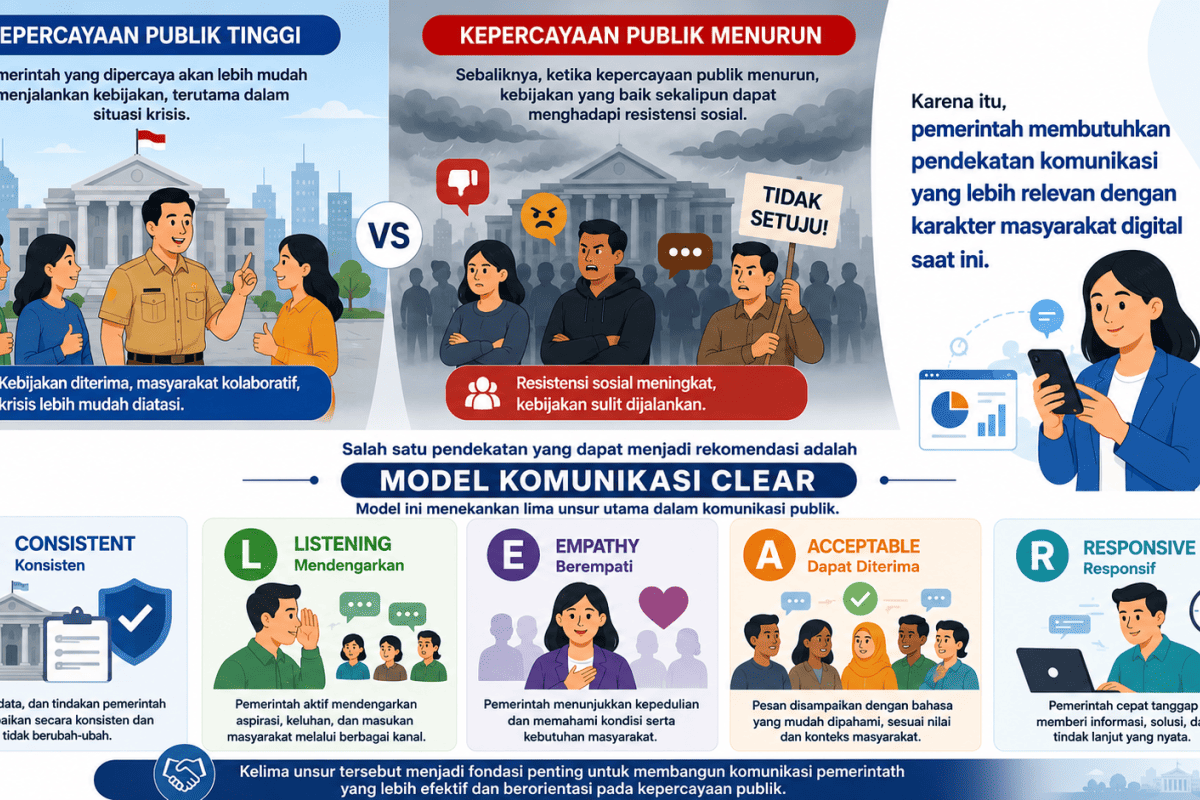
The CLEAR model recommendation is expected to position government communication not merely as an activity to convey information, but as a process to build healthy social relationships between the state and society.
Jakarta (ANTARA) - Amid the torrent of digital information, the government’s current challenge is not only to create policies but also to ensure that those policies are understood and trusted by the public.
Unfortunately, public communication in Indonesia remains a major unfinished task.
Not a few government policies that actually have good intentions end up facing rejection due to weak communication with the public. In the end, the problems that arise are not solely about the substance of the policies, but rather how the government communicates with the public.
This phenomenon has been evident in various national issues in recent years, from controversies over government assistance programmes, public officials’ statements deemed offensive, to inconsistent statements that often cause public confusion.
One of the most frequent problems is the discrepancy in statements among government officials. When one institution conveys certain information, another institution provides a different explanation. This situation not only confuses the public but also has the potential to lower the government’s credibility in the eyes of the public.
In fact, in 2025, President Prabowo Subianto ordered his subordinates to improve public communication to be more communicative and proactive in providing information to the public.
In the social media era, communication issues become even more complex. Information spreads very quickly, while government clarifications often arrive too late. As a result, the digital space is first filled with speculation, disinformation, and even hoaxes.
When the government fails to respond quickly and convincingly, the public will seek other sources of information that may not be accurate. This situation shows that public communication today is no longer sufficient to be administrative and formal, but must be consistent, responsive, and humane.
Additionally, government communication in Indonesia is still often one-way. The government tends to convey more information than listen to public aspirations. Public communication channels are indeed increasingly available, but not all of them truly become effective dialogue spaces. Not a few members of the public feel that their criticisms are ignored, while government responses tend to be defensive towards differing opinions. In the long term, this situation can weaken public trust in state institutions.
Nevertheless, public trust is a very important social capital in governance.