
Clarifying the Fate of Honorary Teachers
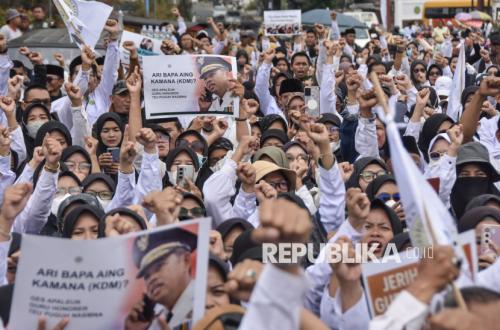
The issue of eliminating honorary teachers or non-ASN teachers starting in 2027 has become one of the most sensational pieces of news in Indonesia’s education sector in recent weeks. This information has spread rapidly through social media, WhatsApp groups, and school conversations. Not a few teachers feel anxious, fearing job loss, and even view the state as closing the door to service for those who have long supported national education.
However, if examined comprehensively, this narrative arises from a misunderstanding of the non-ASN personnel arrangement policy regulated in the ASN (Civil Servant) Law Number 20 of 2023 and clarified through the Circular Letter of the Minister of Education, Culture, Research, and Technology Number 7 of 2026. Ironically, a wave of panic has emerged due to information not understood comprehensively. Many in the public fail to distinguish between “eliminating non-ASN status” and “eliminating the honorary teacher profession”. Yet, these are two very different things.
Government Initiative
A firm clarification has been issued by the Director General of Teachers and Education Personnel. Their statement emphasises that the Government is not conducting mass layoffs (PHK) of honorary teachers. On the contrary, the Government still needs their presence to address teacher shortages in various regions. Data from the ministry handling basic and secondary education shows there are more than 200,000 active non-ASN teachers teaching in public schools and recorded in the Basic Education Data (Dapodik).
This clarification is very important because it highlights a fundamental fact: Indonesia’s education system to this day still relies on the role of non-ASN teachers. In many regions, especially 3T areas (frontier, outermost, and underdeveloped), schools continue to operate due to honorary teachers willing to serve amid limited facilities, low welfare, and minimal job status certainty.
Behind all this, the Government is actually undertaking an initiative to organise the personnel system to be more orderly and professional. From the perspective of modern public administration, this step can be understood through Good Governance theory, which emphasises the importance of accountable, transparent, and efficient bureaucratic governance. For years, the recruitment of honorary personnel in various regions has often occurred without a clear system, leading to welfare disparities and human resource quality issues.
The state is attempting to reorganise the education sector’s workforce mechanisms to provide legal certainty and better professional standards. However, this arrangement should not be interpreted as an effort to sideline honorary teachers. On the contrary, what must be addressed clearly is that the Government is actually strengthening support for non-ASN teachers. One indicator is the increased attention to teacher welfare.
The Ministry of Education, Culture, Research, and Technology records the national realisation of Non-ASN Teacher Professional Allowance (TPG) at 103.01 percent, with a total budget of Rp12.1 trillion. This figure demonstrates the state’s serious commitment to supporting non-ASN teacher welfare. Additionally, the Government has launched a direct allowance disbursement system to teachers’ accounts to reduce bureaucratic barriers and increase disbursement transparency. This policy is an important step in education service reform, as delays in allowances have long been a major complaint among teachers.
On the quality improvement side, the ministry handling basic and secondary education continues to expand the Teacher Professional Education (PPG) programme and S1/D4 education assistance for educators. In 2025, more than 800,000 teachers will be targeted by these competency enhancement programmes. The government is also accelerating the integration of PPG graduates into national educator needs.
Clarifying the Fate
If analysed using Theodore Schultz and Gary Becker’s Human Capital theory, the Government’s investment in teachers is truly an investment in the nation’s quality. Education will not produce superior human resources without competent and prosperous teachers. In this theory, teachers are not merely bureaucratic workers but strategic assets for national development.
The problem is that education policies in Indonesia often face clashes between idealism and local fiscal capacity. Many local governments still face budget limitations to fully meet ASN teacher needs. Therefore, the presence of non-ASN teachers remains a practical solution to prevent disruptions in teaching and learning activities.
In truth, the state faces a major dilemma: on one hand, it wants to organise the bureaucracy to be more professional, but on the other, the education system still greatly needs honorary personnel. The most realistic solution is not to suddenly eliminate non-ASN teachers, but to carry out a gradual transition through PPPK schemes, competency improvements, and national teacher needs mapping.
From the perspective of sociology of education, honorary teachers actually hold a very strategic position. Emile Durkheim described education as an instrument for forming social solidarity. Teachers are the main actors in transmitting national values, discipline, and character. If teachers lose a sense of security about their future, the quality of education will also be disrupted.
Therefore, the uproar from the “honorary teachers to be eliminated in 2027” issue should also serve as an alarm for the Government to improve public communication. Good policies can cause panic if conveyed without a clear and empathetic narrative. On the other hand, the public also needs to be more critical in receiving information. Not all viral policy snippets tell the whole story.