
Civilisation of Fire vs Civilisation of Earth
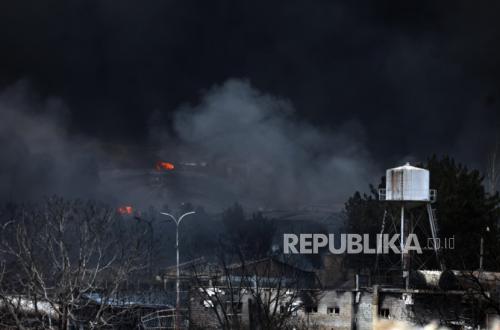
There is one cosmic dialogue that never grows old. It occurred long before human history began, yet its echoes are felt to this day—even in modern energy conflicts that shake the world. That dialogue is Iblis’s arrogant statement before Allah: “I am better than him (Adam); You created me from fire, and You created him from earth.” (QS Al-A’raf:12). This statement is not merely rebellion. It is the foundation of a paradigm—a worldview regarding life, power, and values. Today, unwittingly, the modern world is repeating that narrative in a more complex form: the civilisation of fire versus the civilisation of earth. Fire: Symbol of Energy, Speed, and Dominance In the modern world, “fire” is no longer just a candle flame or wood embers. It has transformed into: petroleum, natural gas, coal, power plants, even the global industrial system. Fire is energy. And energy is power. Countries that control energy: drive industry, control logistics, determine global prices, even influence the political stability of other nations. It is no surprise that many modern conflicts intersect with energy sources. The most evident example is the Russia vs Ukraine conflict. This conflict is not just about territory or classic geopolitics, but also about: gas routes to Europe, the European Union’s energy dependence, and the struggle for influence over energy markets. When the conflict erupts, it is not only tanks that move—gas prices soar, electricity becomes expensive, and the effects spread to households around the world. Fire, in the form of energy, shows its true face: it provides power, but also ignites conflict. Earth: Symbol of Life, Patience, and Sustainability In contrast to fire, earth works in silence. It does not explode, leap, or burn. But from earth: food grows, life is born, ecosystems form. In the Al-Qur’an, humans are created from earth—a profound symbol: humility, stability, giving, not consuming. However, in modern civilisation, earth is often sacrificed for fire: forests are burned for mines, fertile land is repurposed, agriculture depends on high-energy inputs. As a result, humanity slowly drifts away from its own source of life. When Fire Claims Superiority Returning to the story of Iblis, the core issue is not the material of creation, but the claim: “I am better.” In the modern context, this claim appears in the form of: advanced countries have more rights, those with technology hold power, those who control energy set the rules. This is the Iblis-like mentality in a contemporary version. Energy is no longer viewed as a trust, but as a tool for legitimising power. Contemporary Energy Conflicts: Spreading Fire If we look at the world map today, we will see that many global hotspots are closely related to energy. Russia–Ukraine: Gas as a Weapon In the Russia-Ukraine conflict: Russia is the main gas supplier to Europe. Ukraine is an important transit route. When conflict occurs, supplies are certainly disrupted, energy prices surge; Europe faces an energy crisis. Gas becomes more than just a commodity—it becomes a geopolitical instrument. Tensions in the Strait of Hormuz This strait is one of the world’s most vital energy routes. About one-fifth of global oil passes through this route. Even a slight disruption can shake world prices. Tensions between countries in the region make: global markets anxious, oil prices fluctuate, the risk of open conflict always looms. Here, we see how one geographical point can become the centre of global tension—because it is the “lifeblood of fire.” Gulf War: Oil as an Overt Motive When Iraq invaded Kuwait, the world knew that: oil reserves were a major factor; control over production means control over the market. This war blatantly showed that energy can be a direct trigger for military conflict. Global Energy Crisis and Food When energy prices rise, fertiliser (gas-based) becomes expensive, food production potentially declines, food prices rise. As a result: poor countries are most affected, potential social unrest increases. Here, fire does not only burn battlefields—it also burns social stability. Civilisation of Fire: Fast but Fragile A high-energy-based civilisation has characteristics of speed, efficiency, productivity. However, behind that, it is also fragile to disruptions, dependent on global systems, vulnerable to conflict. One damaged pipeline, one disrupted route, one erupting conflict—the world is immediately shaken. Civilisation of Earth: Slow but Resilient In contrast, a land-based civilisation: more local, more independent, more stable. It may not be as fast as the fire civilisation, but it is not easily collapsed, not easily politicised, closer to human nature. Today, the battle between “fire” and “earth” is not always visible as open conflict. It appears in the form of: energy policies vs food policies; industrialisation vs sustainability; and globalisation vs local independence. And often, modern humans unwittingly choose “fire”—because it is faster, more instant, and seems more profitably prospective. Re-reading the Story of Iblis and Adam The story of Iblis and Prophet Adam is not merely a theological tale. It is a mirror: between arrogance and humility; between domination and trust; between exploitation and balance. In the energy context: “fire” becomes a symbol of power; “earth” becomes a symbol of life. When humans choose fire without earth, they lose the balancing factor. Towards Synthesis: Not Choosing, But Positioning The solution is not to reject energy, but: to position energy within the framework of nature. That means: energy as a tool, not a goal; earth as a foundation, not a victim; technology as a means, not a ruler. This is where ideas like AGROFITRAH become important: integrating energy with ecosystems; returning food to a local base; reducing dependence on fragile global systems.