
Civil Society Group RIB Sharply Criticises BKPM's 2026 OSS Project: Direct Appointment Worth Rp30.6 Billion
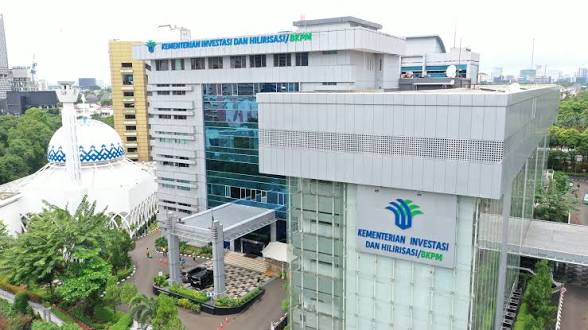
Chairman of the Central Executive Board of the Indonesian Empowered People Civil Society Organisation (LSM Rakyat Indonesia Berdaya), Hitler Situmorang, through the Analysis, Investigation & Advocacy Division team, delivered by its analyst Harno Pangestoe, has issued sharp criticism against the procurement project for the Maintenance of the Integrated Electronic Business Licensing System (OSS) for the 2026 Fiscal Year, implemented by the Ministry of Investment and Downstreaming/BKPM (Investment Coordinating Board). The project, valued at Rp30,658,331,000, is deemed to contain several serious irregularities that potentially violate government procurement principles and open the door to unhealthy practices in state budget management. In the official documents, the method used is Direct Appointment with only one participant, namely PT Telekomunikasi Indonesia Tbk. This condition is seen as contrary to the basic procurement principles as regulated in Presidential Regulation Number 16 of 2018 and its amendments in Presidential Regulation Number 12 of 2021, which emphasise efficient, effective, transparent, open, competitive, fair, and accountable principles. “How can the principle of healthy competition be fulfilled if there is only one participant? This is not procurement; this is a closed appointment that potentially locks the market,” Harno asserted firmly. The Estimated Own Price (HPS) is recorded at Rp30,655,610,370, while the submitted offer is Rp30,655,415,898, with a difference of only around Rp194 million or 0.0006 percent. After negotiation, the value only drops to Rp30,651,601,938, or less than 0.02 percent. This situation is viewed as strong evidence of a lack of healthy price competition and raises suspicions of HPS leakage or offer value conditioning. “In healthy procurement practices, such differences are almost impossible without access to internal information. This should be suspected as a form of conditioning,” Harno stated. This package is a repeat order for the Online Single Submission (OSS) system, which is a national strategic system and the main gateway for all business licensing services in Indonesia. The activity documents state that OSS is an integrated system that serves as the primary reference for electronic business licensing services. However, the management of this strategic system is instead carried out through a single vendor scheme and extended via direct appointment, which is seen as potentially creating state dependency on one party. “If the state’s system is locked by one vendor, then every fiscal year becomes a mere formality for contract extension. This is dangerous for national digital system sovereignty,” he emphasised. In addition, the technical specifications in the qualification documents are deemed too complex and highly detailed, requiring dozens of experts from various fields, from backend, frontend, QA, to project management and data. This condition is seen as potentially leading to technical conditioning that can only be met by a specific party. “This is a classic pattern of procurement conditioning, where specifications are crafted in such a way that only one party meets them,” Harno revealed. Based on the analysis results, there is potential violation of government procurement principles, indications of unhealthy business competition, and potential waste of state budget. Therefore, LSM RIB states it will bring these findings to the Corruption Eradication Commission, Financial Audit Board, Attorney General’s Office of the Republic of Indonesia, Indonesian National Police, and the Government Goods/Services Procurement Policy Agency as a form of oversight and prevention. “We see this not merely as ordinary procurement, but a systemic pattern that recurs in government technology projects. If not stopped, this will become a field for continuous state budget waste,” Harno said. LSM Rakyat Indonesia Berdaya urges a comprehensive audit, transparent opening of the system architecture, and the implementation of competitive and accountable procurement mechanisms for national strategic projects. LSM Rakyat Indonesia Berdaya concludes that this project does not meet healthy competition principles, contains indications of price conditioning, potentially creates vendor dependency, and has high risks of state budget deviations.