
Civil Society Coalition Proposals on the Domestic Workers Protection Bill
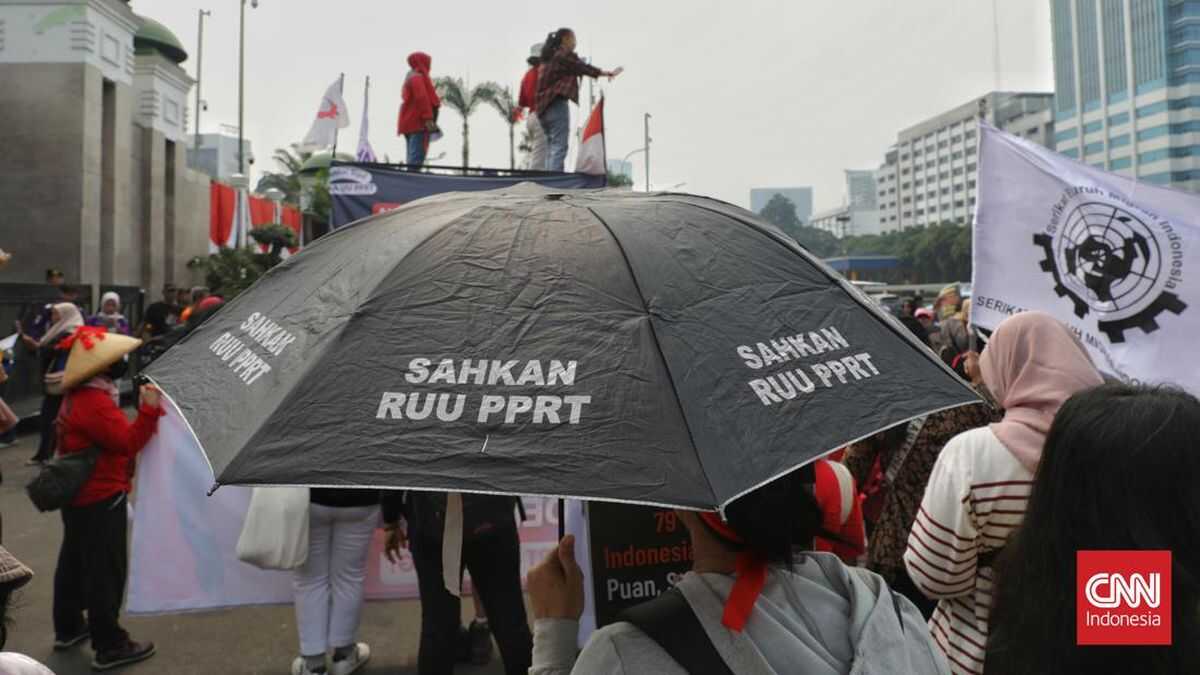
Several civil society organisations have submitted their proposals and notes on the Domestic Worker Protection Bill (RUU PPRT), which is currently under discussion in the DPR. The proposals were presented at a public hearing (RDPU) organised by the DPR’s Legislative Body (Baleg) on Thursday March 5. The RDPU was convened to absorb aspirations, proposals, and notes from the public before a Bill is officially discussed between the government and the DPR. At the occasion, Baleg invited a number of organisations, including independent institutes, legal aid offices, and NGOs to discuss the RUU PPRT, which is currently in the process of drafting. They were Komnas Perempuan, YLBHI, Jaringan Advokasi Nasional Pekerja Rumah Tangga (JALA PRT), and Jakarta Feminists. The Chair of Baleg, Bob Hasan, targeted completion of the RUU PPRT this year. “If this year is assured, yes. But for the month, I cannot estimate like that,” said Bob. Here are the points of the coalition’s proposals on the RUU PPRT: A dignified working relationship Commissioner Devi Rahayu of Komnas Perempuan urged that the RUU PPRT provide a clear status regarding the relationship between domestic workers (PRT) and the employer. In her view, the working relationship between the PRT and the employer must remain mutually respectful and uphold human dignity. Therefore, Komnas Perempuan recommended that the employment agreement be written. Devi explained that a written employment contract will provide legal certainty for both parties, prevent conflicts, and serve as valid evidence in dispute resolution. “Substantively, the contract is broadly similar to general agreements, namely the identities of the parties, terms of work, wage levels, and above all there is certainty of rights and obligations,” Devi said. Recognition of the right to organize and be assisted The Chairperson of YLBHI, Muhamad Isnur, asked that the RUU PPRT recognise organisations or unions for domestic workers. According to Isnur, the right to organise and to assemble is important to safeguard their standing. Isnur drew on a number of labour cases, where organisations or unions are a key element in the struggle. “So I strongly urge that the accommodation and recognition of the right to organise and unionise be included, because they are the ones who provide support in all things,” Isnur said. Legal references and ratification Isnur also asked that the RUU PPRT be able to refer to several international conventions and ratifications related to protections for women. According to Isnur, the RUU PPRT should refer, for example, to the Convention on the Elimination of All Forms of Discrimination Against Women (CEDAW) 1979, Law No. 7 of 1984 on the Ratification of the Convention on the Elimination of Discrimination Against Women, and Law No. 11 of 2005 on Ratification of the Covenant on Economic, Social and Cultural Rights. “That’s the first thing, so I haven’t seen that cited to the maximum yet,” Isnur said. Definition of PRT National Coordinator of JALA PRT, Lita Anggraini, explained that the provisions governing PRT need to be crafted specifically because it constitutes domestic work and private service. According to Lita, one country that has such a law is the Philippines. “So we need a separate law, as we see in the Philippines; Indonesia cannot lag behind the Philippines,” Lita said. Lita also emphasised the definition of PRT. According to her, besides performing domestic or household work, PRT is not bound by custom, kinship, education, or religion. “So this should not be a cause for concern, as it will be explained later in the explanatory notes of the PPRT Bill that santri, ngenger, abdi dalem, and similar are not included in PRT,” she said. Dispute resolution JALA PRT proposed several options for resolving disputes. From consensus through deliberation, mediation, arbitration under the Ministry of Manpower, which would be final. Based on experience, Lita said that dispute resolution has so far been overly lengthy. With arbitration, case resolution can be swift and the PRT does not need legal representation. “And the employer also does not have the time for that. So use arbitration,” she said.