
Civil Servants to Work from Home Every Friday, Warteg Owners Complain and Rack Their Brains
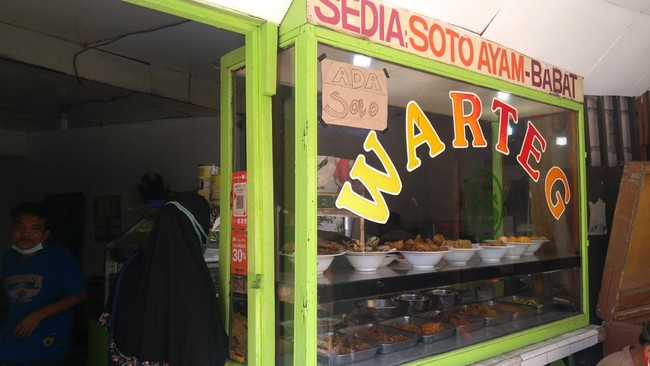
The government has officially implemented a work from home (WFH) policy for one day per week for civil servants (ASN), namely every Friday starting 1 April 2026. This policy is taken as a measure to anticipate the ripple effects of the conflict in the Middle East, which is triggering global energy price volatility.
Coordinating Minister for the Economy Airlangga Hartarto stated that the policy is part of the national work culture transformation that prioritises efficiency and modernisation of the work system.
“Implementation of WFH for ASN in central and regional offices for one working day every Friday,” said Airlangga during an online press conference on Tuesday evening (31/3/2026).
Meanwhile, on Wednesday (1/4/2026), the Minister of Manpower Yassierli stipulated that private sector workers, SOEs, and regional SOEs should also follow the one-day-per-week WFH policy, but it is advisory and adjusted to each company’s conditions.
“The implementation of WFH does not reduce annual leave. For workers or labourers carrying out WFH, they must still carry out their duties and obligations,” said Yassierli during a press conference at his office in Jakarta.
Yassierli also emphasised that several sectors are exempted from this policy, such as health, energy, industry, transportation, and food and beverage sectors, to maintain service continuity and operations.
However, this policy has triggered concerns among small business players, particularly warung tegal (warteg) that have long depended on ASN and private sector employees in office areas as customers.
Chairman of the Warteg Nusantara Cooperative (Kowantara) Mukroni assessed that the implementation of WFH for ASN and private sector workers poses a major challenge to the warteg ecosystem.
“For the implementation of the Work From Home (WFH) policy for ASN and workers, it certainly becomes a major challenge for the warteg ecosystem, especially those located in government office or city centre areas. Warteg relies heavily on daily customer volume and quick cash turnover,” Mukroni told CNBC Indonesia on Thursday (2/4/2026).
He explained that ASN is one of the main market segments for warteg due to affordable food prices and diverse menus. With reduced office activity, warteg could lose peak sales times.
“Losing ‘Prime Time’, namely lunch hours, is the biggest source of income. If offices are quiet for 3 days a week, daily revenue potential could drop by up to 50%-70%,” he clarified.
In addition, Mukroni highlighted the increased risk of food waste due to uncertainty in customer numbers.
“There is a risk of food waste, where warteg cooks in large quantities in the morning. With uncertain customer numbers, the risk of unsold food (going stale) becomes higher, which directly hits profit margins,” he said.
Furthermore, he stated that this policy forces warteg business owners to adapt, including changing business patterns.
“This policy forces warteg owners to change survival strategies, such as focusing on delivery services. Warteg that usually only serves dine-in (eating on site) must start expanding to online motorcycle taxi platforms or independent delivery services to reach ASN (and/or private sector/SOE/regional SOE workers) who are working from home,” he said.
Mukroni assessed that the impact is not only felt by warteg but also ripples to the supply chain.
“Warteg does not stand alone. A decline in purchasing power at warteg will impact traditional market suppliers, such as reduced absorption of vegetables, meat, and rice from the market,” he explained.
“It also affects the workforce, where warteg owners may reduce the number of assistants or waiters due to a drastic drop in workload on WFH days,” he added.
Nevertheless, he sees opportunities for adaptation among business players, such as changing menu compositions and offering catering services.
“To survive, warteg will likely make several adjustments like increasing durable menu items such as dry fried tempeh, potato mustard, or anchovy peanuts. To reduce the risk of food spoilage losses,” said Mukroni.
“Owners can also offer subscription systems or catering, weekly catering packages for offices that still have essential staff or for delivery to homes,” he added.
He emphasised that for warteg in office areas, this policy could have serious impacts if adaptation is not swift.
“Overall, for warteg in office zones, this policy could be a ‘death knell’ if they do not quickly transform digitally or adjust their business models. On the other hand, it becomes an opportunity for warteg on the city outskirts to capture the ‘home lunch’ market,” he concluded.