
Civil Servants and Private Employees to WFH Once a Week, Business Leaders Issue Warnings
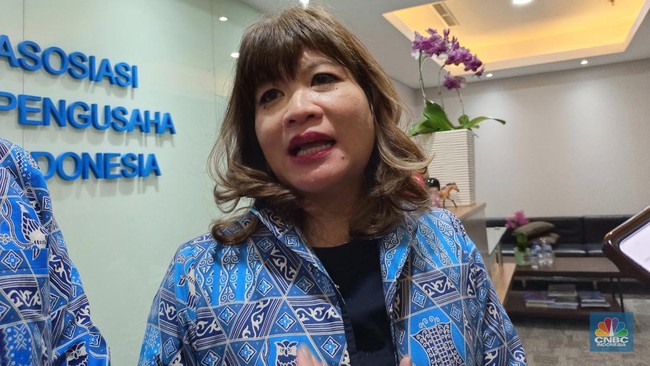
Jakarta, CNBC Indonesia - Chairwoman of the Indonesian Employers’ Association (Apindo) Shinta Widjaja Kamdani has responded to the government’s policy mandating work from home (WFH) once a week for civil servants (ASN) and a similar recommendation for private sector workers. The business community fundamentally supports the government’s move but requests that the policy’s implementation remains flexible and does not disrupt real sector operations.
“First, we appreciate the government’s strategic steps in responding to the impacts of geopolitical turbulence through this national work culture transformation policy and energy policy,” Shinta told CNBC Indonesia on Wednesday (1/4/2026).
Nevertheless, she emphasised that WFH work patterns should not be uniformly applied across all sectors.
“However, we believe that work pattern arrangements should be left to each company’s internal policies so they can be adjusted to operational needs and anticipate sectors not included in the exempted categories,” she explained.
Shinta assessed that the business community also needs space for dialogue with the government to ensure this policy does not cause disruptions on the ground. She reminded that the policy’s scope is limited because the majority of the workforce is in the informal sector.
“The business community also views it as important to have space for dialogue with business actors so that the impacts of this policy do not cause disruptions. Additionally, it should be noted that nearly 60% of Indonesia’s workforce is in the informal sector, so the implementation of this policy has limitations in terms of reach and impact,” she said.
Not only that, Shinta also highlighted the global pressures currently faced by business actors, from rising energy prices to the weakening rupiah exchange rate.
“Of course, the impacts of pressures on the business world are broad. The rise in oil prices not only directly affects the energy sector but also creates knock-on effects to various sectors through increased production and distribution costs, which risk driving inflation and pressuring people’s purchasing power,” Shinta explained.
The weakening rupiah, she said, also adds further pressure, especially for the manufacturing sector that still relies on imported raw materials. Indonesia’s March 2026 manufacturing PMI data at 50.1 indicates stagnant manufacturing activity over the past month and the lowest level in the last eight months.
On the other hand, she also responded to the government’s budget refocusing policy, which she assessed needs to be done carefully to avoid disrupting productive sectors.
“Regarding budget refocusing, the business community in principle understands that this step is an unavoidable response to maintaining fiscal discipline amid external pressures,” she said.
“However, it needs to be highlighted that if efficiency touches productive spending closely related to the real sector, the impacts will be quite broad, for example, on the construction and infrastructure sectors, including supporting industries like cement, steel, and building materials, the MICE sector, transportation, and MSMEs that have been in the government spending supply chain,” she continued.
She added that the policy remains important for maintaining economic stability but must be done selectively.
“The business community views budget refocusing as still important to maintain APBN credibility and macro stability, but ideally it should be done selectively while still protecting spending with high multiplier effects so as not to sacrifice related sector productivity,” she continued.
To maintain economic resilience, the business community also pushes for stimulus targeting both the supply and demand sides simultaneously.
“Therefore, the needed stimulus must target the supply side (business world) and demand side (people’s purchasing power) simultaneously. On the supply side, the business world needs policies that can keep business costs controlled, cash flow healthy, and business certainty maintained,” she explained.
Shinta detailed several required steps, from reducing business costs to deregulation.
“For that, acceleration is needed in lowering business costs, including taxes, logistics costs, energy costs, and regulatory compliance costs, accompanied by strengthened liquidity support,” she said.
At the same time, Shinta continued, accelerating deregulation and debottlenecking various regulations that hinder business productivity becomes increasingly important. Special support for labour-intensive sectors is also mentioned as necessary to maintain workforce continuity.
“Additionally, the smoothness of supply chains and logistics needs to be maintained so that global pressures are not further transmitted domestically. With a measured and targeted approach, economic stability can remain maintained without disrupting business continuity,” she stressed.
The government previously officially implemented the WFH policy for one day a week, specifically every Friday, for ASN as part of a strategy to address the impact of geopolitical conflicts on global energy prices. Coordinating Minister for the Economy Airlangga Hartarto stated that this policy is part of the national work culture transformation that prioritises efficiency and modernisation.
“Implementation of WFH for ASN in central and regional areas for one working day every Friday,” said Airlangga during an online press conference on Tuesday night (31/3/2026).
This policy is also accompanied by restrictions on official vehicle use to 50% and encouragement of public transportation use, effective from 1 April 2026.
Meanwhile, today, Wednesday (1/4/2026), Minister of Manpower Yassierli has set that private workers, SOEs, and regional SOEs should also follow the WFH policy for one working day a week, but it is a recommendation and adjusted to each company’s conditions.
“WFH implementation does not reduce annual leave. For workers