
Civil Servant Spending Limited to 30 Percent, Fate of 9,000 NTT Contract Workers Uncertain
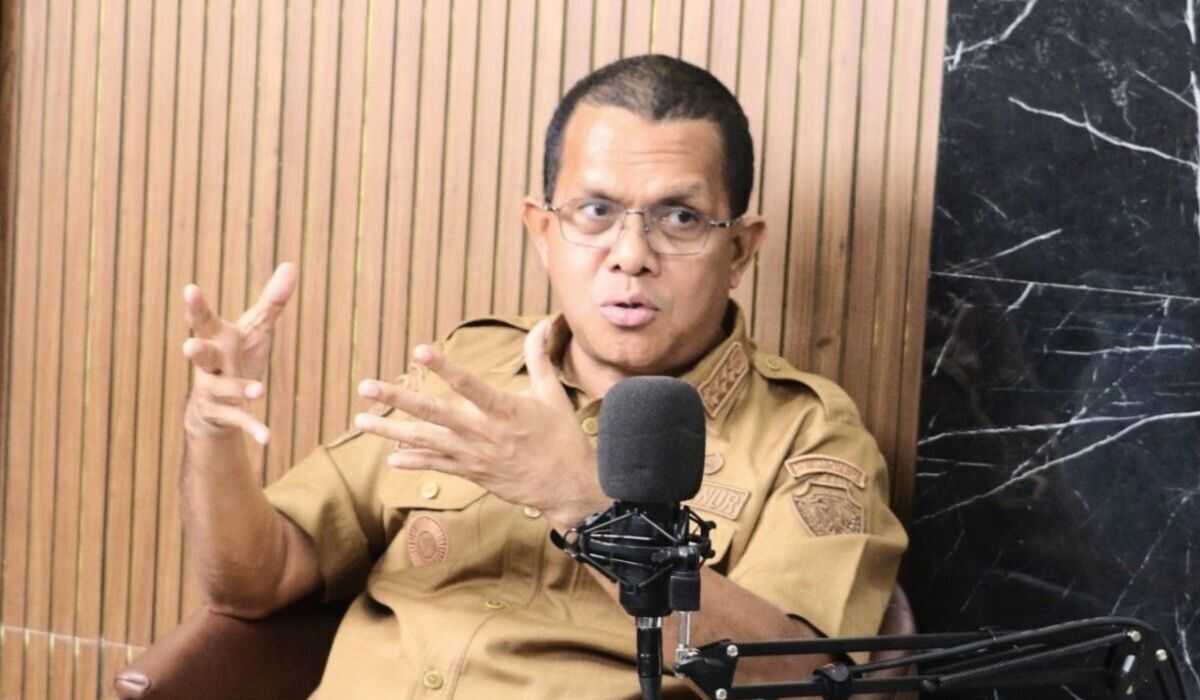
The Governor of NTT, Emanuel Melkiades Laka Lena, revealed the potential serious impact on approximately 9,000 Contract Government Employees (PPPK) within the NTT Provincial Government following the implementation of a regulation limiting civil servant spending to a maximum of 30 percent of the total APBD.
The policy refers to Law Number 1 of 2022 concerning Financial Relations between the Central Government and Regional Governments (UU HKPD), which provides a five-year deadline since its enactment.
This means that, at the latest by 2027, the composition of regional government employee spending must be at 30 percent.
“This stems from regulations regarding the percentage of employee spending sourced from laws on central and regional finances. At the latest by 2027, employee spending must be 30 percent of the APBD,” said Melki, Thursday (February 26).
Based on a simulation with the Regional Personnel Agency and the NTT Regional Finance Agency, if the provision is fully implemented next year, the NTT Provincial Government must save approximately IDR 540 billion. This value is equivalent to the funding for approximately 9,000 PPPK employees.
“If it is implemented next year, we must save IDR 540 billion. That is equivalent to 9,000 PPPK employees who we will no longer be able to pay,” he emphasized.
However, Melki stated that the policy has not been finalized. The NTT Provincial Government is still awaiting the possibility of further policies or adjustments from the central government.
As an anticipatory measure, the NTT Provincial Government has begun preparing training and career transition schemes for PPPK employees who may be affected. Options being considered include encouraging entrepreneurship through People’s Business Loans (KUR) or other financing schemes so that they can still have a source of income.
“We must think about how they can continue to survive, continue to earn a living and support their families,” said Melki.
He added that this information is intended so that all PPPK employees in NTT can understand the region’s fiscal condition early on, while hoping that the central government will consider affirmative policies for island regions such as NTT before the 2027 deadline. (H-3)
So far, the largest portion of the APBD has been absorbed by employee spending.
The Ministry of Finance (Kemenkeu) has disbursed regional transfer funds (TKD) of IDR 644.9 trillion as of September 30, 2025.
Komdigi stated that the 2026 budget ceiling set at IDR 8 trillion is not sufficient, but will carry out efficient and effective budget utilization.
Employee spending is recorded at IDR 102 trillion or 33.3% of the budget allocated in the APBN of IDR 513.22 trillion.
COMMISSION XI of the House of Representatives (DPR) approved the budget efficiency proposed by the Ministry of Finance (Kemenkeu) of IDR 8.99 trillion.
The Ministry of Religious Affairs stated that it continues to fight for private madrasah teachers to be appointed as Contract Government Employees (PPPK).
The PROVINCIAL GOVERNMENT (Pemprov) of West Java (Jabar) denied not having funds to pay the salaries of part-time Contract Government Employees (PPPK) in January 2026.
Agus assessed that the priority for the appointment of ASN should be given to sectors that are more crucial for the welfare of the community.
The HEAD of the National Nutrition Agency (BGN) Dadan Hindayana appointed PPPK from the second phase of the SPPG, as many as 32,000 positions from the SPPG, Commission IX of the DPR RI requested that the MBG have an impact.
The Head of the National Nutrition Agency (BGN) Dadan Hindayana said that he would appoint Contract Government Employees (PPPK) in the second phase as many as 32,000 positions.