
Civil Coalition Warns Military Involvement in Counter-Terrorism Could Violate Constitution and Human Rights
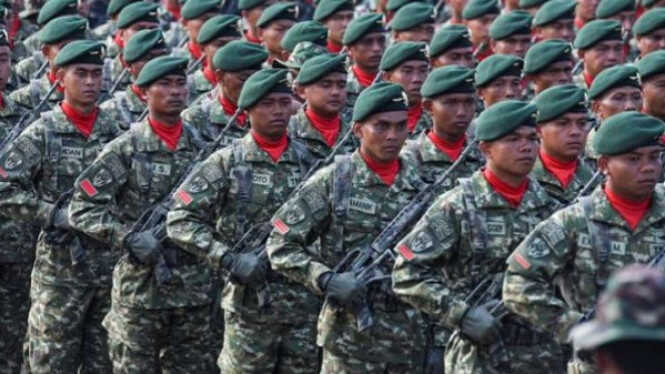
Jakarta, VIVA – The proposed involvement of the Indonesian National Armed Forces (TNI) in counter-terrorism operations remains a subject of intense debate. A draft presidential regulation (perpres) governing the military’s role in addressing terrorist acts has come under scrutiny, particularly regarding its potential impact on human rights protections.
The issue has emerged as a derivative regulation of Law No. 5 of 2018 and the recently revised Law No. 3 of 2025. Amid these developments, the Civil Society Coalition has highlighted a number of fundamental concerns that require serious examination.
Wahyudi Djafar, representing the Civil Society Coalition from Raksha Initiative, argued that discussions on military involvement in the counter-terrorism sphere must not be rushed.
“Particularly the legal and constitutional problems, which could have serious implications for human rights recovery if not properly discussed and debated,” said Wahyudi Djafar on Monday, 23 February 2026.
According to Wahyudi, the boundaries of military duties in the context of domestic security must be clearly defined. He noted that the reform era established a separation between the roles of the TNI and the National Police (Polri), and that this division of authority should continue to be implemented consistently.
“We should today be able to consistently carry out all the mandates of the reform era itself, for the development of a professional military,” Wahyudi said.
He also emphasised that Indonesia’s approach to combating terrorism has been agreed upon as following a criminal justice system. This approach is considered to better guarantee the protection of citizens’ rights.
Should military involvement be expanded without firm limitations, Wahyudi expressed concern that the legal approach would shift towards a militaristic one.
In his view, the TNI may indeed be involved under certain highly limited circumstances — for instance, terrorist acts occurring on Indonesian vessels abroad, on aircraft, or attacks aimed at seizing control of a territory.
However, he assessed that the circulating draft regulation instead opens the door to broad military involvement, spanning prevention, deterrence, enforcement, and recovery operations.
“This is the challenge we face, because it violates the law and the constitution, and will certainly have serious implications for human rights,” he said.
Previously, State Secretary Minister Prasetyo Hadi affirmed that the draft regulation circulating since early January 2026 is not yet a finalised rule. He urged the public to wait until the regulation is officially issued and to examine its substance in full.