
Circular economy model has potential for application in the palm oil industry
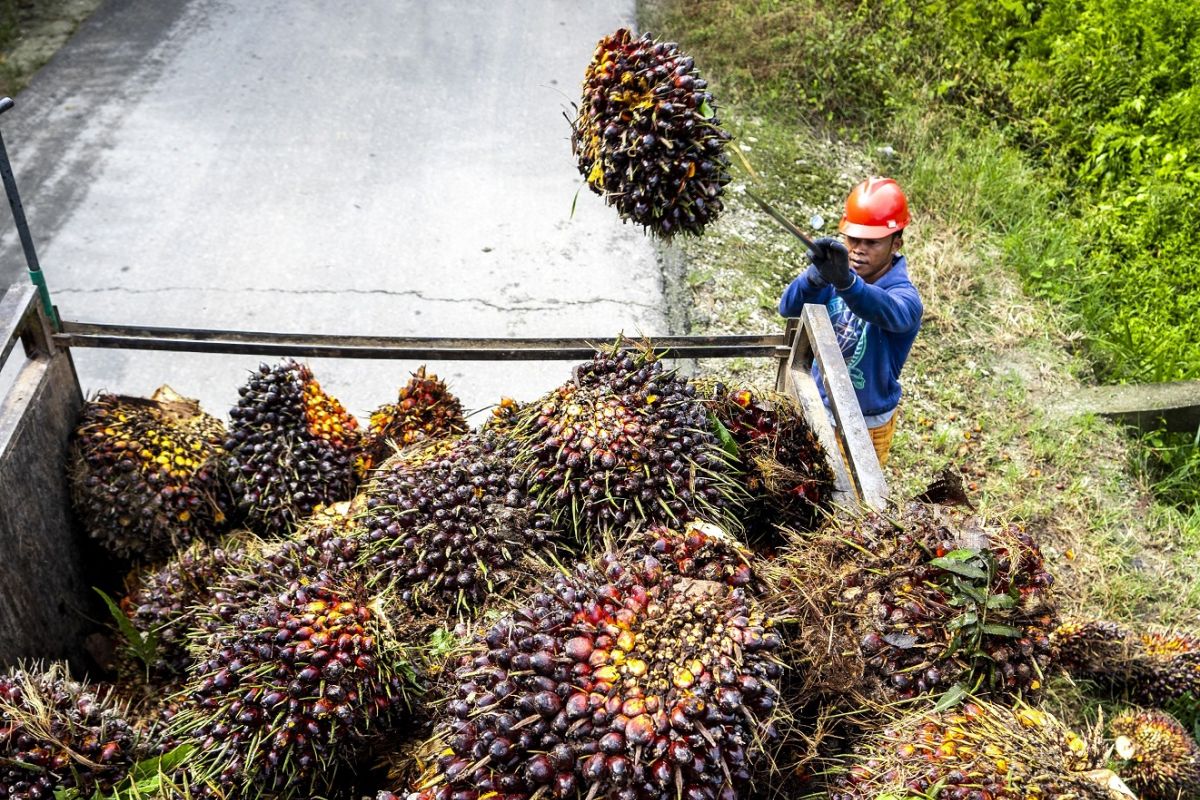
Jakarta (ANTARA) - A researcher at IPB University’s Centre for Palm Oil Studies, Siti Nikmatin, stated that the circular economy model can be applied to the national palm oil industry from upstream to downstream sectors, thereby transforming waste into value-added and competitive products.
“The circular economy model is feasible and indeed necessary to implement in the palm oil industry. How to apply it? It certainly requires knowledge and technology,” she said in Jakarta on Thursday.
Palm oil is categorised as a zero-waste crop, she continued, with all parts of the palm plant—from the fruit, seeds, fronds, empty bunches, to the trunk—able to be processed into products that meet various human needs.
She gave examples that empty palm fruit bunches (TKKS) can be optimised into biomaterial products such as helmets, bulletproof vests, and shoes.
As a researcher, she stated that she has conducted various innovative studies resulting in products based on TKKS waste.
Furthermore, palm shells can be processed into various value-added products that contribute positively to the renewable energy transition. Utilisation of palm shells includes boiler fuel in palm oil mills, concrete and building material mixtures, as well as raw materials for biobriquettes and biopellets.
“So, what I have done to utilise empty palm fruit bunches into biomaterial products is an effort to implement the circular economy model in the palm oil industry,” Nikmatin said in her statement.
This lecturer from the Physics Department of IPB University’s Faculty of Mathematics and Natural Sciences (FMIPA) said she received support from the Plantation Fund Management Agency (BPDP) for research on applying the circular economy in the palm oil industry.
“There is concrete evidence that BPDP supports innovative research for the advancement of palm oil in Indonesia. I am one of the researchers who received palm oil research funding support from BPDP,” she said.
Nikmatin emphasised that applying the circular economy model in the palm oil industry will have positive impacts on the environment and economy. She explained that derivative products based on palm oil waste can support environmental conservation while creating economic value.
In addition to positive impacts on the economy and environment, the application of the circular economy model also has the potential to positively impact the social sector, she added. The palm oil industry can involve communities around mills or plantations in processing waste into economically valuable products.
“If the company does not process everything itself, it can involve the community in the palm oil plantation environment. Certainly, this will bring positive impacts to the community,” she said.